

























































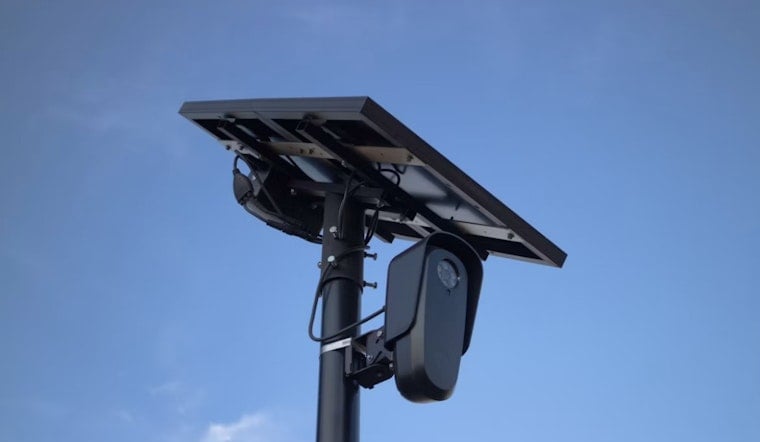
A part-time dispatcher for the Highland Heights Police Department resigned Thursday morning after an internal review found she had run the city's Flock Safety license plate camera system for reasons that had nothing to do with police work, running five separate plates through the system more than 1,000 times each. Police say she faces no criminal charges, but she would have been fired had she not quit first.
The scale of the searches only came to light after Washington Post reporters contacted the department on August 17, according to Highland Heights Police Chief Dennis Matejcic, whose account was first detailed by Cleveland.com. The reporters were working off data from Have I Been Flocked?, a public lookup tool that lets residents check whether their own plates were searched and compiles records obtained through public-records requests from government bodies with Flock contracts. That same database, containing nearly 242 million searches covering more than 4.6 million plates nationwide, underpinned a broader Washington Post investigation that found at least 50 law enforcement officers across the country accused, charged, or convicted of misusing Flock and similar automated license plate reader networks to track ex-partners, family members, or romantic interests.
Matejcic said the dispatcher's activity, once flagged, immediately stood out. Records show she made 930 searches between June 5, 2024, and November 24, 2025, but according to Have I Been Flocked?, her total searches during 2024 and 2025 topped 20,000. The department opened an internal affairs investigation once it learned of the misuse, and the dispatcher submitted her resignation letter Thursday morning.
No Crime Found, But No Job Either
Highland Heights police reviewed the searches conducted by every other officer and staff member with system access and determined those were legitimate and tied to department business, Matejcic said. The dispatcher's searches, by contrast, were determined to be unrelated to police work and unauthorized, conducted largely within the 30 days before the department's review began. Department policy already prohibited employees from using internal systems, including Flock Safety, for personal reasons, and officials determined the dispatcher's conduct violated that policy without meeting the threshold for a criminal charge.
That distinction traces back to how Ohio law treats different kinds of law enforcement databases. Under Ohio Revised Code Section 2913.04(C), unauthorized access to the state's Law Enforcement Automated Database System is a fifth-degree felony, according to Ohio's state law code. But private vendor platforms like Flock Safety fall outside that statute and are instead governed by internal departmental policy, unless a separate computer crime or stalking law is triggered. Matejcic said the dispatcher would have been terminated had she not resigned, and that the department wants residents to know it is taking quick action in response to their concerns.
A New Policy and Monthly Audits
Highland Heights police are now creating a policy specifically governing Flock use, which will include monthly audits conducted by the department's terminal agency coordinator, who will also audit the department's other internal systems going forward. The move comes as Flock Safety itself announced on August 17 that search-history audits will become mandatory for all law enforcement clients starting January 1, 2027, a shift reported by MLQ.ai. Under the new rules, officers will need to enter a specific criminal case number before running a search, and emergency lookups that bypass that requirement will automatically trigger a supervisor flag.
Flock is also cutting its default data retention window from 30 days to seven, while offering a separate Evidence Mode for active criminal investigations, according to reporting from daily.dev. Like Cleveland and Shaker Heights police, Highland Heights does not allow employees with system access to search the keyword “immigration,” a restriction that has spread across Ohio departments after public records reviewed by news outlets documented more than 4,000 Flock searches tied to federal officials or potential immigration enforcement, per Mashable.
Part of a Wider Reckoning
Highland Heights is not an isolated case. In early August, two officers in Reynoldsburg, Ohio, resigned following internal investigations into personal misuse of their department's Flock system, including one officer who conducted 46 lookups on a former domestic partner, according to WOSU Public Media. Both cases involved resignations before internal affairs interviews were completed.
Flock Safety's cameras now scan millions of vehicles daily through a network of more than 120,000 devices across 49 states, according to the American Civil Liberties Union, which notes that less than 1% of scanned vehicles are ever linked to active criminal investigations. That scale, paired with a string of misuse cases nationwide, has fueled a growing municipal backlash: data compiled by the crowdsourced tracking project DeFlock shows at least 47 local jurisdictions across 23 states have canceled, rejected, or deactivated their Flock contracts. Hoodline has reported on similar oversight demands after a Florida officer was accused of conducting 717 unauthorized searches on his estranged wife.
For now, Highland Heights police say the department is focused on tightening its own oversight rather than pursuing further action against the former dispatcher, who worked part-time. Flock Safety had offered departments a tool to audit search histories as early as April 2026, but Highland Heights' review did not catch the scale of the dispatcher's activity until federal reporters brought it to the department's attention.



