

























































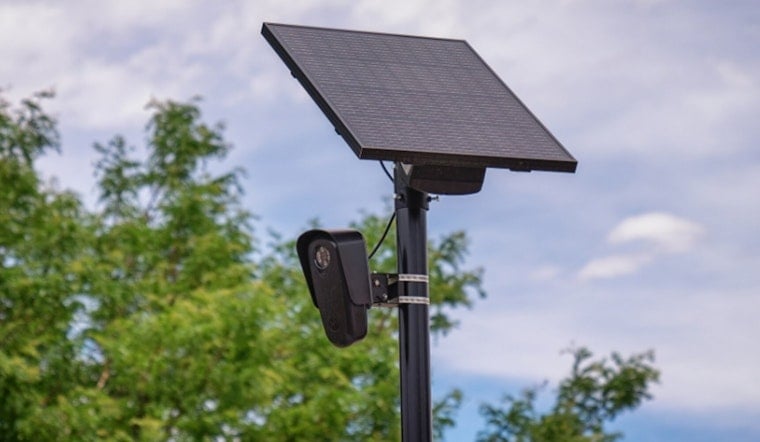
St. Petersburg residents packed a meeting at the Obama Main Library to press city officials on a question that's suddenly urgent nationwide: who can look at the footage from the city's 50 Flock Safety license plate reader cameras, and what stops someone from misusing it? The cameras have quietly operated across St. Petersburg since 2022, but a grassroots group called DeFlock St. Pete says the city has never adequately explained who has access to the data or how that access is policed.
Resident Sarah Michaud told the crowd she simply wants to better understand how the cameras are being used, a sentiment organizers say reflects widespread confusion among residents who had no idea the network existed until recently, according to FOX 13 Tampa Bay. DeFlock St. Pete formed amid growing nationwide concerns about license plate reader technology, and the group is now urging residents to contact St. Petersburg City Council members directly about establishing more oversight of the camera network.
St. Petersburg Police Chief Anthony Holloway has defended the cameras, saying they have helped investigators solve crimes in the city. But organizer Zach Schira argued that surveillance technology needs safeguards, telling the station that without them the risk of abuse is too high — and he called for either implementing real oversight or removing the cameras altogether.
A Florida Officer's 717 Searches on His Estranged Wife
Schira pointed to a case that has rattled Florida residents in recent days: an officer who used Flock roughly 700 times to track his ex-wife. That case involves Haines City police officer Christopher Goodson, who was arrested for official misconduct after an internal audit found he had searched his estranged wife's license plate in the Flock database 717 times between September 2024 and June 2026, logging fake case reasons like narcotics and assault investigations to justify the searches, according to KSDK. Goodson reportedly confessed to a supervisor only after his wife was contacted by investigative journalists looking into the pattern.
Central Florida has already seen a similar case play out. In Sumter County, Sheriff's Detective Brandy Almany was fired and arrested last month for allegedly entering false case numbers into Flock and state databases to spy on her husband's ex-wife, a case Hoodline previously reported led to internal audits and a temporary suspension of ALPR access in that county.
National Data Shows a Pattern, Not an Isolated Case
These Florida cases are not outliers. An August investigation found that at least 50 law enforcement officers across 12 states have been charged with or accused of misusing ALPR databases like Flock, with more than half of those cases involving officers spying on romantic partners or exes. The Institute for Justice, a public-interest law firm challenging ALPR surveillance on Fourth Amendment grounds, published a public tracker this month documenting more than 140 verified cases of misuse nationwide, ranging from romantic stalking to wrongful felony traffic stops at gunpoint.
Flock Safety, the company behind the technology, operates approximately 120,000 automated license plate reader cameras across 49 states in more than 6,000 communities, processing over 20 billion vehicle plate scans monthly into a cloud database. The company has told the public that data sharing is turned off by default. Flock also announced this week that it is reducing its default data retention period from 30 days down to seven days, though it will still retain data for 30 days when a jurisdiction activates evidence mode for an active investigation.
Florida Law Limits What Residents Can See
Under Florida Statutes 316.0777 and 316.0778, captured license plate images and location logs are exempt from general public records requests, but registered vehicle owners are legally permitted to request records of scan data and audit trails tied to their own license plate. That legal framework means most residents cannot simply ask the city for a broad accounting of who has searched the database — they can only check on searches involving their own vehicle.
The frustration in St. Petersburg has also shown up outside city hall meetings. One resident staged a peaceful protest by holding a 12-foot pool skimmer with a sign reading Down With Flock Cameras to block a neighborhood camera's lens from a public sidewalk, according to the Pacific Legal Foundation, which contrasted the non-violent lens obstruction with instances of physical camera destruction reported elsewhere in the country.
Contract Was Approved Without Public Debate
Much of the current unease traces back to how St. Petersburg's Flock contract was approved in the first place. City Council approved a five-year, $730,250 contract with Flock Safety for the 50 cameras on a consent agenda, meaning it passed as part of a routine bulk vote without any individual presentation or public debate, according to Florida Politics.
That kind of quiet approval process is now colliding with a broader national reconsideration of ALPR contracts. At least 82 municipal and county contracts with Flock Safety across 28 states were canceled between August 2021 and May 2026, including 39 terminations in just the first five months of this year, per Reason. Cities that have walked away from the technology frequently cite privacy risks, fears about federal data sharing, and the absence of any warrant requirement for searches.
Whether St. Petersburg follows that trend remains an open question. DeFlock St. Pete has made clear it wants either meaningful oversight rules written into the city's arrangement with Flock or the removal of the cameras entirely, but the City Council has not yet indicated whether it will revisit the contract it approved without debate.




.jpg)