

























































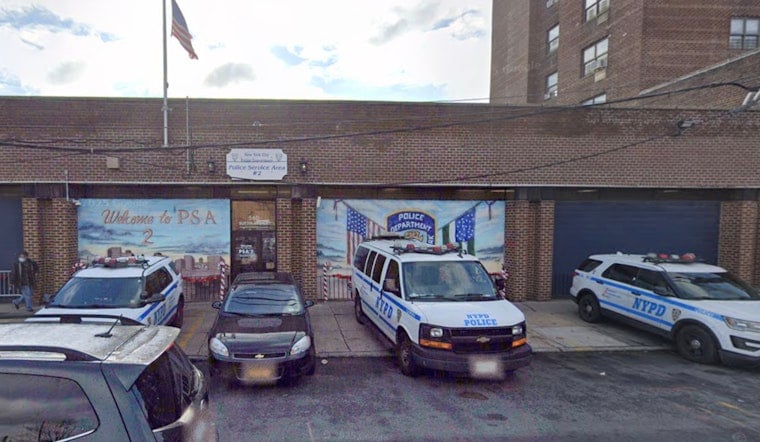
Governor Kathy Hochul and NYPD Commissioner Jessica Tisch spent time this week inside Police Service Area 2 in Brooklyn, greeting housing officers and sitting down with tenant leaders who described a familiar problem: crime may be falling across New York City public housing, but broken entrance doors are still letting strangers wander into their buildings.
The visit to PSA 2 headquarters at 560 Sutter Avenue brought Hochul and Tisch face to face with patrol officers and community members from the Brownsville, East New York and Crown Heights developments the command covers, according to amNewYork. NYPD data presented during the visit showed major crime in public housing has dropped more than 6% since January, with murders down 45%, shootings down 32%, and shooting victims down 35%, per the outlet's report. Tisch also said robbery, burglary and car theft are each down about 33% so far this year.
Tenant leaders praised the improvements but used the sit-down to press for action on physical building failures that have lingered for years. Lisa Kenner told officials that people use drugs and sleep in the hallways of the Van Dyke Houses, and that homeless individuals regularly enter the building, according to the same report. Anita Alston, from Glenmore Plaza, offered a more positive account, saying police officers respond promptly and resolve problems she reports.
Broken Doors Undercut the Safety Gains
NYCHA needs to repair broken entrance doors, tenant leaders told Hochul and Tisch, and Tisch offered to co-sign a letter urging the housing authority to make those fixes. The concern is not anecdotal. A citywide audit from the Office of the New York City Comptroller found that 40.1% of residential entrance door locks across NYCHA developments were broken and 57.9% of building entrance doors were unsecured, up sharply from 23.5% in 2018. Those failures leave stairwells, hallways and lobbies open to non-residents no matter how many officers are patrolling outside.
The scale of the problem is tied to the scale of NYCHA itself. The authority is the largest public housing landlord in the country, managing roughly 178,000 apartments across more than 330 developments that are home to over 360,000 official residents, with an estimated total population exceeding 500,000 New Yorkers, according to LockAtlas. Hoodline previously reported that squatters moved into empty units after a March 2026 review found roughly 6,700 vacant NYCHA apartments citywide, prompting agencies to reclaim nearly 550 unsecured units being used for criminal activity.
Tenants Want More Vertical Patrols
Tisch said residents at the meeting want more officers conducting vertical patrols — the practice of checking stairwells, hallways and rooftops inside NYCHA buildings. She promised to increase patrols if necessary. The request carries added weight in central Brooklyn, where the practice has a fraught history: the 2014 fatal shooting of unarmed resident Akai Gurley in a dark stairwell at the Louis H. Pink Houses in East New York, detailed by the Crime and Justice Policy Lab, spurred mandates for body-worn cameras and broader patrol reforms.
Vertical patrols today also operate under strict legal limits stemming from the federal class-action settlement in Davis v. City of New York, which, per a review from Cornell University, bars officers from stopping or questioning residents during interior patrols without individualized reasonable suspicion of criminal trespass or unlawful activity. The NYPD Housing Bureau itself dates to 1995, when the independent Housing Authority Police Department, originally formed in 1952, was folded into the NYPD.
State Officials Point to Post-Pandemic Investment
Hochul said the state has put money into helping local policing, tracing the investment back to a COVID-19 pandemic-era crime spike that hit New York City and the nation. According to the Office of Governor Kathy Hochul, state funding for the NYPD includes $77 million allocated in the current fiscal year plus an additional $77 million commitment, totaling more than $150 million over 18 months as part of nearly $4 billion invested in statewide public safety since 2021, the year Hochul became governor. That state investment supports increased police presence on trains and subway platforms, roughly 5,000 hours of daily enhanced transit safety overtime, and mobile field force deployments.
The state has also funneled money toward equipment upgrades. In July, Hochul announced a $100 million investment through the LETTECH grant program to upgrade police technology, operating alongside the state's Gun-Involved Violence Elimination initiative, which state officials have credited with a 60% drop in shooting deaths statewide since 2021.
PSA 2's own numbers reflect the broader trend officials point to. Hoodline reported in late 2025 that homicides within PSA 2's Brownsville developments had dropped 80% compared to the prior year, even as officers still responded to severe incidents, including a fatal stabbing at the Langston Hughes Apartments. That progress has not been uniform: Hoodline also documented a 13-year-old shot inside the Seth Low Houses in Brownsville in February, and a woman grazed by gunfire at a Flatlands playground this week, underscoring that gun violence tied to public housing areas persists even as citywide totals fall.




