

























































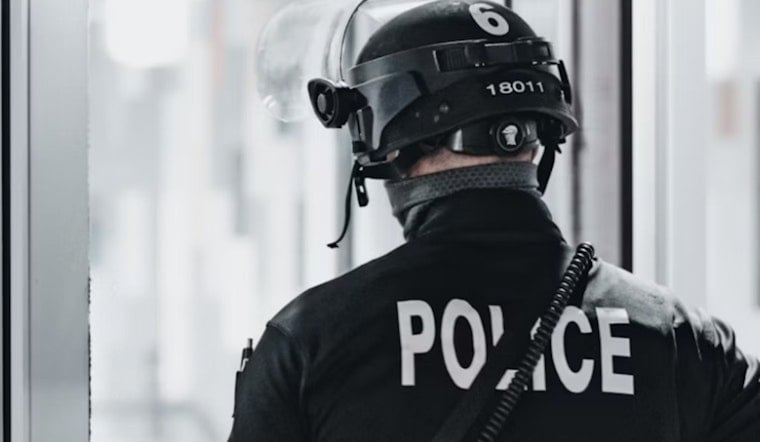
Police officers from more than 20 agencies stretching from Toronto to Texas converged on a Hollywood hotel this week for the 2026 National Asian Peace Officers Conference, a gathering built around training, networking, and recruitment for Asian American and Pacific Islander officers. The event ran from August 3 through August 6 at the Loews Hollywood Hotel, drawing law enforcement personnel from the United States and Canada for what organizers describe as a week centered on collaborative efforts, learning, and networking.
The Los Angeles County Sheriff's Department, which posted about the event on Facebook, said the National Asian Peace Officers' Association has supported the Asian American law enforcement community since 1980, according to the Los Angeles County Sheriff's Department. That founding date lines up with the organization's own history: NAPOA was officially established in July 1980 and held its inaugural national conference in San Francisco in June 1981, with charter members including the California Asian Peace Officers Association, the Northern California Asian Peace Officers Association, and the New York City Police Department's Asian Jade Society, per the National Asian Peace Officers Association.
Agencies represented at the Hollywood gathering included the Los Angeles Police Department, the Los Angeles County District Attorney Police Department, the Port of Los Angeles Police, the Contra Costa Sheriff's Office, the San Diego Police Department, and the Berkeley Police Department, all according to the sheriff's department's post. Departments from well outside Southern California also sent representatives, including the St. Paul Police Department, the Toronto Police Department, the New York City Police Department, the Chicago Police Department, the Cook County Sheriff's Police, the Houston Police Department, the Texas Highway Patrol, the Ohio Highway Patrol, the Tennessee Highway Patrol, and the Loudoun County Sheriff's Office. The Fairfax County Police, the Portland Bureau of Police, and multiple Massachusetts agencies — the Boston Police Department, the Boston Department of Public Safety, the Tufts Police Department, and the Braintree Police Department — rounded out the roster of departments in attendance.
A Recruitment Pipeline Alongside the Training
The conference paired specialized professional development with a public-facing recruitment function. Training sessions covered homeland security, terrorism, contemporary investigative techniques, promotional and interview preparedness, bridging cultural gaps, and equal employment opportunity processes, according to the National Asian Peace Officers Association. Alongside those sessions, the conference included a daily career fair open to the public from 8 a.m. to 4 p.m., featuring recruiters from federal, state, and local law enforcement agencies.
NAPOA describes itself as a national umbrella organization representing more than 4,000 Asian American and Pacific Islander law enforcement officers across regional chapters throughout the country, spanning federal special agents, state troopers, municipal police officers, and correctional personnel. Federal agencies including the U.S. Department of Justice and the Department of Homeland Security have partnered with NAPOA on minority law enforcement recruitment initiatives and inter-agency community relation forums, according to a Justice Department report.
Los Angeles's Own Roots in Asian Officer Organizing
Hosting the conference in Los Angeles carries historical weight for the movement it represents. The precursor to Asian American law enforcement fraternal organizations began in Los Angeles in 1968 with the founding of the California Oriental Peace Officers' Association, formed following the line-of-duty death of LAPD Officer Gary Murakami, the first Asian American peace officer killed on duty, according to the Northern California Asian Peace Officers Association.
That local history sits alongside present-day representation numbers inside the host department. City of Los Angeles personnel records show Asian officers make up approximately 6.7% and Filipino officers 2% of sworn LAPD personnel, while the department's strategic plans have set recruit hiring goals targeting 10% Asian-Pacific Islander representation. The gap between current staffing and that target reflects a broader pattern nationally, where AAPI officers remain underrepresented relative to population growth even as agencies pursue diversity recruitment goals.
Chapter Growth and a More Complicated Picture
Regional NAPOA chapters have grown substantially since their early days. The Minnesota Asian Peace Officers Association, for example, expanded from four founding Saint Paul police officers to more than 300 members serving across Minnesota and neighboring states, according to the association's own history. Hoodline has previously reported on that chapter's leadership, and separately covered a holiday shopping partnership with Blaine police that the chapter helped organize.
Academic research complicates any single narrative about AAPI communities and policing. Federal health and justice research published in PubMed Central found that aggregated AAPI criminal justice statistics mask wide variances among ethnic subgroups, with Southeast Asian and Pacific Islander populations experiencing substantially higher rates of police encounters compared to East or South Asian demographics. That disaggregated data, researchers note, is meant to help law enforcement agencies tailor community policing strategies rather than treat Asian American and Pacific Islander communities as a monolith.
This year's Hollywood conference followed the 2025 NAPOA Annual Training Symposium & Exposition, which was held at the Loews Chicago O'Hare Hotel in Chicago from July 21 to July 24, 2025, reflecting the association's pattern of rotating its national gathering among major U.S. metropolitan areas each year.





