

























































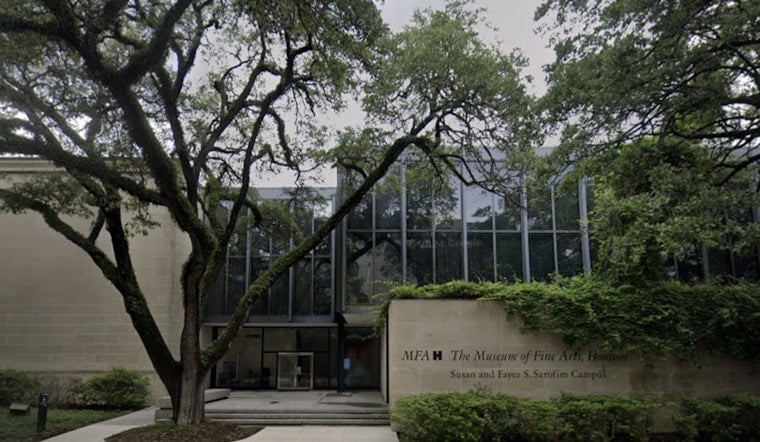
Nearly 900 photographers who shot for Black-owned magazines between 1930 and 1970 are getting their overdue moment at the Museum of Fine Arts, Houston, where a sprawling new exhibition opening February 28, 2027, will pull their work out of yellowing periodicals and onto gallery walls. Titled Bold and Brilliant: The Rise of Black American Magazines, 1930-1970, the show runs through May 31, 2027, and will display more than 100 images by 50 photographers, many appearing publicly for the first time.
The exhibition, as reported by CultureMap Houston, grew out of archival research that identified more than 300 general-interest magazines published for Black audiences and roughly 900 working photographers active during that 40-year span, according to Artdaily. That scope reframes what museums have historically collected: rather than a handful of celebrated names, the project surfaces an entire creative ecosystem that served as the primary national and local platform for Black self-representation long before social media existed.
Familiar titles like Ebony, Essence, and Jet anchor the show, alongside smaller regional publications such as Cincinnati's NIP, Harlem's Survey Graphic, and Eyes in Iowa City — a geographic spread that Artdaily notes captured localized community milestones during the Great Migration era. Ebony, Essence, and Jet also employed writers including Langston Hughes and Maya Angelou, underscoring how these magazines functioned as full cultural institutions rather than just photo outlets.
Gordon Parks and the Photographers Who Built the Genre
Gordon Parks, who photographed for Ebony, Essence, Jet, Circuit's Smart Woman, and Newspic before becoming a prominent writer and director, is represented by a 1943 photograph of a Black fireman. Parks famously said he chose his camera as a weapon against poverty, racism, and discrimination.
Lesser-known figures share equal billing. Nat Brown, a largely self-taught photographer who shot for Ebony, Hue, and Jet, contributed an image of a woman and children baking in a kitchen. Stephen Deutsch, a Hungarian immigrant who photographed for Duke, Ebony, and Tan Confessions, has a photograph of a classroom of Black women in nurses' uniforms in the show. LaMonte McLemore's fashion-model inkjet print rounds out a roster that spans photojournalism, portraiture, and fashion.
The exhibition also features Black Is Beautiful movement figures such as Kwame Brathwaite, whose circa-1971 inkjet print Untitled (Couple's Embrace) is part of the MFAH's permanent collection, according to Aesthetica Magazine. Brathwaite helped popularize the Black Is Beautiful slogan through fashion and photography in Harlem during the late 1960s. Together, the works trace photography from the Great Migration through civil rights activism and into the Black Is Beautiful era.
Restoring Photos to Their Original Pages
Rather than hanging prints in isolation, the show places photographic prints alongside the original vintage magazine layouts and spreads where they first appeared, Aesthetica reports. The curatorial choice matters because magazine photography was designed for mass print circulation and readership, not for standalone gallery display, and the pairing restores that original editorial context. The exhibition is organized into editorial sections including fashion and beauty, food and home, entertaining, sports, music, nightclubs, professions, education, and activities.
MFAH Director Gary Tinterow, who has led the museum since 2012, said the exhibition builds on archival recovery efforts to locate the work of hundreds of overlooked photographers. Tinterow has also stated that the scholarship behind the project demonstrates how visual culture actively shapes identity and community allegiances, not merely reflects history, per Artdaily.
A Multi-Institution Effort With a Digital Legacy
Bold and Brilliant is a collaborative effort between MFAH, the Portland Museum of Art, and the New Orleans Museum of Art, with academic partnerships extending to the University of Houston and Rice University, Artdaily reports. The show is curated by MFAH's Lisa Volpe, curator of photography, alongside Anjuli Lebowitz, the Judy Glickman Lauder Curator of Photography at the Portland Museum of Art, and Brian Piper, Freeman Family Curator of Photographs, Prints, and Drawings at the New Orleans Museum of Art.
MFAH has also partnered with the University of Houston to build a public online archival database expected to include more than 2,500 entries documenting newly rediscovered Black magazines and photographers — a resource intended to outlast the three-month exhibition window, according to the same Artdaily report. Separately, Rice University's Department of Art History has folded the project into its William A. Camfield Fellowship, assigning graduate researchers to study how Black picture magazines helped build American visual culture and foster a Black middle class.
The exhibition arrives with a 288-page companion catalogue, also titled Bold and Brilliant: The Rise of Black American Magazines, 1930-1970, due from Yale University Press in March 2027. Beyond photographer biographies and curator essays, the catalogue includes contributions from musician Jason Moran on jazz, designer Tina Knowles on beauty, and former Major League Baseball player Doug Glanville on sports — a cross-disciplinary approach that broadens the book's reach beyond traditional art history.
The show adds to a run of major curatorial ambition at MFAH, which brought Berggruen's Picasso collection to Houston in May 2026 with more than 95 European modern masterworks on loan from Berlin. As Texas's oldest art museum, MFAH has increasingly paired international blockbusters with projects recovering overlooked American history, and Bold and Brilliant continues that pattern when it opens next February.





