

























































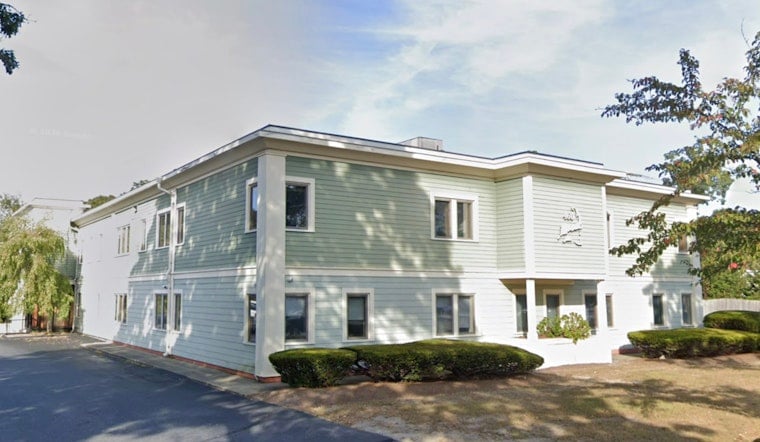
Catholic Charities of the Diocese of Fall River and Asclepius Corporation have taken their fight over a stalled Hyannis homeless shelter relocation to federal court, accusing the Barnstable Zoning Board of Appeals of religious discrimination after the board revoked a building permit for the project. The federal civil rights lawsuit, filed August 19 in the U.S. District Court for the District of Massachusetts, seeks to force the town to let the shelter move forward at 460 West Main Street, a site that once served as Housing Assistance Corporation's headquarters.
The case, filed under docket number 1:26-cv-13842, alleges violations of the First and Fourteenth Amendments and runs alongside a related complaint already pending in state Land Court, according to PacerMonitor. Catholic Charities and Housing Assistance Corp. are asking both courts to let the relocation proceed after months of municipal wrangling, according to the Boston Herald. Susan Mazzarella said Catholic Charities filed suit because the zoning board's action would prevent what the organization considers a constitutionally protected ministry, adding that the group serves poor, vulnerable, displaced, and marginalized people, per the Herald's reporting.
Board Overturns Permit After Marathon Hearing
The dispute traces back to a four-hour hearing in the Barnstable High School performing arts center, where the Barnstable Zoning Board of Appeals voted 4-1 on July 22 to overturn a decision by Building Commissioner Brian Florence to issue Catholic Charities a building permit. Member Herb Bodenseik cast the lone vote to uphold the permit, according to the Cape Cod Chronicle. Florence had issued the permit in April, determining that the project was protected by the Dover Amendment, per the Herald.
That vote reversed a prior finding that the shelter qualified as an allowable non-conforming use, and it came after the zoning board allowed hours of public comment during the July hearing. The process had already hit turbulence in June, when the board's original June 10 hearing had to be postponed after an over-capacity crowd forced organizers to reschedule to the larger high school venue, the Chronicle reported. Barnstable's building commissioner separately issued a cease and desist order halting interior renovations already underway at the new shelter site, per the Herald.
A Dover Amendment Fight Over What Counts as Religious
At the center of the legal battle is Massachusetts' Dover Amendment, codified under M.G.L. c. 40A, § 3, which restricts municipalities from prohibiting or restricting land use for religious or educational purposes while still allowing reasonable local rules on things like building height, setbacks, and parking, according to guidance cited by the Massachusetts Municipal Association. The statute, originally enacted in 1950, exempts agricultural, religious, and educational uses from certain zoning restrictions, per the Herald.
In court filings, Catholic Charities alleged that the zoning board misapplied that law by requiring an “overt religious act” at the site rather than accepting religious motivation as sufficient, according to reporting cited by JNS. Project proponents stated that the state complaint says the zoning board exceeded its authority by demanding overt religious practice as a condition for protection, the Herald reported. Catholic Charities argued that Barnstable is preventing it from continuing a constitutionally protected ministry, and the nonprofit accused the zoning board of discrimination on the basis of religion, per the Herald's account. Massachusetts Attorney General Andrea Campbell's office had separately determined that the relocation qualified for Dover Amendment protection and favored support for homeless individuals as a value of utmost importance to the state, according to the Herald.
Neighbors Cite School Proximity, Nonprofits Cite Building Limits
Opposition to the move centered heavily on the proposed site's closeness to Hyannis West Elementary School, which enrolls more than 300 students and sits roughly 300 yards from the proposed shelter location, per the Herald. The Barnstable School Committee wrote a letter last spring urging project proponents to reconsider the plan, and Mike Judge said in May that the proposal could create major financial problems and expressed concern that the shelter's proximity could require hiring additional staff to supervise recess, according to the Herald. Housing Assistance stated it was unaware of any incidents involving students or school operations tied to the current shelter.
Proponents counter that the current facility at 77 Winter Street, which Housing Assistance Corp. has owned since 1979 and operated as St. Joseph's House from 1984 through 2016 before leasing it to Catholic Charities that year, is simply outdated. The building is inaccessible to people with limited mobility because its bedrooms sit upstairs with no elevator, per the Herald. Alisa Magnotta said the new shelter would help guests find permanent housing and confirmed Housing Assistance would continue pursuing the project under the Dover Amendment, according to the Herald's reporting.
What Would Actually Change at the New Site
The proposed 9,000-square-foot facility would not add new beds to address Cape Cod's growing homeless population — the relocated shelter would still offer 50 overnight beds, the same as the current site, per the Herald. Instead, the plan emphasizes services: the relocation would include education and on-site behavioral health and medical care, and the one-floor layout would provide dedicated room for day programs, according to the Herald.
Housing Assistance Corporation has detailed further operational changes planned for 460 West Main Street, including moving guest wakeup time from 5:45 a.m. to 7:30 a.m. and creating separate spaces for day programs and meals, ending the current practice of pushing guests onto surrounding streets during the day, according to the organization's own project materials. The proposed site sits about 1.35 miles west of the existing Winter Street shelter in downtown Hyannis, according to reporting shared on social media covering the case. The shelter would remain within Hyannis, a village of Barnstable, per the Herald.
Regional Money, Local Demographics
Cape Cod towns were asked to help fund renovations at the new facility, and voters in April considered allocating upwards of $100,000 in Community Preservation Act funds for the project, according to the Herald. Ultimately, Chatham, Brewster, and Bourne each approved $100,000 in Community Preservation Act funds, while Truro approved $20,000, according to the Chronicle. Proponents have framed homelessness as a Cape-wide issue requiring investment from multiple towns rather than Barnstable alone.
Data from Housing Assistance Corporation's 2025 client figures show that 84% of guests staying at St. Joseph's House were local Cape Cod residents and 48% were employed, according to the organization. Those numbers have featured in the broader public debate over who actually uses the shelter and whether local ties and employment among guests should factor into the zoning dispute.



