

























































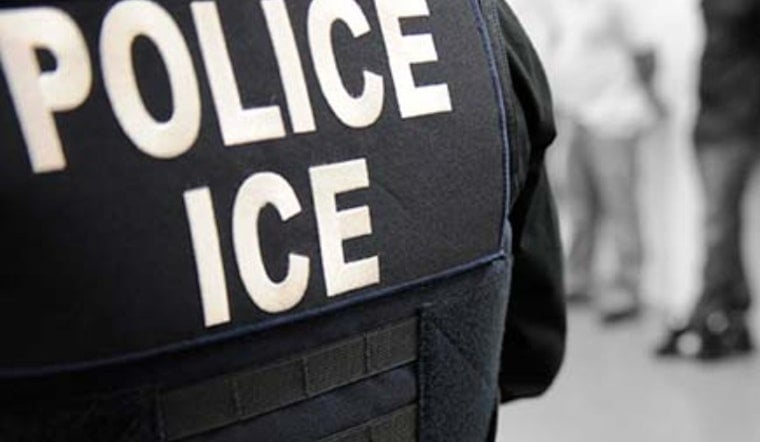
Haitian food delivery drivers working for DoorDash and Uber Eats are being pulled over and detained by ICE agents while actively making deliveries across San Diego, according to local advocates tracking the arrests. Some of the encounters have left cars abandoned on the street with food still inside, undelivered.
Immigration attorney Arturo Gonzalez has been documenting ICE arrests throughout San Diego and says Haitians are increasingly becoming targets of immigration enforcement, according to ABC 10News San Diego. Gonzalez said many DoorDash and Uber Eats drivers are being detained specifically because they are out actively delivering food, making them easy, visible targets for agents working public streets. He told the station that a large share of the Haitians being detained in the region are food delivery drivers.
Benjamin Prado, who has also tracked the arrests, reported an increase in ICE detentions of Haitians in San Diego and said the end of Temporary Protected Status has enabled agents to racially profile Haitian communities, per the station's report. Guerline Jozef said the Haitian community is traumatized and fearful. The Haitian Bridge Alliance, a local nonprofit advocating for Haitian immigrants nationwide, canceled a monthly event originally scheduled for this past Saturday because of community concerns.
TPS Ended in Late July, Stripping Legal Status Overnight
The Trump administration ended Temporary Protected Status for Haitians, a move the seed report ties to a July 1 date, but the federal timeline is more specific: USCIS set July 27, 2026, as the operative termination date following the U.S. Supreme Court's June ruling in Mullin v. Doe, which restricted judicial review of TPS terminations, according to USCIS. Category A12 and C19 employment authorization documents expired immediately once that date hit, cutting off work permits for hundreds of thousands of people overnight.
Days later, on August 4, U.S. District Judge Ana C. Reyes formally lifted the injunction that had been blocking the federal government from terminating Haitian TPS, clearing the legal path for nationwide ICE enforcement, per the National Immigration Forum. Reyes had initially issued a stay back in February before higher court rulings forced its dissolution. Temporary Protected Status is an immigration program that grants temporary legal status and work authorization to people whose home countries are affected by ongoing armed conflict or natural disasters, and its termination left thousands of Haitians in the U.S. without legal status.
Before its cancellation, TPS covered roughly 300,000 to 350,000 Haitian nationals nationwide, with an estimated 50,000 U.S.-citizen children having at least one parent holding Haitian TPS, Hoodline previously reported. The status was originally granted to Haitians after the magnitude 7.0 earthquake in 2010.
ICE Defends Its Tactics as Enforcement Ramps Up
ICE has said it is committed to professionalism, accountability, and respect for individual rights and dignity, and that it does not target individuals based on race, ethnicity, religion, nationality, political viewpoint, or protected-group membership. The agency said its operations are conducted according to federal law, agency policy, and established enforcement priorities, and that they are based on law enforcement information, case-specific facts, and applicable legal authorities.
The San Diego arrests are not happening in isolation. Federal authorities executed the first deportation flight to Haiti since TPS ended last Friday, removing 161 Haitian nationals, including children, from Louisiana to Cap-Haïtien, with plans to scale removals to roughly 250 people per week. Beyond street arrests, immigration authorities in multiple states have also begun summoning former TPS holders to federal offices, fitting them with electronic ankle monitors, and imposing strict travel radiuses, according to the Haitian Bridge Alliance.
Why ICE Can Operate Freely on San Diego Streets
California's SB 54, known as the California Values Act, bars state and local law enforcement from using public resources or personnel to assist federal ICE agents in civil immigration operations, according to the ACLU of Southern California. That law, in effect since 2018, is why federal agents are operating independently on San Diego's public streets and transit hubs without local police involvement or coordination on release dates.
This isn't the first time gig drivers in the region have been swept up. Before the current street enforcement, military police at Camp Pendleton had already detained dozens of delivery and rideshare drivers at the base's entrance gates and turned them over to ICE, often while drivers were simply dropping off food orders or passengers, according to Capital & Main. San Diego business owners in immigrant hubs like El Cajon, home to Haitian businesses such as Miche Caribbean Market, reported immediate drops in foot traffic as Haitian residents began avoiding public spaces and work shifts out of fear.
In response, volunteer networks supported by the American Friends Service Committee have organized early-morning community patrols across more than a dozen San Diego neighborhoods, live-streaming ICE vehicle sightings and alerting residents in real time, according to the American Friends Service Committee. The patrols rely on social media networks to track unmarked vehicles moving through the area.
Gig Platforms Offer Little Protection
DoorDash and Uber Eats both require proof of work authorization before activating a driver account, but neither platform conducts real-time immigration audits, meaning drivers whose TPS lapsed on July 27 could keep working until the moment they were stopped. Labor groups have criticized both companies for offering no legal or immigration support to gig workers caught up in ICE sweeps, according to the Business and Human Rights Resource Centre, even though the platforms have created legal defense funds during past immigration enforcement pushes.
The San Diego detentions echo cases Hoodline has documented elsewhere as TPS termination ripples outward. An Oceanside man deported by ICE was later shot dead in Tijuana, his family says, and a Pierce County nurse's family was split apart after a DoorDash driver was detained during a traffic stop in Lacey, Washington. Advocates in San Diego say the fear driving people off the roads and out of public life is not abstract, and that for now, the encounters keep happening in the middle of ordinary shifts, one delivery at a time.





