

























































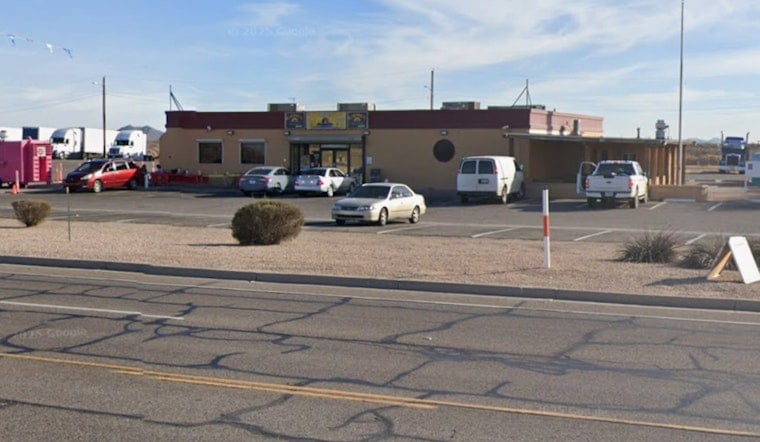
Federal immigration agents arrested three men during a Saturday morning traffic stop outside the Akimel Smoke Shop near Interstate 10 and Riggs Road, prompting Gila River Indian Community leaders to issue a public safety advisory and raise pointed concerns about tribal sovereignty. The three men are not residents or members of the Gila River Indian Community, according to tribal officials, but the stop still unfolded on reservation land, just south of Chandler and Sun Lakes.
U.S. Immigration and Customs Enforcement conducted the traffic stop and arrested the three non-tribal men, according to FOX 10 Phoenix. The Gila River Police Department was called to the scene but was not involved in initiating the stop or the arrests, and tribal officers played no role in the federal operation itself. That distinction matters to tribal leaders, who say local police response and federal enforcement authority are two very different things happening on the same patch of reservation road.
Tribal Leaders Frame the Stop as Encroachment
In response, tribal leaders issued a public safety advisory and said they take any encroachment upon the community's sovereignty with the utmost seriousness and urgency. They noted that even when arrests do not directly involve community members, incidents like this one can create fear and uncertainty among residents who live and work along the busy Riggs Road corridor. Tribal officials encouraged residents to safely record and document any encounters with federal agents, and to ask witnesses to do the same, framing documentation as a tool for protecting community members' rights.
The Akimel Smoke Shop sits at 4231 West Riggs Road in Sun Lakes, operating as a tribally permitted business under Akimel Enterprise LLC along a commercial strip that serves both reservation residents and East Valley commuters, per the Gila River Indian Community Department of Environmental Quality. The Gila River Indian Community itself spans nearly 584 square miles across Maricopa and Pinal counties and is governed by Governor Stephen Roe Lewis, who leads the Akimel O'odham (Pima) and Pee-Posh (Maricopa) tribes, according to the Gila River Police Department. Lewis addressed federal immigration enforcement directly in a January video message to community members, laying out public safety protocols months before Saturday's arrests.
A Broader Legal Fight Over Tribal Land
The Sun Lakes arrests came just one day after a federal judge in Washington, D.C. denied the Tohono O'odham Nation's request for an emergency injunction to halt 62 miles of border wall construction through its reservation. U.S. District Judge Richard Leon ruled on August 14 that federal immigration and border security interests outweighed potential impacts on sacred tribal sites, according to Courthouse News Service. Tohono O'odham Nation tribal leaders warned the ruling would lead to permanent desecration of ancient burial grounds and sacred sites.
Leon based his ruling on a 1907 executive designation by President Theodore Roosevelt that created a 60-foot public reservation along the U.S.-Mexico border, finding that it allows federal construction without altering tribal reservation boundaries. The Tohono O'odham Nation had argued that a century-old executive order should not override modern statutory protections for tribal land. Though that case involves a different tribe and a different federal agency, it underscores the same tension now playing out at Gila River: federal authorities asserting broad power to act on sovereign Native land while tribal governments push back on jurisdictional grounds.
Federal Policy Says ICE Shouldn't Target Tribal Members
DHS Secretary Kristi Noem issued a formal letter to tribal leaders in February stating that ICE does not conduct targeted operations on tribal lands and instructing personnel to accept tribally issued identification cards as valid proof of U.S. citizenship, according to Native News Online. That letter followed bipartisan congressional inquiries into reports of Native Americans being questioned during federal immigration sweeps. Reports compiled by tribal policy organizations and federal lawmakers earlier this year documented multiple instances nationwide where U.S.-born Native American citizens were questioned or detained during ICE surge operations, largely because agents were unfamiliar with tribal identification documents, per the Brookings Institution.
It remains unclear whether ICE notified Gila River tribal authorities before conducting Saturday's stop, and the specific immigration charges facing the three men have not been disclosed. The arrests happened along a stretch of I-10 already reshaped by a multi-billion-dollar Arizona Department of Transportation project launched in 2024 to widen the highway and replace bridges over the Gila River between Phoenix and Casa Grande, a project Hoodline previously reported the tribal government helped oversee alongside state and federal agencies. For now, tribal leaders say their focus is on making sure residents know their rights and know how to safely document any future encounters with federal agents on reservation land.




