

























































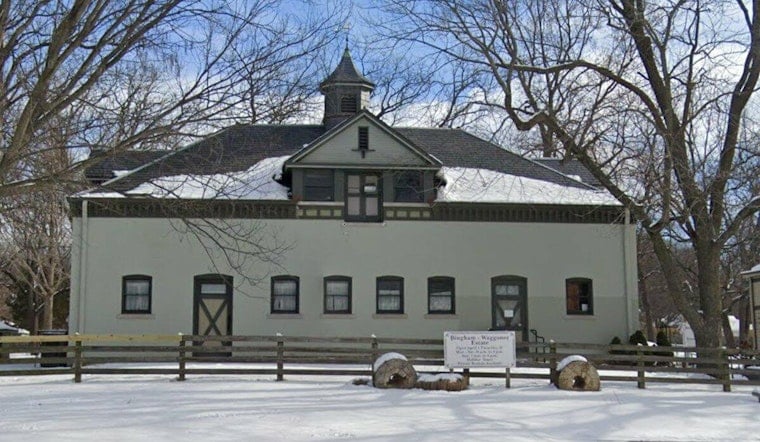
Independence City Council voted unanimously last week to place a $19.9 million general obligation bond on the November 3 ballot, giving voters a second chance to fund repairs at five city-owned historic sites after a similar measure narrowly failed in 2025. The proposal would cover maintenance and upgrades at the Bingham-Waggoner Estate, the Vaile Mansion, the Truman Memorial Building, Old Fire Station One, and the 1827 Log Courthouse, while giving residents free admission to all five properties for the 20-year life of the bond.
The council's final 7–0 adoption came on August 17, capping a legislative process that began July 20 with Resolution 26-758 and moved through a first reading on August 3, according to the City of Independence. As reported by the Kansas City Star, Mayor Kevin King said the historical sites are extremely important to the city, and they need to stay with the city. Councilmember John Perkins said the city worked with historic preservation organizations for several months to craft the proposal.
Under the city's official allocation plan, $7.5 million would go to the Bingham-Waggoner Estate and $4.5 million to the Vaile Mansion, with $1.5 million apiece for the Truman Memorial Building and Old Fire Station One, $600,000 for the 1827 Log Courthouse, $400,000 for bond issuance costs, and $3.9 million held in reserve as a 25% contingency, according to Historic Kansas City. The plan includes $15.6 million in estimated project costs overall, per the Star's report, and sets aside funding to hire people who would craft a long-term business plan meant to make the sites financially solvent once bond funding runs out.
Why the 2025 Bond Collapsed
Independence voters rejected a $12 million historic-sites bond in 2025 by about 1.7% of votes cast, the Star reports. That measure had bundled preservation funding with $5 million for repairing the Independence athletic complex, and like all municipal general obligation bonds submitted on general election days, it needed a four-sevenths supermajority to pass. Missouri's constitution sets that threshold at 57.14% under Article VI, Section 26(b), according to the Revised Statutes of Missouri — a bar the 2025 measure missed despite drawing majority support.
After that defeat, the city council introduced a historic sites master plan that proposed finding new private owners for the Vaile Mansion and Bingham-Waggoner Estate, along with placing several other properties under conservatorship. Independence had retained PGAV Planners, a St. Louis-based consulting firm, to help develop that plan, the Star notes. City officials had discussed selling historic properties to reduce maintenance costs as the city grapples with an estimated $903 million in deferred maintenance costs citywide.
Preservationists Push Back
Volunteer groups launched a Save Our Sites campaign opposing the proposed sale of historic properties, a coalition formed jointly by the Bingham-Waggoner Historical Society, the Vaile Victorian Society, and Historic Kansas City. Bingham-Waggoner Estate board president Steve Euritt wrote that the historic sites could not be allowed to be lost to private development or permanent closure, per the Star. On July 5, the city council responded by passing a resolution stating its intent to retain ownership of the Vaile Mansion, the Bingham-Waggoner Estate, and other historic buildings.
The pushback tracks with broader sentiment in the city: 92% of respondents to Independence's 2023 Citizen Satisfaction Survey agreed or strongly agreed that preserving city-owned historic sites is important, according to the City of Independence. Andy Struckhoff previously said volunteer engagement was not consistent enough to keep the historic properties running, and that the city would likely be unable to sell the five properties until the 20-year payment period ended anyway, per prior statements cited by the Star.
What's at Stake for the Buildings
The Vaile Mansion needs about $4.5 million in repairs, and Pam Fulmer has said the structure's south side was desperate, warning it was likely to deteriorate beyond repair without municipal funding and attention. The mansion, built in the 19th century, features authentic Victorian fixtures and furniture. Bingham-Waggoner Estate repairs are expected to cost about $7.5 million if the bond passes; the estate was originally constructed in 1855 and served as the home of frontier artist and politician George Caleb Bingham before the Waggoner family purchased it in 1879 and maintained it until 1976, according to the Bingham-Waggoner Mansion & Estate.
Independence currently spends between $125,000 and $150,000 each year operating its historic sites, per the Star's reporting, and city officials say that funding source alone is not sustainable long-term. The White House designated Independence an official Preserve America Community in March 2006, recognizing the city's national historical significance and its heritage education and tourism efforts, per the Independence Historic Preservation Division.
The Tax Bill and the Bigger Picture
If approved, general obligation bonds allow local governments to borrow against additional tax funding for projects, and they increase property taxes for a specified period. Independence residents would pay a levy of about 14.5 cents per $100 of assessed property value in the bond's first year, dropping to about 7.6 cents per $100 for the remaining 19 years, according to the Star's reporting.
The Missouri State Auditor's Office says it reviews and registers general obligation bonds issued by political subdivisions in Missouri.
This isn't the first capital measure Independence voters have weighed recently. In April 2025, voters approved a separate $55 million “IndeGO” general obligation bond dedicated strictly to infrastructure, funding 53 lane miles of annual road resurfacing, bridge repairs, and school sidewalks. And in April 2026, Independence voters approved a separate school bond.
As a local precedent, Kansas City voters overwhelmingly approved $125 million dollars in general obligation bonds for maintenance and upgrades, according to the City of Kansas City.
The vote arrives amid a tense stretch for city leadership. Councilmember John Perkins faces a September 1 recall vote tied to his support for a proposed Nebius AI data center in Independence, a fight that has also drawn a Jackson County lawsuit challenging the election, as the Cool Down reports. That data center dispute has become one of the defining flashpoints of local politics this year, adding another layer of scrutiny to how the council handles municipal spending heading into November.





