

























































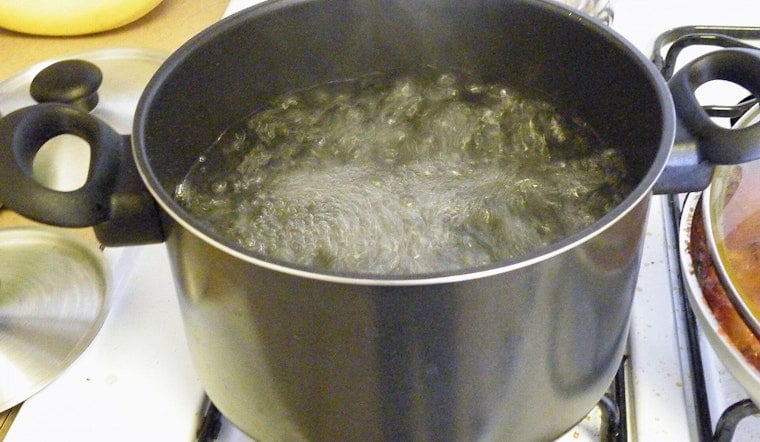
Residents served by the Hydro Public Works Authority in Caddo County are under a mandatory boil order after state regulators detected E. coli in the town's water supply. The Oklahoma Department of Environmental Quality issued the order for Hydro PWA users on Sunday, and the utility says it must inform customers of the advisory and will let them know once the water is confirmed safe to drink.
The contamination was confirmed per a DEQ statement, according to News 9, which first reported the boil order. Under the Environmental Protection Agency's Revised Total Coliform Rule, any detection of E. coli in a public water system triggers a maximum contaminant level violation, which requires mandatory public notifications and a state-supervised “find and fix” investigation into how fecal bacteria entered the system, according to the U.S. Environmental Protection Agency.
Until further notice, Hydro PWA customers must use water brought to a full, rolling boil for at least one minute, bottled water, or water from another acceptable source for drinking, food preparation, dishwashing, and brushing teeth, per the utility's notice reported by News 9. The Centers for Disease Control and Prevention recommends the same one-minute rolling boil to neutralize bacterial pathogens before tap water is used for any of those purposes, per CDC guidance.
Health Risks Tied To E. Coli Exposure
E. coli in drinking water signals potential fecal contamination that can cause severe gastrointestinal illness, including stomach cramps and bloody diarrhea, the CDC warns. In more serious cases, Shiga toxin-producing strains can trigger hemolytic uremic syndrome, a potentially life-threatening complication that can cause acute kidney failure in young children and elderly people, according to the same CDC guidance.
State rules require the boil order to stay in effect until follow-up water samples come back clear for consecutive days and regulators confirm the distribution system is delivering safe water again, according to the Oklahoma Department of Environmental Quality. The agency notes that bacterial contamination in public water systems typically stems from surface runoff after heavy rain, breaks in distribution lines, or failures in the water treatment disinfection process, though it's not yet known which factor, if any, caused the contamination in Hydro.
Part Of A Wider Pattern In Oklahoma
Hydro's advisory is the latest in a string of E. coli-related boil orders across Oklahoma this year. In May, the state agency issued a similar mandatory boil order for the Clarita Olney Public Water Supply in Coal County after routine monitoring turned up E. coli in that system, per OK Energy Today. And in July, thousands of residents served by the Moore Public Water Supply in Cleveland County were placed under a boil order after E. coli was detected there — an advisory Hoodline reported on in July, which the state lifted after two days of clean follow-up testing.
Hydro sits along Interstate 40 mostly in northwestern Caddo County, with a small slice reaching into Blaine County, and had 927 residents as of the 2020 U.S. Census. The town was founded in 1901 along the Choctaw, Oklahoma and Gulf Railroad, and was originally named Caddo before being renamed Hydro that same year specifically because of its abundant underground well water reserves, according to Wikipedia.
A Community Already Stretched Thin
That history adds a layer of irony to the current advisory in a town whose name was meant to celebrate its water. Census Bureau data shows Hydro has a median household income of $40,341, a poverty rate of about 13.6%, and a median resident age of 38 — figures that underscore how a boil order, and the cost of bottled water it can require, may weigh more heavily on some households than others.
It remains unclear how long Hydro's boil order will last or what specifically caused the E. coli detection. Hydro PWA has said it will notify water users directly once testing confirms the water is safe to drink again.


