

























































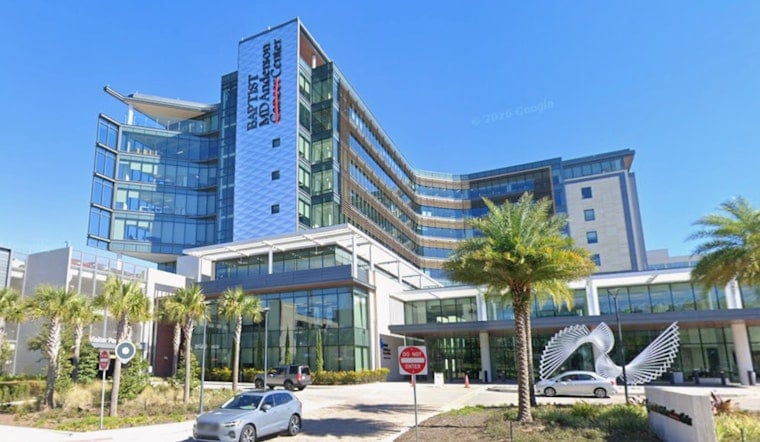
Baptist MD Anderson Cancer Center has opened a dedicated 24-room inpatient unit for cellular therapy and stem cell transplant patients inside Weaver Tower at Baptist Medical Center Jacksonville. The floor was established through an endowment from Bob and Patricia Paquette and gives blood cancer patients access to treatments that were once limited to select academic medical centers, along with river views, a family lounge, and an advanced air filtration system built for the strict isolation these therapies demand.
According to Action News Jax, the new floor supports patients receiving chimeric antigen receptor (CAR) T-cell therapy, a treatment that collects a patient's own T cells from their blood, modifies them in a laboratory to better recognize and eliminate cancer cells, and then returns those reprogrammed cells to fight leukemia, lymphoma and multiple myeloma. The therapy temporarily suppresses the immune system, and patients typically require specialized monitoring during stays that can last from several days to several weeks. Dr. Bill Putnam, medical director of Baptist MD Anderson, said launching the program expanded access to treatments once available only at select academic medical centers.
A Gift Rooted in Years of Giving
The unit traces its funding to the Robert L. and Patricia A. Paquette Cellular Therapy Program, endowed with a $1 million gift from the Hilton Head, South Carolina couple announced in January 2025, according to a Baptist Health news release. It wasn't the couple's first gift to the cancer center: the Paquettes had previously established the Hematological Cancer Medical Fund to support bone marrow transplant teams and the Hematologic Malignancy Fund for research, training and patient education, both focused on malignant hematology.
Baptist Health structured the rollout of its cellular therapy program in two phases, per the same release, launching CAR T-cell therapy in early 2025 before scheduling stem cell transplantation as a second phase. Baptist MD Anderson has said it plans to introduce stem cell transplantation services in the summer of 2027. That treatment involves replacing damaged or diseased stem cells in a patient's peripheral blood or bone marrow with healthy cells, which may come from the patient or from a donor, restoring blood cell production and rebuilding the immune system.
Inside the New Floor
The unit's design borrows heavily from Baptist MD Anderson's flagship outpatient center on Palm Avenue in San Marco, a 330,000-square-foot facility that opened in 2018 at a construction cost of $184 million, according to background compiled from Wikipedia. Patient rooms on the new floor feature river views, and the floor includes handwashing and temperature check stations at the entrance and throughout the space, along with special respiratory rooms equipped with antechambers to protect immunocompromised patients.
Beyond the clinical infrastructure, the floor includes amenities meant to ease long inpatient stays: a family lounge with a kitchen and dining area, a meditation room, and four 65-inch screens rotating through 80 art images. A rehabilitation space is equipped with stationary bikes, a treadmill and weights. Leeann Mengel, vice president and administrator at Baptist MD Anderson, said patients receiving lifesaving treatments often require specialized inpatient monitoring and care.
Why the Isolation Matters
The heavy emphasis on air filtration and isolation rooms reflects federal safety requirements rather than architectural preference. The U.S. Food and Drug Administration mandates close clinical monitoring for CAR T-cell therapies because of boxed warnings for severe side effects, including Cytokine Release Syndrome and Immune Effector Cell-Associated Neurotoxicity Syndrome, both systemic inflammatory responses that can become life-threatening without prompt intervention.
Dr. Maxim Norkin, hematologist oncologist and medical director of the Robert L. and Patricia A. Paquette Cellular Therapy Program, said patients with difficult-to-treat or once-incurable cancers are living longer with improved quality of life. Baptist Health's own clinical reporting has shown that CAR T-cell therapy for aggressive lymphomas can raise long-term remission and potential cure rates to roughly 40%, compared with a typical life expectancy of only several months under conventional care.
Filling a Regional Gap
Before this expansion, Mayo Clinic in Jacksonville served as the primary regional provider of CAR T-cell therapy and bone marrow transplants in Northeast Florida, drawing patients from across the country for its cellular therapy programs. Baptist MD Anderson's new floor gives North Florida patients a second local option for treatments that previously often meant travel to distant academic centers.
The need is significant: Baptist MD Anderson projected caring for approximately 10,000 new cancer patients across its regional campuses in 2025, and the American Cancer Society's 2026 projections estimate Florida will record about 183,100 new cancer cases and 50,010 cancer deaths, giving the state the second-highest cancer burden in the nation behind California. Dr. Tom Dragovich, medical oncologist and head of the division of cancer medicine at Baptist MD Anderson, said dedicated units provide the specialized environment needed to deliver advanced therapies and support future discoveries. Baptist MD Anderson Cancer Center first opened in October 2015 as a joint partnership between Baptist Health and The University of Texas MD Anderson Cancer Center, making Baptist Health the third partner in the national MD Anderson Cancer Network, and hospital leaders say the new dedicated floor increases the center's capacity to serve more patients going forward.





