

























































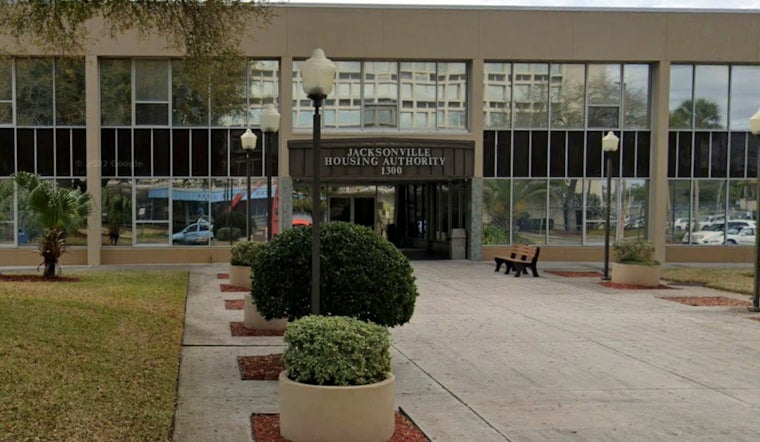
Jacksonville Housing Authority is preparing residents for a possible 30-hour-a-week work requirement to keep their public housing, even though the federal rule that would allow such a policy has not been finalized and no one, including federal officials, can say if or when it will be. The agency has already held public hearings and sent notices to residents about the potential change, positioning Jacksonville among a small number of cities getting ahead of a federal proposal that remains stuck in limbo.
The push traces back to a rule the U.S. Department of Housing and Urban Development proposed on March 2, 2026, that would let local housing authorities require some residents receiving federal assistance to work or face time limits on their aid, according to the Federal Register. As News4JAX reports, HUD has not said when it will issue a final rule or whether it will finalize the proposal at all, leaving Jacksonville's preparations in a kind of regulatory holding pattern. JHA CEO Cheron Corbett has said the agency must follow HUD's rules and regulations because it is federally funded, and that local officials would decide whether to adopt a work requirement or time limit only if the rule is approved.
If the policy moves forward, public housing authorities nationwide may require work-eligible adults generally between ages 18 and 61 to work up to 40 hours a week as a condition of receiving assistance, per the same report. Jacksonville, however, is considering a 30-hour weekly threshold rather than the maximum allowed, with adults 62 and older and residents with qualifying disabilities exempt from the requirement. JHA would also determine how to structure any adopted policy, including required work hours and qualifying activities, giving the agency significant discretion even after federal approval.
Who Would Be Affected, and Who's Exempt
The stakes are notable locally: residents ages 18 to 61 make up a majority of JHA households who are not currently working, and roughly 45% of residents in that age group are employed, according to the station's report. Corbett has acknowledged that full-time work can be difficult for mothers with children and others facing barriers, and JHA says it wants to address transportation and child-care obstacles that keep residents from meeting work hours. Housing authorities that adopt work requirements or time limits must also provide supportive services such as job counseling, transportation and child care.
Corbett has been more skeptical of the time-limit option than the hours-based work requirement. She described term limits as too harsh, warning that a two-year maximum on assistance could create extensive homelessness, and has said Jacksonville would favor work requirements over time limits if forced to choose. Under the federal framework, housing authorities may establish time limits on assistance of no less than two years, per the same account, but nothing requires a local agency to pick that option.
A Gap Between Local Timelines and the Job Market
JHA's draft policy separately outlines a 13-week grace period for residents who lose employment to find new work before facing termination of assistance, according to WUSF. That timeline sits uneasily against United Way workforce data cited by the station showing the average U.S. job search in 2026 lasts roughly seven months. WUSF also reports that disabled residents under 62 who work fewer than 20 hours a week would be required to perform eight hours of weekly community service unless they obtain a doctor's medical waiver.
Local job listings compound the mismatch. CareerSource Northeast Florida reported in March 2026 that the region's most frequently advertised jobs were concentrated in low-wage sectors, including retail salespersons, fast food and counter workers, and food preparation supervisors. Corbett has said Jacksonville needs more wraparound services to promote upward mobility and self-sufficiency, framing the work requirement as a tool meant to help residents move toward financial independence rather than simply remove them from housing assistance.
Jacksonville Joins a Very Short List
Fewer than 1% of public housing authorities nationwide currently enforce work requirements, since such policies were historically limited to agencies in HUD's Moving to Work demonstration program, according to Jacksonville Today. That makes Jacksonville one of the first non-demonstration cities to prepare local implementing rules ahead of a final federal decision. The Bipartisan Policy Center has reported that previous housing work requirements produced mixed results, and some housing authorities elsewhere have discontinued or changed their work-requirement policies because of administrative burdens and employment barriers.
The scale of the potential federal shift is significant. The Bipartisan Policy Center's August 2026 analysis found HUD's proposed rule could affect a meaningful share of the more than 4.3 million low-income households nationwide receiving assistance through public housing, Housing Choice Vouchers, and Project-Based Rental Assistance. HUD received nearly 2,000 public comments before its comment window closed on May 1, 2026, and the agency has given no indication of when a final decision might arrive.
Local Pressure on an Already Strained System
The debate unfolds against a backdrop of overwhelming local demand for housing assistance. Jacksonville Housing manages just 2,881 public housing units and 7,868 Housing Choice Vouchers, while roughly 47,328 applicants sit on its public housing waiting list and 22,706 more on its voucher waiting list as of April 2025, with both lists closed since 2023 and 2024. Proponents of the work requirement note that residents who increase their income and leave subsidized housing could free up vouchers or units for families still waiting.
JHA's proposed requirements could take effect as early as the end of 2026 or potentially the first quarter of 2027, though that timeline hinges entirely on whether and when HUD finalizes its rule. Local housing authorities would retain the choice of whether and how to implement any requirements, meaning actual coverage will ultimately depend on final federal rules and whatever exemptions individual agencies build in.
Leadership Steering the Policy
Corbett took over as JHA's CEO in March 2025, becoming the agency's first permanent female chief executive after a stretch of turnover that included former CEO Dwayne Alexander's January 2024 resignation and interim CEO Vanessa Dunn's departure that August, a transition Hoodline tracked as it unfolded. She previously held executive leadership roles at public housing authorities in Illinois. Corbett is now overseeing JHA through both this workforce policy debate and separate capital efforts, including a $50 million redevelopment planned for the Franklin Arms complex downtown, which the Jacksonville City Council backed with a $1 million loan for environmental remediation and site clearing in June.
For now, JHA's preparation remains exactly that — preparation. No work requirement can be legally enforced in Jacksonville until HUD completes its federal rulemaking process, and the agency has offered no guarantee that the rule will be finalized at all.


