

























































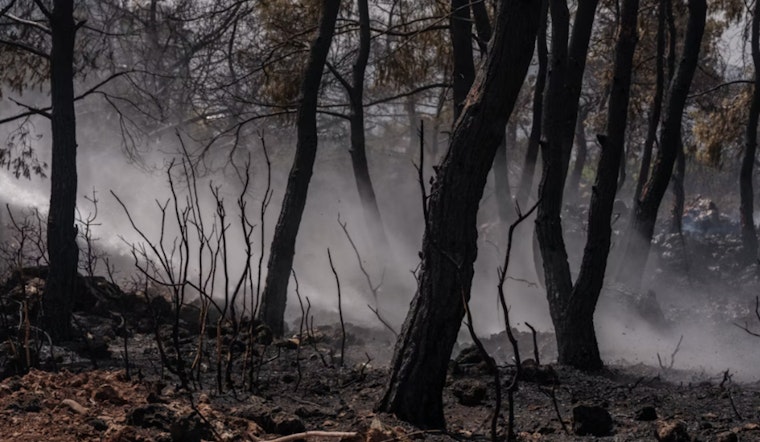
Jasper County residents are now barred from burning outdoors after Judge Mark Allen declared a countywide burn ban Tuesday, citing extreme drought, growing wildfires, and mounting strain on local fire departments. The order took effect immediately and will remain in place for seven days, with violators facing fines.
Allen said the ban was issued due to extreme drought, growing wildfires, and data from the Texas Forest Service and National Weather Service, according to Fox 4 Beaumont. Under Texas Local Government Code § 352.081, county judges have the statutory authority to prohibit outdoor burning in unincorporated areas during drought or public safety hazards, and a first-time order like this can last up to seven days before commissioners court approval is needed to extend it, according to 12NewsNow. Violations are classified as a Class C misdemeanor punishable by a fine of up to $500.
Fire department fatigue has become a real concern in Jasper County, where crews have been stretched thin even though the area has actually seen a minimum number of wildfires over the past few weeks, per the same report. That fatigue, officials warn, is dangerous both for responders and for the people who might need their help. Low winds and humidity have helped keep wildfires to a minimum locally, and Jasper County citizens have helped by using caution while burning, but wildfires statewide have increased majorly and are affecting growing acreage.
A Regional Drought That's Spreading Fast
Jasper County's order landed just a day after neighboring Chambers, Tyler, and Newton counties enacted their own burn bans, as Beaumont recorded a rainfall deficit of 4.63 inches since the start of August, according to 12NewsNow's coverage of the regional burn ban surge. Prolonged heat and dry winds throughout late August have rapidly depleted ground moisture across East Texas timberland, turning what had been a quiet fire season locally into a fast-moving regional emergency.
Statewide, the numbers back that up. As of Tuesday, 190 of Texas's 254 counties were under active outdoor burn bans, up from 157 just six days earlier, according to data from the Texas A&M Forest Service cited by KSST Radio. That means nearly three-quarters of the state's counties were facing critical fire danger in the span of less than a week.
Measuring the Danger Underground
The Texas A&M Forest Service tracks wildfire risk using the Keetch-Byram Drought Index, an 800-point scale that measures soil moisture depletion. Scores between 600 and 800 signal severe drought conditions associated with intense, deep-burning fires that are difficult to contain. In neighboring Newton County, officials reported maximum KBDI readings of 701 in mid-August before that county issued its own burn ban, a level indicating extreme dryness in deep soil and leaf litter, per 12NewsNow's earlier reporting.
Jasper County isn't new to this cycle. The county previously imposed a countywide burn ban on March 3 that stayed in effect for more than five weeks before Allen lifted it on April 13 following spring rainfall. That relief proved temporary once dry summer weather set back in and depleted soil moisture again.
What's Still Allowed, and What Never Is
The ban does not shut down backyard cooking entirely. Under standard Texas county burn ban orders, outdoor burning of yard waste, brush piles, and open campfires is prohibited, but contained outdoor cooking using propane or natural gas grills is typically permitted if monitored continuously, according to KOGT. Open charcoal fires and other uncontained flame sources remain barred.
Separately, Texas Commission on Environmental Quality regulations permanently prohibit burning non-vegetative synthetic materials such as tires, plastics, electrical insulation, furniture, shingles, and construction debris, regardless of whether a county burn ban is active. The Texas A&M Forest Service identifies outdoor debris burning as the leading cause of human-ignited wildfires in the state, with many escaped fires starting because people were unaware of active bans or sudden wind shifts.
Allen thanked the public for cooperating and using caution while burning, and said he hopes Jasper County and surrounding jurisdictions receive adequate rainfall soon. For now, Jefferson, Orange, and Hardin counties remain outside any burn ban, even as Jasper joins the growing list of Texas counties tightening restrictions. The Texas A&M Forest Service manages statewide emergency response through designated Preparedness Levels, escalating resource pre-positioning and aerial support when local volunteer fire departments face fatigue from responding to multiple brush fires, a framework directly tied to the exhaustion crews in Jasper County have reported.





