

























































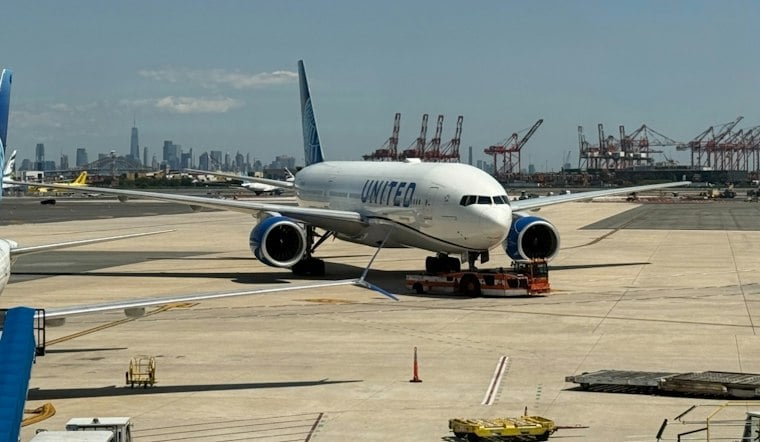
United Airlines departures ground to a halt nationwide on Monday afternoon as the carrier grappled with what it called a widespread system outage, leaving aircraft unable to take off just days after a separate nationwide air traffic control crisis disrupted flights across the country. United had not announced how many flights were affected or when service would resume, and said teams were racing to restore the systems as soon as possible.
The airline confirmed the trouble in a statement reported by NBC News, saying it was dealing with a “widespread system outage.” According to the same report, United said the technology issue was hitting departing flights but sparing aircraft already in the air, noting there was “no impact on flights in progress, or on United Express flights.” The airline added that its teams were “working hard to get things back up and running as soon as possible.”
A United spokesperson told CNBC there was no indication the outage stemmed from a cyberattack. The carrier had not immediately provided additional details about what triggered the breakdown, according to The New York Times, which reported United did not say what caused the systems to fail.
Grounded Crews Wait It Out
At one Texas airport, the disruption played out in real time when a United pilot asked the Houston tower for permission to remain at the gate until the airline's system came back online, according to reporting cited by KETV. The station's report also noted that flight-tracking apps offering live air traffic control radio feeds and real-time aircraft tracking let travelers watch the gridlock unfold from their phones as delays mounted at airports nationwide.
Despite the outage, the broader picture for U.S. air travel on Monday was one of recovery rather than crisis. Per NBC News, air travel in the U.S. was largely returning to normal by Monday following the weekend's disruptions, even as United's own systems buckled. CNBC reported that FlightAware data showed significantly fewer delays and cancellations Monday compared with Sunday, suggesting the broader network was healing even as United dealt with its isolated problem.
By the Numbers
FlightAware figures cited by UPI showed 418 United flights delayed and 21 canceled Monday, representing 13% of the airline's flights delayed and less than 1% canceled. Across the entire U.S. aviation system, the same UPI report showed 343 cancellations and 4,697 delays as of 5:30 p.m. EST Monday into or out of the country.
The Times noted that a prolonged technology outage can become destabilizing for an airline well beyond its initial window, as pilots and flight attendants bump up against legal working-hour limits and delays ripple outward across the network. NBC News reported that the issue did not appear related to the technical problems that triggered the FAA's ground stop earlier in the week, and that other airlines did not appear to be affected by Monday's United-specific breakdown.
Days After a Separate Nationwide Ground Stop
The outage landed just three days after a nationwide ground stop halted flights across the country for more than four hours, as reported by CNBC. That Friday disruption, detailed by NBC News, started with a router problem during routine work at a remote Federal Aviation Administration site; officials had detected disruptions at 17 of the agency's 22 centers that manage aircraft in flight before departures were halted nationwide as a safety precaution.
The Federal Aviation Administration's ground stop that Friday ran for nearly four hours and 40 minutes, and roughly 12,000 flights did not happen, according to FedScoop. Transportation Secretary Sean Duffy said a router being swapped out as part of the FAA's copper-to-fiber transition flooded other routers in the air traffic control system, disrupting communications and radar feeds, per FedScoop's report. The precise cause of that disruption remained under investigation, officials said, even as they pointed to the router problem during routine telecommunications maintenance as the trigger.
The scale of Friday's fallout was stark: UPI reported that the average daily number of U.S. flight cancellations in 2025 was 340, compared with 9,201 cancellations on the day of the ground stop. FedScoop noted that the FAA's broader technology modernization push is part of a $12.5 billion plan meant to address a long list of aging infrastructure problems across the agency — a backdrop that loomed over Monday's separate United outage, even though officials said the two incidents did not appear connected.
This is a developing story, and United has not said when normal departures will fully resume.



