

























































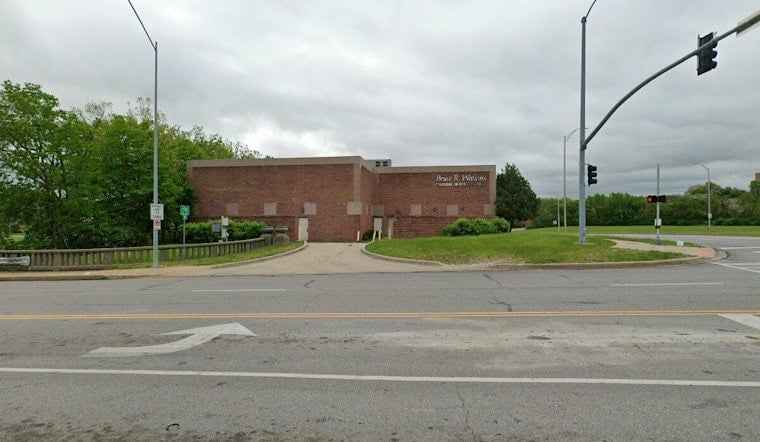
More than 20 million vehicles cross Bruce R. Watkins Drive every year, but for the East Side neighborhoods it slices through, the road has long been less a connector than a wall. Now, after more than a year of community meetings, Kansas City planners have narrowed their options for reshaping the 2.45-mile stretch between 51st Street and Gregory Boulevard, with a sunken, landscaped parkway emerging as the clear community favorite.
The road's troubled history stretches back to the 1950s, when the original proposal for U.S. Highway 71 would have run through the Country Club Plaza, according to Flatland KC. Planners later shifted the route to what became known as the South Midtown Freeway, a 10.2-mile stretch intended to connect fast-growing suburbs to downtown. Critics at the time contended the eastern shift favored affluent, politically connected white residents over poorer, disenfranchised Black neighborhoods, and the South Midtown route ultimately cut through the predominantly Black neighborhoods of the East Side.
Bruce R. Watkins, who became Kansas City's first Black councilman and founded the political organization Freedom, Inc. in 1962 alongside activist Leon Jordan, according to the Black Archives of Mid-America, warned early on that the highway would wall off a large part of the Black community from Prospect Avenue and other parts of Kansas City. Watkins, who also served as chairman of the Jackson County Democratic Committee, sponsored Public Accommodations Ordinance No. 29153 in September 1963 as one of his signature civil rights achievements. Opposition to the freeway became central to the April 1979 Kansas City mayoral race, in which Watkins became the first African American candidate to reach a Kansas City mayoral general election, per the Kansas City Public Library. He lost to Richard Berkley and died in 1980, years before construction began.
A Lawsuit, a Consent Decree, and a Compromise
The proposal was controversial from the start, and the NAACP filed a federal discrimination lawsuit in 1973 that called for more environmental regulation, housing assistance, and community feedback, forcing design changes to the roadway. Homes on the East Side were demolished in the 1970s as part of that fight, leaving residents to live with decades of uncertainty about their property and communities. Construction of the corridor ultimately displaced approximately 2,000 predominantly African American families and destroyed 2,000 homes, according to the Missouri Department of Transportation.
A 1985 consent decree ended the legal battle and called for a highway/parkway hybrid, with stoplights along the route intended to encourage stopping and shopping along Prospect Avenue. According to Flatland KC, that plan did not produce the expected stopping and shopping along Prospect, and Michael Wells said the roadway's impact on Prospect Avenue was predictable, adding that the proposal was universally despised from the beginning. Construction on the roadway began in 1987, and it wasn't completed until 2001, when it was renamed Bruce R. Watkins Drive in the civil rights leader's honor.
A Corridor That's Become One of the City's Most Dangerous
The finished road created a significant division of the East Side and a barrier fairly hostile to pedestrians, running near homes from Martin Luther King Jr. Boulevard to 85th Street. Kansas City has seen a 37% increase in crashes since 2010, and the project's focus area has the city's highest rate of pedestrian and cycling crashes, making Bruce R. Watkins Drive among the city's most dangerous roadways for fatal and injury crashes. A 2024 analysis found that more than half of all pedestrian car-crash deaths in Kansas City in 2022 and 2023 occurred east of Troost Avenue, where the highway cuts through historically Black neighborhoods, according to The Beacon.
Reconnecting the East Side Study Nears a Decision
U.S. Rep. Emanuel Cleaver II, who represents Missouri's 5th Congressional District and is serving his tenth term in Congress, secured the $5 million federal grant that now funds the Reconnecting the East Side study, a three-phase Planning and Environmental Linkages effort led by Kansas City in partnership with the Missouri Department of Transportation and the Mid-America Regional Council. The city hosted its fourth and final planned Community Summit for the study on April 7, at St. James United Methodist Church, capping more than 150 other community engagements held across the East Side.
Similar federal efforts have supported highway-removal planning elsewhere. According to the U.S. Department of Transportation, a Feb 28, 2023 award supported planning for the redesign or removal of a highway in West Baltimore to improve safety, access, opportunity, and innovation. According to the U.S. Department of Transportation's Mar 13, 2024 RCN Grant Program materials, such projects identify and evaluate alternatives to reconnect neighborhoods and address safety and mobility concerns.
Planners have narrowed the options to three: a return-to-grid layout, a fully grade-separated freeway, and a grade-separated hybrid parkway that would lower travel lanes below ground level while keeping cross-streets like Gregory Boulevard at surface grade. Reconnecting the East Side is also considering simply returning U.S. 71 to its pre-highway street grid. Selina Zapata Bur, the Reconnecting the East Side project manager, said the current design does not work for commuters and described the parkway alternative as more of an integrated approach. That option has proved overwhelmingly popular with community members, per Flatland KC.
What the Redesign Would Change
Under the parkway concept, traffic signals at 55th Street, 59th Street, and Gregory Boulevard would be replaced with overpasses or underpasses, which planners say would improve road safety. City planning documents also flagged dangerous intersections at 53rd Street and 60th Street for active transportation safety upgrades, in addition to Gregory Boulevard. Moving travel lanes toward the middle of the right-of-way is intended to address environmental impacts on nearby homes, and Bur said the corridor's main environmental issues are noise and air quality — problems planners believe replacing cross-street intersections and signals could ease by eliminating stop-and-go traffic.
Project plans also leave space for businesses, housing, and other community spaces along the corridor, and are considering adding public transportation in the middle of the roadway. Residents have prioritized the environment, safety, and economic development throughout the engagement process, and Reconnecting the East Side says it will prioritize economic opportunities on the East Side, especially along Prospect, while seeking design alternatives that help the avenue recover from decades of disinvestment. Kansas City residents and suburbanites alike have voiced similar concerns about the roadway, according to Flatland KC.
The Reconnecting the East Side effort remains in Phase One, and key questions remain unresolved: how future construction phases will be financed, how long construction will take, and whether physical changes to the corridor will deliver meaningful economic development to Prospect Avenue and other East Side corridors. For a city working to undo harm caused by a road built through the heart of its Black community, those answers are still to come.




