

























































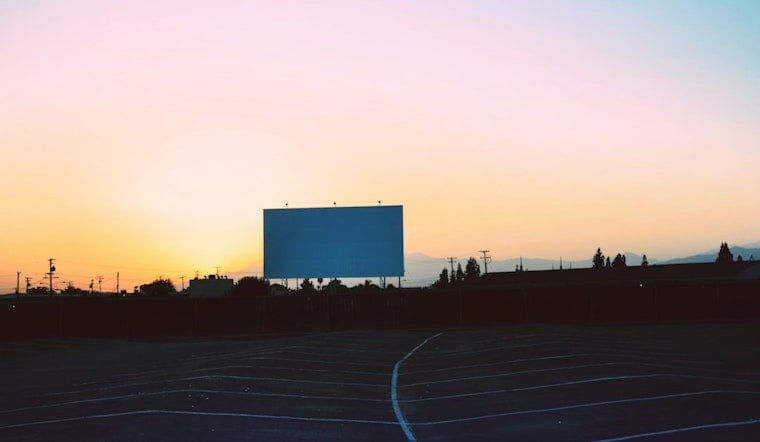
A new nonprofit drive-in project outside WaKeeney is betting that Kansas still has room for movies under the stars, even as traditional theaters and streaming have reshaped how people watch films. The effort arrives at a moment when the state has only a handful of surviving drive-ins left.
The Trego Skyview Foundation has raised more than $150,000 for an outdoor screen and movie licenses, with plans to build a theater just outside WaKeeney, according to KCUR. The group’s first double feature drew about 100 people, and organizers are now raising money for restrooms, landscaping and a better digital projector.
WaKeeney Project Turns Nostalgia Into Rural Entertainment
The Trego Skyview plan is less about recreating a 1950s fantasy than filling a modern gap: giving families and teenagers somewhere to go in a region with limited entertainment options. The foundation intends to operate the project as a nonprofit, with any surplus potentially supporting other community projects.
For now, the setup is decidedly grassroots. A local DJ supplies the projector and sound system, and moviegoers take a dirt road to a field where organizers have warned them to drive slowly because the route is bumpy.
Wichita’s Starlite Shows Why Survival Takes Community Backing
Wichita’s Starlite Drive-In offers a more established version of the same experiment. The theater has been part of Wichita since 1953, and city records show a $200,000 loan helped keep it operating after its future became uncertain in 2018, while Visit Wichita describes it as a continuing local attraction.
Owner Blake Smith told KCUR that the Starlite lost roughly 30% of its audience after the pandemic and that many customers never returned. He still considers the business viable when the movies and weather cooperate, but said the drive-in’s heyday is unlikely to return.
Kanopolis Gets A Projector Lifeline
Kanopolis is taking another route to preservation. The Kansas Department of Commerce awarded the historic Kanopolis Drive-In a $65,000 grant after its owners learned that replacing a broken digital projector would cost more than $100,000, according to the Kansas Department of Commerce.
Combined with local fundraising, the grant helped pay for a new 4K laser projector and upgrades to the screen and projection room. The state said the 1952 theater can accommodate up to 160 vehicles, making it both a cultural landmark and a small-town economic asset.
The Drive-In’s Second Act Depends On More Than Movies
Across Kansas, the surviving theaters are selling an experience that indoor cinemas and living rooms cannot quite duplicate: families gathered around cars, concessions shared outside and a movie projected against the night sky. Industry group Cinema United has likewise emphasized that movie theaters remain community gathering places, even as operators invest in new formats and amenities to bring audiences back. According to Cinema United’s 2025 update, the number of habitual moviegoers—those who see at least six movies annually—grew by 8%.
That is the wager behind Trego Skyview. The group is not pretending streaming will disappear or that every rural movie night will be packed, but it is betting that a low-cost, social night out can still be valuable enough to keep the screen glowing.





