

























































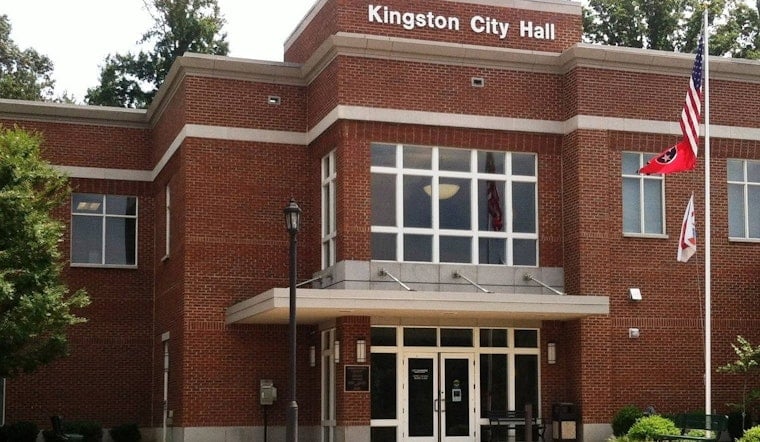
Kingston will let its Flock Safety camera contract expire in September, with City Manager David Bolling saying the numbers simply didn't add up. The two-year, $12,300 deal covering two automated license plate readers in the small Roane County city won't be renewed, and Bolling says the decision came down to dollars and cents rather than any single incident.
Bolling told WATE 6 On Your Side that the cameras' benefits simply weren't worth what the city was paying for them, framing the call as a financial one rather than a rejection of the technology itself. Kingston signed its original two-year agreement with Flock Safety in 2024, and that contract runs out in September 2026. City officials say the money earmarked for the cameras will instead go toward other needs within the police department.
That doesn't mean the cameras never paid off. Kingston Police used an automated Flock alert on May 20 to track down and arrest 26-year-old Elvis Ibarguen Salazar outside a convenience store on West Race Street, taking him into custody on multi-state felony warrants, according to BBBTV12. Officers seized Salazar's vehicle and several packages during that operation, and Hoodline covered the arrest of a wanted driver at the time. Law enforcement broadly has pointed to successes like that one as evidence the cameras work, even as Kingston moves on from the technology.
A Regional Retreat From Flock's Subscription Model
Kingston is far from alone in walking away. Nearby Rocky Top announced it will terminate its own $3,500-per-camera annual Flock contract in October, citing both the financial burden and insufficient investigative payoff, a decision detailed in Hoodline's reporting on Anderson County's mass surveillance fears. The pattern extends south, too: the Loudon County Sheriff's Office, just below Kingston, publicly declined to adopt Flock cameras at all, warning that recurring subscription costs outweighed the benefit to its budget.
The pricing pressure behind these decisions is not unique to small East Tennessee towns. Flock Safety's standard annual subscription runs $2,500 to $3,000 per camera, and the company introduced a vendor price increase of roughly $500 per camera per year for new contracts starting in 2024, according to contract analysis from Safe and Sound Security. Because Flock operates on a lease-subscription model, the hardware itself gets pulled if a city doesn't renew, leaving municipalities like Kingston with nothing to show once the cameras go dark.
Bigger Counties Are Hitting Pause Too
The retreat isn't limited to small towns working with a handful of cameras. The Knox County Sheriff's Office paused plans to deploy nearly 300 Flock Safety cameras this month after pushback from county commissioners and residents over privacy concerns, per WBIR-TV. Sullivan County commissioners have advanced a resolution to let their own two-year Flock contract, signed in 2024, lapse when it expires in January 2027 unless strict privacy guardrails get established first, according to the Kingsport Times News.
Public opinion appears to be tilting the same direction. A local Republican polling firm's August survey found that 58% of surveyed Knox County residents oppose police deployment of Flock cameras, a finding Hoodline reported showed opposition spanning traditional party lines in its coverage of the Knox County poll results. Some residents have raised privacy concerns tied specifically to Flock's camera network, concerns that have followed the technology into statehouses and Congress alike.
Privacy Fights Reach State Law and Congress
Tennessee law already limits how long this kind of data can be kept. Under Tennessee Code § 55-10-302, state and local government entities cannot store captured automated license plate reader data for more than 90 days unless it's tied to an active criminal investigation, and the captured plate data itself is exempt from public disclosure. U.S. Representative Tim Burchett, an East Tennessee Republican, went further in July, introducing the Protection Against Mass Surveillance Act in Congress to bar federal agencies from purchasing or accessing automated license plate reader systems, arguing the cameras pose Fourth Amendment risks of warrantless tracking, as reported by WATE 6 On Your Side.
Misuse cases have added fuel to the debate. A former Oak Ridge police officer in neighboring Anderson County pleaded guilty in March to 23 counts of official misconduct after using law enforcement databases, including the Flock license plate reader network, for unauthorized personal searches of vehicle movements. Not every East Tennessee community is backing away, though — Murfreesboro renewed its Flock camera contract despite public pushback, according to Hoodline's report on the city's decision to keep its cameras despite residents' pleas. For Kingston, though, the math simply didn't work out, and the city's two Flock cameras are set to come down once the contract runs out next month.





