

























































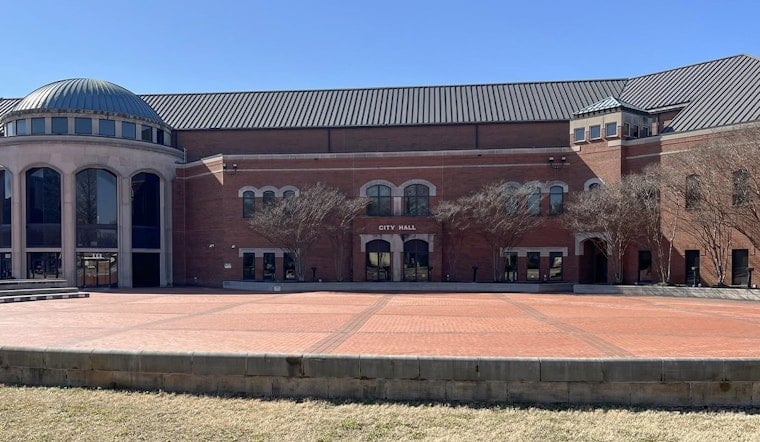
Murfreesboro residents stood before the city council and asked officials to walk away from their contract with Flock Safety, the company behind the city's license plate reader cameras and gunshot detection microphones. The council said no, choosing instead to keep the surveillance system running across the city of roughly 64 square miles.
According to WSMV, one resident told the council that “safety matters, but privacy matters as well,” while another questioned whether a small Tennessee town needs this level of surveillance. Opponents raised Fourth Amendment concerns and worried the cameras could be used to track innocent citizens, arguing that the government should investigate people only when there is a legitimate reason. The Murfreesboro Police Department declined to comment on the continued public pushback, instead pointing to previous comments made on the Flock system at earlier council meetings, per the same report.
The pushback comes on the heels of a specific contract action: on June 18, the Murfreesboro City Council voted unanimously in a roll-call vote to approve a two-year, $243,898 renewal with Flock Safety for its Raven gunshot detection system, which covers roughly five of the city's square miles based on violent crime data, according to the Nashville Scene. That gunshot detection system operates separately from the city's license plate readers, which were purchased earlier, in January 2024.
How the Cameras Are Used, and Who Can See the Data
During that June presentation, Murfreesboro Police Chief Michael Bowen and Real-Time Crime Center supervisor Ryan Lawrence told the council that access to the city's Flock ALPR system is restricted to eight of the department's 361 sworn officers, that searches require justification, and that the system does not collect facial recognition or personally identifiable information, the Nashville Scene reported. Flock cameras track vehicle make, model, color, and even bumper stickers, and the company requires law enforcement agencies to enter a case number for every search.
Supporters point to results. Murfreesboro resident Austin Maxwell said he supports the technology because it has helped police, adding that he believes appropriate guardrails and constraints are already in place. Another resident said the technology is working for Murfreesboro, noting the city recorded 791 total operational successes in 2025, 652 in the first quarter of 2026 alone, and 403 in 2024. Technology supporters argue Flock Safety's tools can help police departments solve crime.
Wider Networks Raise Questions Locally and Beyond
City-operated cameras are only part of the picture. Public records compiled in the Atlas of Surveillance database show the Murfreesboro Police Department operated 59 Flock cameras as of September 2025, but volunteers with DeFlock the USA, a group that opposes Flock camera technology, reported counting 154 ALPR cameras in and around Murfreesboro when non-city and regional devices are included. Murfreesboro police can also tap into surveillance networks beyond city limits: audit logs reviewed by Hoodline showed officers accessing Flock data from Nashville International Airport in May to search for a person wanted on an arrest warrant.
Tennessee law caps how long that data can be kept. Under Tennessee Code § 55-10-302, governmental entities are legally barred from storing automated license plate reader data for more than 90 days unless it's preserved as part of an active criminal investigation, according to Justia Law. Vendor settings and local police guidelines often enforce shorter windows than the statutory 90-day ceiling.
Adoption Statewide, and a Vendor Under Pressure
Murfreesboro's setup fits a broader pattern. A survey published in April 2025 by the Municipal Technical Advisory Service and the UT Baker School of Public Policy found that two-thirds of participating Tennessee police departments use ALPRs, with adoption surging since 2020, though data-tracking mechanisms and usage policies vary widely across jurisdictions. That growth has not gone unchallenged: recent reporting has documented cases of police officers across the country misusing Flock's surveillance system to stalk ex-partners, and the company says it has locked out users flagged for abnormal search behavior.
Flock Safety itself announced system-wide policy changes in August, cutting default license plate data retention from 30 days to seven and adding AI-powered audit tools meant to catch potential search misuse, according to WDRB. The company has said its systems support more than one million public safety investigations annually across over 5,000 partner agencies nationwide.
Pushback Spreads Across Tennessee and Washington
Murfreesboro isn't alone in facing resident revolt. In July, the Knox County Sheriff's Office paused a planned expansion of Flock cameras and a new surveillance center after county commissioners unanimously passed a resolution demanding a comprehensive program review, freezing a rollout that included 300 grant-funded camera units, per WBIR. Tennessee lawmakers announced plans in July to evaluate new statutory restrictions on license plate readers ahead of the January 2027 legislative session, momentum that built after Knox County's move, according to the TBA Law Blog.
The debate has reached Congress as well. U.S. Representative Thomas Massie introduced federal legislation in July seeking to withhold federal grant funding, administered by the Department of Justice and Department of Homeland Security, from municipalities and law enforcement agencies that deploy Flock Safety or similar networks, Newsweek reported. For now, Murfreesboro's council has chosen to stick with its contract even as courts, legislatures, and the vendor itself keep rewriting the rules around what these camera networks can do.





