

























































A Kyoto tea stand that started on a 70-square-foot patch of neighborhood sidewalk has planted its first American flag on Spring Mountain Road. Hatoya opened its debut U.S. location in March in Las Vegas Chinatown, at 6000 Spring Mountain Road #4A, inside a storefront that previously housed a Filipino grocery and money-wire service.
From a Kyoto Sidewalk to Five Global Shops
Hatoya was founded by Nobu Maruyama, who still participates in matcha harvests, and the brand has since grown into five shops and, as Las Vegas Weekly describes it, a global phenomenon. The chain specializes in authentic matcha and whisks each cup by hand in front of the customer rather than pre-batching drinks, and staff will pause for photos or video before pouring. Its Chinatown build-out followed a mid-March soft opening ahead of a March 27 grand opening, according to a timeline reported by ChinatownVegas.com.
The menu leans into ceremony and variety at once. Hatoya offers four matcha grades — original, roasted, midori and joyo3 — served straight up, poured over iced coconut water, or built into a matcha latte topped with house-made ice cream and mochi balls. The shop also uses seasonal fruit syrups and a whipped topping called espuma, whisking everything with traditional hand whisks rather than machines, per the same account from Las Vegas Weekly. Hatoya is open daily from 10 a.m. to 9 p.m.
What Matcha Actually Is, and Why It Caught On
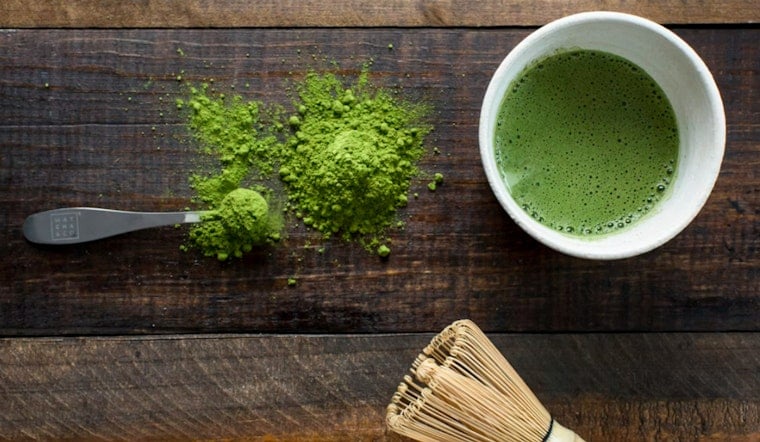
Matcha is a fine powder made from shade-grown green tea leaves, prized for concentrated tea notes, umami, natural sweetness and strong antioxidant properties, alongside an earthy taste that's become its signature. The powdered-tea process traces back to China during the Tang Dynasty, developed between the seventh and 10th centuries before making its way to Japan, where it became closely tied to the country's broader tea culture. Part of matcha's modern appeal is practical: it carries enough caffeine to give drinkers a lift without the crash associated with coffee, and social media has helped drive its recent surge in popularity as cafes fold it into everything from lattes to desserts.
Hatoya's arrival lands inside one of the densest restaurant corridors in the country. A February commercial audit counted 248 sit-down restaurants along a three-mile stretch of Spring Mountain Road, where developers have deliberately built open-air courtyard plazas designed around tea and dessert venues, according to Hoodline's reporting on the corridor.
A Valley-Wide Matcha Wave
Hatoya isn't the only new name pouring matcha around the valley. On the eastside, Inu Matcha & Brew at 671 N. Nellis Blvd. serves ube cloud matcha and lychee-lime drinks, while Kohi Coffee & Matcha, with locations at 2839 N. Green Valley Parkway and 2101 S. Decatur Blvd. #16, offers tres leches and blueberry milk matcha. Out in Centennial Hills, Leev Matcha Atelier at 7565 Norman Rockwell Lane #120 serves bananas foster and jasmine matchas sourced from Shizuoka, Japan — a northwest expansion Hoodline covered when the matcha bar first opened.
The trend has even reached the Strip, where The Venetian Resort added a Matcha Madness drink to its grab-and-go Poma Juice Bar near the suite elevators this spring.
Behind the Boom: Japan's Record Export Surge
The Las Vegas rollout is riding a genuine supply-side story out of Japan. Green tea export values jumped roughly 80% year-over-year in the first half of 2026, making green tea the country's single largest agricultural gainer, according to data released by Japan's Ministry of Agriculture, Forestry and Fisheries and reported by First Agri B2B. Fiscal year 2025 customs figures compiled by Japan's Ministry of Finance showed green tea exports hit a 70-year record of 13,125 metric tons valued at more than $550 million, with powdered matcha making up about 70% of that volume and the United States as the top destination, as detailed by Nation Thailand.
To keep pace with that overseas appetite, Japanese agricultural authorities now subsidize farmers converting loose-leaf sencha fields into shaded tencha crops, the specialized process required for fine matcha, per reporting from The Korea Herald. Global market researchers at Grand View Research valued the worldwide matcha industry at $5.1 billion to $5.4 billion in 2025, projecting it could top $8.9 billion by the 2030s. Forbes has pegged the U.S. matcha market specifically at $164 million in 2024, with growth projections reaching as high as $760 million by 2030, driven largely by Gen Z and Millennial drinkers looking for caffeine without the crash.
That demand hasn't come without friction. Ceremonial-grade matcha remains supply-constrained in Japan even as American cafes multiply, and proposed U.S. tariffs ranging from 10% to 34% on Japanese green tea imports could push retail prices higher for operators like Hatoya, according to industry tracking from Sorate.





