

























































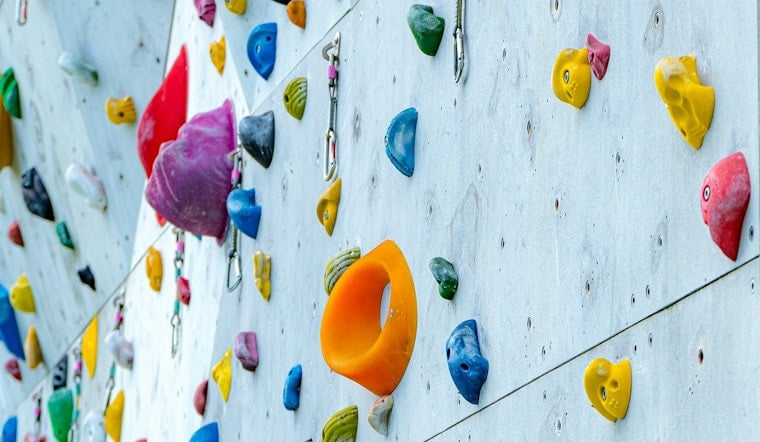
Eight-year-old Ricardo Jimenez is scaling climbing walls at Children's Hospital Los Angeles as part of an unusual therapy plan designed to prepare him for a carbon-fiber prosthetic hand. Ricardo was born with left-handed symbrachydactyly, a condition in which his left hand did not develop fingers in the typical way, and doctors are using climbing sessions to build the strength and coordination he will need before he receives a permanent prosthesis once he is fully grown.
The approach comes from a team at Children's Hospital Los Angeles, where orthopedic surgeon Dr. Nina Lightdale-Miric and orthopedics researcher Abigail Padilla are studying how rock climbing can build strength and resilience in children born with hand differences, according to CBS News Los Angeles. The hospital's team is working directly with Ricardo to develop strength and coordination through climbing ahead of his eventual fitting for a permanent prosthesis, which will take over function for his left hand.
While the climbing sessions build Ricardo's physical readiness, prosthetics experts are separately developing a plastic 3D-printed temporary hand for him, meant to help him get used to working with a prosthetic device before he receives the carbon-fiber version. That kind of temporary device is the product of a partnership Children's Hospital Los Angeles has maintained since 2022 with USC Freehand, a student engineering organization at the University of Southern California that designs and 3D-prints low-cost, custom-fit prosthetic hands for pediatric patients, according to the USC Viterbi School of Engineering.
Why Climbing Before a Permanent Prosthesis
USC engineering students typically take about four to six weeks to design, print, and adjust each custom plastic prosthetic, building devices meant to assist with light daily tasks like writing or holding a ball rather than heavy lifting, per the same USC Viterbi account. Because children grow quickly and outgrow expensive commercial prosthetics, the 3D-printed models offer a practical, lower-cost stepping stone before a permanent device is fitted.
The clinical thinking behind pairing physical conditioning with prosthetic adaptation reflects a broader shift in how specialists approach symbrachydactyly. A November 2023 systematic review published in PMC found there is no standardized surgical protocol for the condition, which has led clinicians to increasingly pair non-surgical adaptive physical training, like climbing, with custom prosthetics rather than relying primarily on surgery.
A Rare, Non-Hereditary Condition
Symbrachydactyly occurs in roughly 1 in 32,000 live births and is marked by abnormally short, webbed, or missing fingers, sometimes reduced to small skin-and-tissue remnants known as nubbins, according to data cited by Seattle Children's Hospital. Most children with the condition have typical development in their unaffected hand.
Research compiled by the National Institutes of Health and published in PMC indicates the condition is not a hereditary genetic disorder. Instead, it stems from a disruption in embryonic blood flow, known as subclavian artery supply disruption sequence, that occurs before 42 days of gestation, meaning parents face no elevated risk of it recurring in future pregnancies. Surveillance data published by the Centers for Disease Control and Prevention in April 2026 notes that upper limb reductions remain relatively rare among structural birth defects in the United States, underscoring why specialized regional centers like Children's Hospital Los Angeles serve as key resources for affected families.
A Program Built Over 15 Years
Ricardo's climbing sessions are part of a much longer institutional effort. Dr. Lightdale-Miric founded the Center for Achievement of Teens and Children with Hand Differences, known as CATCH, at Children's Hospital Los Angeles in 2011 to offer peer support, adaptive sports programs, and community events for children born with upper extremity differences, according to Amplitude Magazine. The program has since grown to include activities ranging from climbing and surfing clinics to holiday gatherings for patient families.
In December 2024, a pilot study led by Dr. Lightdale-Miric and published in the American Journal of Recreation Therapy found that a six-week adaptive therapeutic climbing program for children with upper limb differences produced at least a 20-degree bilateral improvement in shoulder flexion and abduction range of motion. The same study revealed a more complicated reality, however: three of the seven initial child participants dropped out due to socioeconomic hardship tied to travel and session attendance, a reminder that access to specialized, hospital-based adaptive sports programs remains uneven for lower-income families.
Dr. Lightdale-Miric's work extends beyond the climbing wall and the operating room. In March 2023, she co-authored “The Hand Book: An Informational Guide for Parents of Children With Hand Differences” with occupational therapist Sarah Tuberty, offering families guidance on treatment choices, social stigma, and how to introduce adaptive physical activities early in a child's life. For Ricardo, that broader philosophy is now playing out one climb at a time, as he works toward the day he receives the carbon-fiber prosthesis that will eventually take over function for his left hand.





