

























































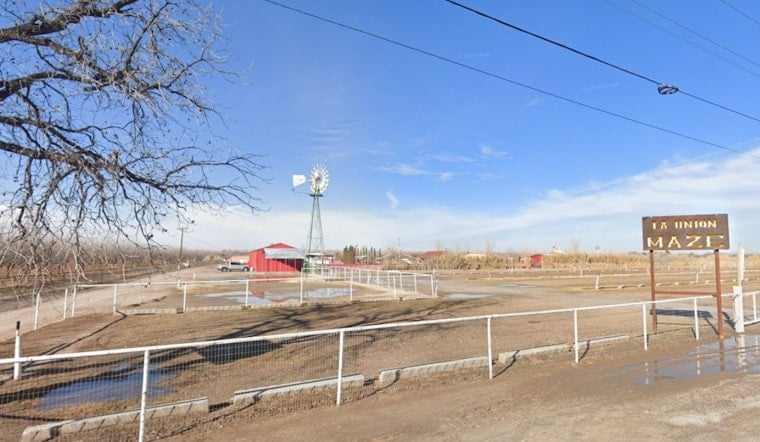
A 13-acre corn maze in the Mesilla Valley is about to turn its fields into a giant tribute to New Mexico agriculture. La Union Maze, located at 1101 Highway 28 in Anthony, New Mexico, opens its 27th fall season on Sept. 26, with a design that weaves together chile, tractors, the Zia symbol, and a roadrunner across the farm's rows.
The maze also incorporates the number 250 in recognition of the nation's 250th anniversary, according to KFOX, whose report on the upcoming season quotes organizers saying the design highlights agriculture's role in New Mexico and the surrounding community. Organizers said they wanted the maze to feel like New Mexico, per the outlet's account of the release announcing the season. The 2026 layout pays tribute to the state's farmers, ranchers, crops and traditions, with organizers describing agriculture as important to both New Mexico and the community.
From a Single Tent to a Regional Landmark
The farm's transformation into a 13-acre seasonal attraction has been decades in the making. Founders Lucy and Robert Sondgeroth started the operation in 1999 as a modest single-tent attraction, according to The Prospector, before it grew into the larger regional agritourism destination it is today. The land originally focused on traditional row crops like onions and jalapeños before organizers began integrating public entertainment into the farm's seasonal operations.
That growth has turned La Union Maze into a draw for visitors well beyond Doña Ana County. The farm's location near the state line means it regularly pulls in guests from southern New Mexico, West Texas, and Chihuahua, Mexico, per 93.1 KISS FM, with past maze designs having explicitly honored symbols from all three border jurisdictions given the farm's spot near El Paso and Ciudad Juárez.
What's New for the 2026 Season
This year's attractions include jumping pillows, slides, pedal cars, a mini zip line, pig races, flower picking and seasonal food, per KFOX's rundown of the season. Visitors can also expect a working agricultural setting alongside maze exploration, pumpkin picking, roasted corn and farm-animal visits. A haunted pallet maze will run every Friday and Saturday night in October, offering a spookier option alongside the daytime family attractions.
GECU sponsors the maze's end-of-season fireworks, maps, animal corral and pig races, according to the same release cited by the station, and the company's logo appears throughout the maze grounds. The season wraps on Nov. 7 with a hybrid fireworks and drone show. Opening weekend brings a 50% discount on admission for teachers, military members and veterans, and first responders.
Farming a Maze in the Desert
Pulling off a fall maze in the Chihuahuan Desert takes some engineering. To protect heat-sensitive crops like pumpkins, which are planted between June and August, the farm relies on silt-loam soil and sloped fields that channel heavy monsoon rains directly into canals, according to KVIA. Without that drainage system, an unexpected summer downpour could wipe out the pumpkin harvest before the season even begins.
The maze sits along Highway 28, a historic 30-mile scenic drive that follows the Rio Grande along the old El Camino Real Tierra Adentro trade route between Old Mesilla and North El Paso, according to Visit El Paso. The corridor is lined with pecan orchards and adobe landmarks, tying the farm's fall festivities directly into one of the region's oldest travel routes.
The Crops Behind the Celebration
The 2026 design's tribute to chile and pecans reflects real weight in the state's economy. New Mexico's total chile crop value reached $52.2 million in 2024, up from $41.5 million the year before, and the state grows roughly 77% of all chile peppers produced in the United States, according to the USDA National Agricultural Statistics Service. Green chile alone accounts for nearly 90% of the state's total chile tonnage.
Pecans carry similar heft in the Mesilla Valley, where dense orchards surround the farm corridor. New Mexico pecan growers produced 84.8 million pounds valued at $167.1 million in 2024, keeping the state as the nation's second-largest pecan producer, per the same USDA data. Statewide, the USDA Economic Research Service recorded 20,976 working farms generating more than $2.9 billion in market value, with family-owned operations making up roughly 84% of all farms in New Mexico.
An Insurance Gap Facing Farms Like This One
Behind the seasonal fun, agritourism operators in New Mexico face a legal landscape that leaves them more exposed than farms in many neighboring states. New Mexico remains among fewer than 15 states without a standalone agritourism liability exemption statute, according to the Center for Agriculture and Food Systems, forcing operators to lean on general commercial insurance and private visitor waivers rather than statutory protections. More than 30 states have already enacted shields covering inherent farm risks.
State lawmakers have tried to close that gap before. In March 2025, New Mexico legislators tabled House Bill 521, the Agritourism Promotion Act, which would have offered limited liability protections for working farms against inherent agricultural risks to help lower insurance costs, according to Citizen Portal. Opponents in that debate argued that broad liability limits could undercut public safety standards, leaving the measure stalled for now and operators like the Sondgeroth family continuing to rely on waivers and commercial coverage as they open their gates each fall.
Planning a Visit
For its 2026 run, La Union Maze will operate as a fully cashless venue, accepting only credit cards or gift cards at the gate, according to Visit Las Cruces. The farm is offering a 15% discount for military members and seniors, along with free admission for children under 2 and adults over 75. Special events will run throughout the season alongside the maze's daily attractions, giving Mesilla Valley families and visitors crossing in from Texas and Chihuahua plenty of reasons to return before the Nov. 7 finale.




