

























































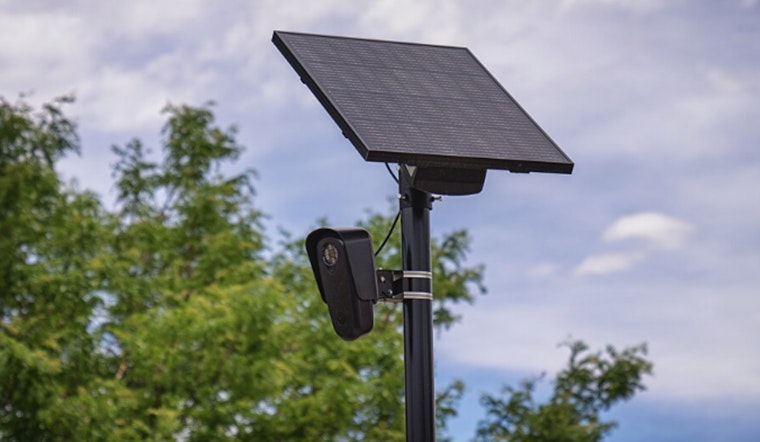
Lake City’s vehicle-surveillance debate is headed for a pressure test: The City Council is weighing whether to let voters decide in November if the city should keep using Flock automatic license plate reader cameras and related vehicle-data systems. The proposed vote would not immediately switch the cameras off, but it could turn a technical policing question into a citywide political one.
According to News4JAX, council members are scheduled Monday night to discuss Resolution No. 2026-094. If approved, the question would go before voters in a special election on Tuesday, Nov. 3, held alongside Florida’s 2026 general election. A “YES” would support continued installation and maintenance of the cameras, while a “NO” would oppose it.
Voters Would Offer A Signal, Not An Order
The proposal comes with a significant asterisk: The result would be nonbinding. It would not automatically rewrite city policy, cancel existing agreements or force the removal of equipment; instead, it would give council members a public reading before deciding what to do next.
The city meeting notice lists the session for 6 p.m. at City Hall. Public comment is expected, and council members could advance the ballot measure, delay it or reject it altogether.
Lake City Already Has Flock History
This is not a theoretical fight for Lake City. The agenda material includes prior city agreements with Flock dating to 2023 involving license-plate readers and audio-detection devices, while Lake City police later promoted a Flock gunshot-detection system in a 2025 social media post, News4JAX reported.
The proposed ballot language reaches beyond one camera or one police tool. It asks whether the city or its contractors should continue installing and maintaining systems that collect and store license plates and other vehicle information, putting privacy concerns directly alongside public-safety arguments.
Lake City Is Not Debating In A Vacuum
Other cities have landed on opposite sides of the same argument. Hoodline reported that Renton, Washington, paused its Flock program after a close council vote and weeks of public debate over privacy and policing. In Sunnyvale, California, officials instead kept a 20-camera network after a review found no evidence that its data had been shared with federal immigration authorities, according to Hoodline’s coverage.
That split is likely to shadow Lake City’s discussion Monday night. A November vote would not settle the policy by itself, but it could make the council’s next move much harder to separate from public opinion.





.jpg)