

























































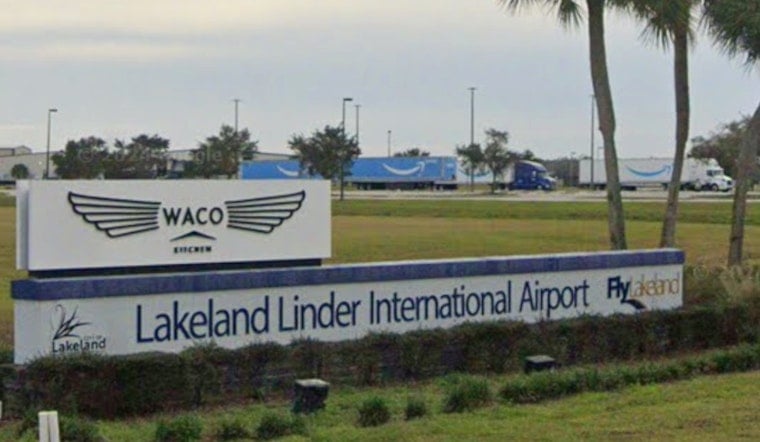
Lakeland Linder International Airport is getting a $4.8 million federal boost to expand its terminal, adding gate space and passenger amenities as the airport works to keep pace with a passenger boom that nobody quite expected two years ago. The Lakeland City Commission approved the grant agreement with the U.S. Department of Transportation on Monday, part of a broader package of nearly $13 million in federal funding for terminal, apron, and runway improvements.
The city-county grant, first reported by LkldNow, will fund a second gate hold room along with a slate of passenger comforts: family restrooms with adult changing stations, a service animal relief area, and an interactive children's play area designed in partnership with the Florida Children's Museum. Construction on the expanded hold room is scheduled to begin next month, according to FOX 13 Tampa Bay, with work on three new aircraft holding bays following no later than October.
A Terminal Built for One Gate Now Serves Hundreds of Thousands
The upgrades are a direct response to demand the airport's single-gate terminal was never designed to handle. Since Avelo Airlines relaunched commercial passenger service at Lakeland Linder in June 2024, the airport has served roughly 390,000 passengers as of this month, per the same LkldNow report. That volume has put immediate pressure on facilities that were built for a much smaller operation.
The scale of that turnaround is easy to miss without context. Before Avelo arrived, Lakeland Linder had gone more than a decade without regular commercial passenger flights, following a charter airline's 2012 exit, according to background compiled by HDR. The airport's transformation from general-aviation field to commercial secondary airport has tracked the broader growth of the Interstate 4 corridor between Tampa and Orlando, the firm notes.
Air Taxis and a Push for Bigger Airlines
Beyond the terminal upgrades, airport officials have designated a site near the terminal to test electric air taxis and other advanced air mobility vehicles. Initial testing will focus on cargo transport and is expected to begin by the end of the year, FOX 13 Tampa Bay reports, before expanding to human passengers in a later phase.
Airport leadership is also working to diversify beyond Avelo's ultra-low-cost model, actively courting legacy carriers like United Airlines and American Airlines alongside mid-level operators like Southwest Airlines, the station reports. To sweeten the pitch, the City of Lakeland's Air Carrier Incentive Program waives 100 percent of landing fees and per-turn fees for two years for airlines that launch qualifying nonstop routes not served in the prior two years, according to Fly Lakeland.
Avelo, for its part, has kept expanding on its own. The airline established an operational aircraft and crew base at Lakeland in 2025 and announced in June that it will launch nonstop international service to Aguadilla, Puerto Rico, beginning in mid-November, according to the City of Lakeland.
What Comes After the Current Round of Construction
The gate additions now underway represent just the first phase of a much longer runway. The airport's Master Plan targets a major expansion around 2030 envisioning a five-gate terminal with three passenger boarding bridges, expanded TSA and baggage handling space, and an intermodal center linking flights with buses, rideshares, and air taxis, according to reporting from 6AM City.
The airport's rise has already reshaped the surrounding area. Hoodline previously reported on major warehouse deals along the County Line Road logistics corridor next to Lakeland Linder, underscoring the airport's growing role as an economic engine for Central Florida. Whether the city's landing-fee waivers succeed in luring a legacy or mid-level carrier to join Avelo on the field remains the next big question for an airport whose passenger numbers, not long ago, were essentially zero.





