

























































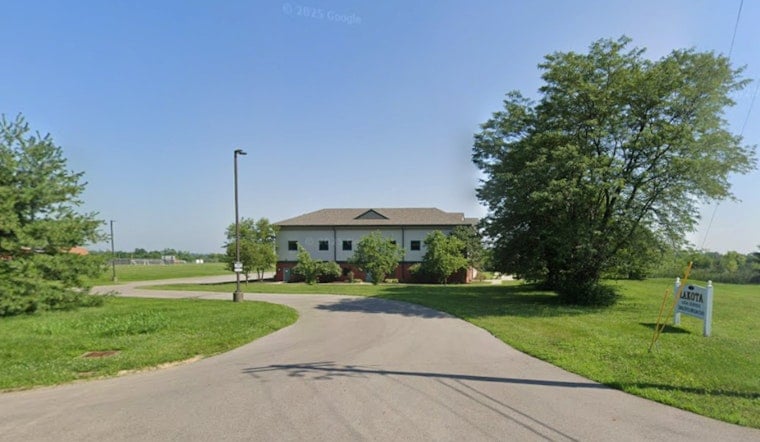
Dozens of Butler County families who send their kids to Cincinnati Christian School lost their school bus route this year, and now they're fighting back. The Lakota Board of Education voted 4-1 to declare transportation to several nonpublic schools impractical for the 2026-27 school year, and the families who rejected the district's cash buyout have pushed the dispute into formal state mediation.
The fight traces back to a switch Lakota made from paper transportation forms to an online registration system, according to WCPO 9 Cincinnati. Petermann, the district's busing contractor, notified private schools about the new process, but Cincinnati Christian School says it never became aware the registration system had changed. Petermann received its first family application under the new system in mid-May, and by the time requests were tallied, Cincinnati Christian School families had submitted 44 transportation requests spread across 18 different attendance areas.
A Retired Principal's Inbox at the Center of the Dispute
At the heart of the breakdown is where Petermann's notification actually landed. Parent Ray Kochis said the email was sent to an elementary principal who retired five years ago, and he believes it should have bounced back to Petermann as undeliverable. Petermann has said it contacted Cincinnati Christian School and received no bounce-back email, leaving the two sides with conflicting accounts of what happened to the message.
Parents believe the mix-up had real consequences, saying more families would have requested transportation had they known about the registration change in time. The stakes go beyond convenience. Lakota parents told the station that busing was a reason they chose to live within the district's boundaries in the first place, and that it's the only public school service some of them use despite paying local taxes toward the schools.
What the District Says It Weighed
Lakota officials said the transportation department evaluated the requests using criteria outlined in Ohio law, pointing to ride time, distance, cost, the number of students served, effects on existing routes, and available alternative transportation. Those six factors are not optional guidelines; Ohio law requires local school boards to weigh all of them before passing an impracticality resolution, and the statute additionally requires public districts to transport eligible K-8 nonpublic students so long as direct bus travel time doesn't exceed 30 minutes. District officials pointed to the distribution of Cincinnati Christian School students across so many attendance areas as part of what made a single bus route difficult to create.
Lakota has a long-running bus route serving students at Cincinnati Christian School and other area private schools, and the district has offered affected families a payment in lieu of transportation rather than continued busing, though Lakota has not disclosed the payment amount. Statewide, that kind of buyout falls within a range the Ohio Department of Education and Workforce set for the 2026-27 school year, between $636.75 and $1,273.50 per student.
Why State Law Keeps the Buses Running for Now
Because the families rejected Lakota's payment offer and requested mediation, state law forces the district to keep running the disputed routes while the process plays out. Under Ohio Revised Code 3327.02, districts must continue providing transportation until an impracticality dispute is officially resolved, which is why Lakota says it is considering all options while the appeal is pending. The mediation process will determine whether Lakota's impracticality determination stands, and it may result in transportation service resuming for the families who pushed back.
The outcome carries weight beyond this school year. If the Ohio Department of Education and Workforce ultimately issues a formal determination approving or disapproving the resolution, that ruling becomes legally binding in future years as long as the underlying route facts stay comparable, according to state guidance. That means whatever mediation decides for Cincinnati Christian School families this year could shape whether Lakota can make the same call again down the road.
Part of a Larger Statewide Busing Squeeze
Lakota's dispute is not an isolated one. A state legislative pupil-transportation workgroup found that Ohio public districts declared busing impractical for more than 22,000 students in the 2025-26 school year, with roughly 21,000 of those enrolled in chartered nonpublic or community schools, as reported by The Highland County Press. Hoodline's own reporting on a similar Delaware County bus dispute found the same statewide pressures at work, driven largely by chronic driver shortages and increasingly complex regional routing.
Lakota's transportation network is sizable even by Ohio standards. Ohio Auditor of State filings show the district operates more than 200 daily bus routes covering over 12,000 miles across Butler County, serving roughly 9,000 to 11,000 public school students along with several hundred nonpublic and parochial students. The district has weathered transportation turmoil before: in September 2023, Petermann-employed bus drivers launched a four-day strike before the two sides reached a mediated five-year contract, according to K-12 Dive.
State lawmakers have floated fixes aimed at reducing exactly this kind of friction, including a statewide student transportation database, allowing smaller nine-passenger vans on low-ridership private school routes, and building regional transit networks that cross district lines. For now, though, Cincinnati Christian School families are waiting on mediation to decide whether their yellow buses come back for good.





