

























































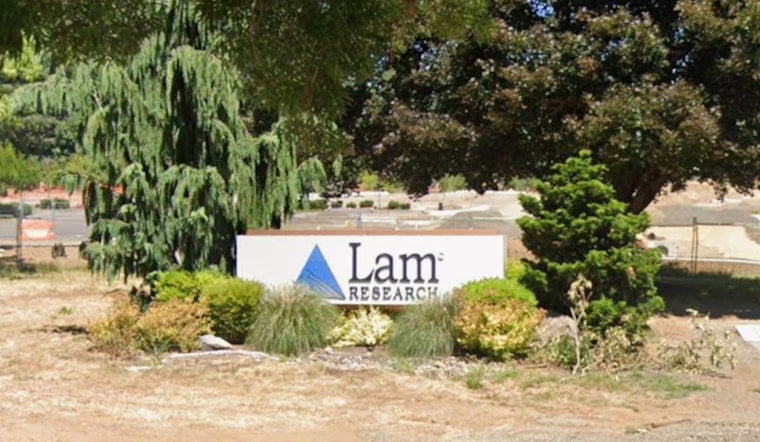
Lam Research hosted a groundbreaking this week for a $620 million research and development lab at its Tualatin campus, the centerpiece of a $1.5 billion commitment the chip-equipment maker plans to pour into Washington County laboratories over the next decade and a half. The new 120,000-square-foot facility is expected to add roughly 400 jobs to Lam's headcount, which already numbers around 3,000 people at the company's Tualatin campus, most of them concentrated there.
The groundbreaking, first reported by Oregon Public Broadcasting, arrives just weeks after local governments cleared the final hurdles for the project's tax incentives. The Washington County Board of Commissioners approved a Strategic Investment Program agreement on August 4, and the Tualatin City Council followed on August 10, according to Tigard Today. The deal still needed sign-off from the Oregon Business Development Commission before construction could move forward.
Lam Research chief executive Tim Archer framed the investment as a competitive necessity in an industry racing to keep pace with artificial intelligence demand. Archer said increasing velocity throughout the research and development process has become a decisive advantage, and that the pace of innovation in the AI era is relentless, requiring chips with new architectures, different materials and complex features engineered with nanoscale precision, per OPB's report. Sesha Varadarajan, another Lam executive quoted in that report, said the new lab is expected to deepen specialized capabilities and add tens of thousands of square feet of cleanroom space, and that it will enable closer collaboration with customers while strengthening the reach of Lam's global lab network.
A Campus Still Growing
The new lab represents just one phase of a larger buildout on Lam's 76-acre Leveton Drive campus. The company's long-term “TuX project” plan calls for approximately 210,000 square feet of new office, laboratory and industrial space in total, according to the Beaverton Beat's reporting on the county commissioners' review of the expansion. Lam had already opened a separate $65 million, 120,000-square-foot office building at the Tualatin site last November, designed to hold 700 employees, the outlet notes, showing a pattern of incremental capital investment even before this larger, decade-long commitment took shape.
An economic impact study by Optimal Solutions Group, cited in that same coverage, projected the campus expansion will support roughly 1,420 construction jobs, 669 equipment-installation roles and 445 permanent research and engineering positions. Those permanent jobs are projected to pay an average annual salary of $173,000, a figure the study frames as roughly triple Oregon's statewide average wage.
Tax Breaks and a Long County History
Under the county agreement, the new Lam Research building qualifies for property tax breaks over a multi-year deal, with Lam expected to pay an estimated $111 million in taxes and fees over the life of the arrangement, per OPB. The 15-year tax deal marks Washington County's seventh Strategic Investment Program agreement since 1993, following five prior deals with Intel and one with Genentech in 2006, the Beaverton Beat reports.
The company's Tualatin investments also build on a $22 million state grant awarded in late 2023 under Oregon's $240 million CHIPS Act, formally Senate Bill 4, which was earmarked for R&D facility construction in Tualatin and enacted to match federal CHIPS Act funding, according to the City of Hillsboro.
Neighborhood Pushback Over Chemical Facility
Not everyone in Tualatin is cheering the expansion unconditionally. The local group Save Tualatin Road filed a public appeal against a city-approved land use application for a Chemical Management Building on Lam's campus, citing noise and chemical scrubber concerns ahead of a September 14 City Council hearing, according to the group's own account. Opponents have argued that projects benefiting from public tax incentives should be held to higher community standards.
Oregon's Chip Ambitions Amid Layoffs
The Tualatin groundbreaking lands against a mixed backdrop for Oregon's chip sector. Intel remains the state's largest private employer and provides chips for the data centers needed to keep the AI industry running, but the company had nearly 2,500 layoffs last summer, and experts say Intel's data-center chip partnerships will not necessarily translate into big job gains for Oregon's technology manufacturing sector, OPB reports. Oregon lost nearly 8,500 manufacturing jobs over the past year, according to state employment data cited in that same coverage.
Even so, Oregon retains an outsized footprint in the industry nationally. The state hosts 15 percent of the total U.S. semiconductor workforce and conducts 15 percent of all U.S. company-funded microchip research and development, ranking second in the nation behind California, according to National Science Foundation data, with semiconductor manufacturing generating 40 percent of the state's total exports. Lam Research designs and builds tools for Intel and Micron, and beyond Tualatin plans to invest $3 billion in operations across the United States, Asia and Europe, per OPB. Company-wide, Lam reported $20.6 billion in calendar year 2025 revenue and $2.3 billion in global research and development spending, employing approximately 19,700 workers worldwide, according to Lam Research's own company overview.
A Policy Model for Faster Permitting
The Tualatin campus has also become a backdrop for state policy. Governor Tina Kotek launched her statewide “Prosperity Roadmap” at Lam Research's Tualatin facility in December 2025, an effort that led to House Bill 4084 this year creating “FastTrack” permitting meant to streamline regulatory approvals for major industrial developments across state agencies, according to the Beaverton Valley Times. The tension between that push for faster industrial approvals and neighborhood appeals like the one from Save Tualatin Road is likely to keep playing out as Lam's broader campus buildout continues.





