

























































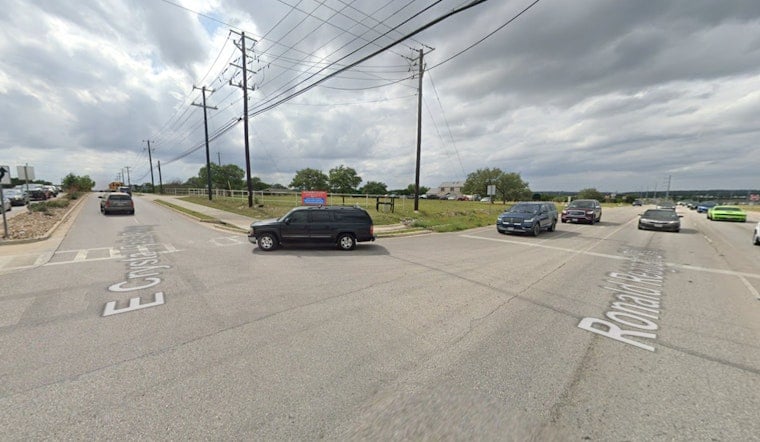
Leander City Council has approved a $20.8 million contract to build a new water pump station and 2.5 million-gallon ground storage tank at the northeast corner of Ronald Reagan Boulevard and East Crystal Falls Parkway, a project city officials call a linchpin in stabilizing water delivery for one of the fastest-growing cities in the country. The council awarded the contract on August 6 to Austin Engineering Co., which was selected from a field of 13 bidders offering prices ranging from $18.3 million to $29.3 million.
According to Community Impact, the first phase of the project will move about 17.5 million gallons of water per day and will include three of the facility's five planned pumps. The station is designed to take water flowing from the Brushy Creek Regional Utility Authority through the Ronald Reagan Boulevard corridor, loop it to the north side of the city and recirculate it through Leander's distribution system. City official Tony Bettis said the project is a linchpin in Leander's water master plan, and that water storage helps smooth out daily water use, per the same outlet's report.
The site sits at the same intersection where a private contractor struck a major BCRUA transmission main in April, cutting treated water delivery to nearby neighborhoods and schools, as Hoodline reported at the time. The new facility is intended to address water demand along that corridor during peak hours, addressing both daily surges in usage and the kind of localized transmission vulnerability exposed by that break, the outlet's report on the pump station notes.
A City Straining Under Its Own Growth
Leander's population climbed from 59,202 at the 2020 census to an estimated 91,132 by 2025, according to the U.S. Census Bureau, a surge that has repeatedly outpaced the city's utility capacity. As of a 2024 city resolution, Leander operated with a combined treatment capacity of just 24.1 million gallons per day, split between its own 9 MGD Sandy Creek Water Treatment Plant and a 15.1 MGD contractual share of the BCRUA plant. That dependence on the regional partner has proven fragile in the past.
In January 2025, Leander enacted Stage 4 emergency water restrictions, the highest tier in its drought contingency plan, prohibiting all outdoor irrigation when the main BCRUA treatment plant was temporarily shut down for planned valve upgrades, leaving the city reliant solely on its own 9 MGD plant, Hoodline reported at the time. A similar Stage 4 scenario played out in January 2024 amid underwater raw water pipeline repairs, and residents were again asked to cut back in January 2026 during another round of regional utility maintenance.
Funding and What Comes Next
The first phase of the new pump station and storage tank is funded through water impact fees, which Leander City Council raised substantially in July 2023, increasing the charge on new residential developments from $7,129 to $11,064.73 per Living Unit Equivalent. The project ranks eighth in the city's capital improvement planning matrix, which scores proposed projects on operational capacity, economic development, public safety and quality of life, per Community Impact's reporting.
A planned second phase would expand the station's capacity to move 30 to 35 million gallons of water per day, though funding for that future phase still needs to be identified. City planners also anticipate Leander will eventually need a separate booster pump near San Gabriel Parkway and Bagdad Street. The rolling 10-year Capital Improvement Program that this pump station belongs to includes more than $265 million in planned capital spending between fiscal years 2026 and 2030, with over $558 million required through 2035, according to Leander City Council agenda records.
Tied Into a Larger Regional Overhaul
The pump station is one piece of a broader push to shore up the region's water supply. The Brushy Creek Regional Utility Authority, formed in 2007 by the partner cities of Leander, Cedar Park and Round Rock to treat and distribute raw water drawn from Lower Colorado River Authority allocations in Lake Travis, is nearing completion of its own $224.8 million Phase 2 Deep Water Intake project. Contractors finished all underground tunnel and shaft concrete lining for that project in December, according to Community Impact's separate coverage, which will eventually feature a 145 MGD pump station replacing a drought-vulnerable floating barge system.
Combined with Sandy Creek plant improvements and other BCRUA upgrades, city projections show Leander's total daily water treatment capacity climbing to 44 million gallons per day by 2028. The new pump station also follows other recent local storage efforts, including the resumed construction of a 1 million-gallon elevated water storage tank along San Gabriel Parkway that Hoodline covered in a prior infrastructure report. Together, the projects reflect a city trying to build its way out of a pattern of emergency restrictions as its population keeps climbing.





