

























































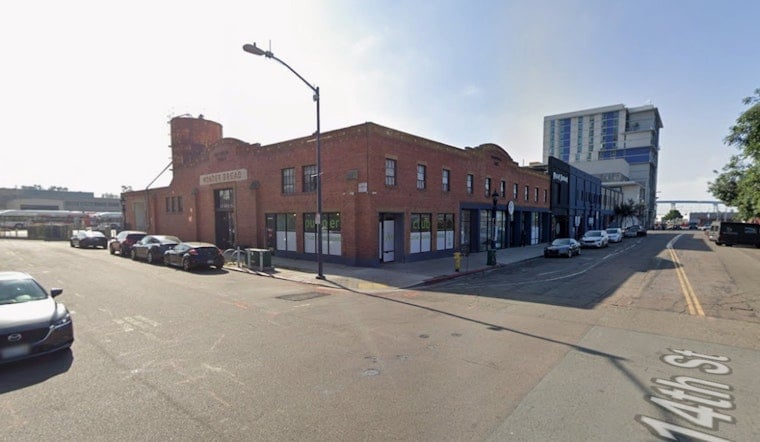
San Diego's century-old Wonder Bread Building is being converted into a 4,000-capacity concert venue, and the entertainment giant behind the plan says the city has needed a room this size for nearly a decade. Live Nation confirmed it purchased the property at 171 14th Street in East Village in June, and the company now plans to gut roughly two-thirds of the site while preserving the historic red-brick bakery as the venue's lobby, box office and bar.
The transaction and redevelopment plan were first detailed by The San Diego Union-Tribune, which reported that Live Nation vice president for the San Diego market John Schalk said the company has sought a venue of this size for close to a decade because the city lacks an indoor, state-of-the-art 4,000-capacity hall. Live Nation expects to host 85 to 90 shows a year at the site once it opens, with a target date in fall 2028. The bakery, built in 1924 and designed by Eugene Hoffman, will retain all four exterior walls, its barrel-vaulted trusses and skylights, and its visible grain silo, while a second-story premium level called the Vinyl Room — featuring fixed seats, box or suite areas and elevated food options — will sit atop the historic structure.
Live Nation says the appeal went beyond square footage. According to the company, it was drawn to the building's history, its red-brick facade and its proximity to Petco Park, and it first became interested in the site about 18 months before this month's announcement. Two additional historic facades along 14th Street will be reconstructed even as the southern portion of the property is demolished and replaced with the new venue and rebuilt storefronts, per the same reporting.
A Century of Bread, Beer and Now Ballads
The site's industrial pedigree runs deep. A bakery first opened across the street in 1894, and Southern California Baking Company operated the Wonder Bread property as a bakery and warehouse until 1952, when Continental Baking Company took over the operation until 1988. The City of San Diego's Historical Resources Board designated the building Historical Site #458 in 2001 under Criterion C for its architectural significance in early 20th-century industrial design, according to city records, a landmark status that requires specialized design and environmental review for major structural changes.
That landmark status nearly didn't survive a prior redevelopment push. In September 2016, the building faced potential demolition under a proposed downtown Chargers stadium plan, a threat that evaporated only after San Diego voters rejected the initiative, as Voice of San Diego reported at the time.
More recently, the building became known for its craft beer tenant. Mission Brewing moved into the property in 2011, installing a 2,500-square-foot tasting room that helped catalyze East Village's broader wave of industrial adaptive reuse, according to San Diego Beer News. That taproom grew into a 14,000-square-foot destination and a major post-game stop for Padres fans, but the outlet reports Mission Brewing will permanently close it on August 31 because of the property sale — a closure also confirmed by SanDiegoVille. Outside the Lens is another current tenant of the property, according to the Union-Tribune's reporting.
Preservationists and Sellers Sign Off
The project has already picked up a notable endorsement from San Diego's preservation community. Save Our Heritage Organisation executive director Bruce Coons praised Live Nation for preserving the historic brick facade and retaining the visible grain silo, according to Live Nation's own announcement of the plan — a striking show of support from a group that has previously fought to protect historic warehouse structures across East Village during past downtown redevelopment pushes.
Former property owners Megan Heine and Torrey Lee said they agreed to sell after Live Nation committed to preserving the bakery's defining architectural features, per the same announcement. Sinclair-affiliate Modern Machinery LLC sold the property to buyer PVVN, LLC for $16.8 million on June 23, per the Union-Tribune's review of the transaction.
On Live Nation's design side, in-house design executive Ruthie Embry said the company is working closely with the city and preservation organizations on the project, the Union-Tribune reported. Architecture firm Gensler submitted the permit application in May 2026. The project still needs a conditional use permit for live indoor entertainment, a neighborhood use permit to expand a previously conforming structure and install a theater marquee, and a neighborhood development permit for deviations from development regulations — all of which will eventually go before a city hearing officer, whose decision can be appealed to the planning commission. The plan is scheduled to be presented to the Downtown Community Planning Council on Wednesday.
Filling a Gap Between the Balboa and the Rady Shell
Live Nation's pitch rests on a genuine capacity gap in downtown San Diego's indoor venue lineup. The 1,339-seat Balboa Theatre and the 2,967-seat Civic Theatre are the city's marquee indoor performing arts halls, according to San Diego Theatres, leaving nothing near the 4,000-seat range indoors — the city's biggest downtown music space remains the outdoor Rady Shell at Jacobs Park, which holds up to 10,000. Live Nation already books shows across the region: it owns the 1,200-capacity Observatory North Park, owns House of Blues San Diego at 1,100 capacity, owns North Island Credit Union Amphitheater in Chula Vista, and serves as primary booking partner at Viejas Arena and Cal Coast Credit Union Open Air Theatre.
Live Nation has framed the project's economic case in dollar terms, estimating in its own announcement that the venue will generate $97 million in local economic impact and support 660 jobs as concertgoers spend money at surrounding East Village businesses. The company has declined to share the overall project cost, according to the Union-Tribune.
Those numbers land against a backdrop of fresh antitrust scrutiny for the company. A federal jury in New York found Live Nation Entertainment liable in April 2026 for monopolizing live concert markets, in a suit brought by a coalition of state attorneys general that included California's Rob Bonta, according to the California Attorney General's Office. State officials celebrated the verdict while continuing to pursue antitrust remedies, even as the company expands its venue footprint in Southern California with projects like the Wonder Bread conversion.
East Village's Entertainment Buildout Continues
The Wonder Bread project lands in a corridor that has been steadily filling with live entertainment infrastructure. Just steps away, Noah Kahan's sold-out Petco Park stadium show drew long lines and strict bag rules earlier this month, underscoring how East Village has grown into a dense entertainment district around the ballpark. Once envisioned by Live Nation as a home for concerts, comedians and podcasts, the ground-floor space at the Wonder Bread site is designed as a standing-room general-admission area that can also accommodate temporary seating as needed.





