

























































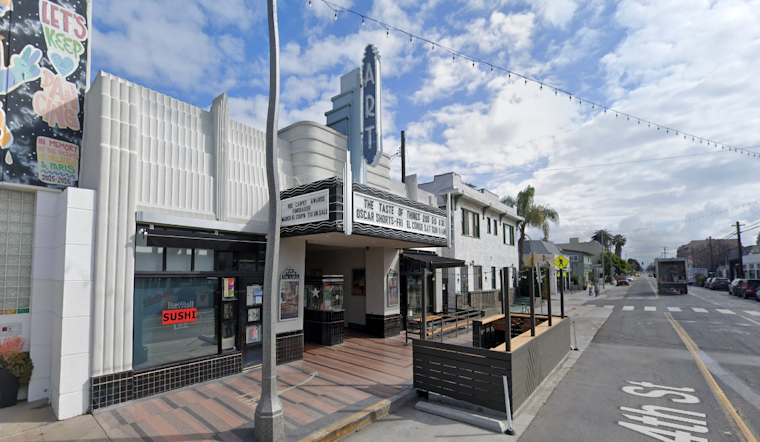
Long Beach is getting its first-ever film festival this weekend, and organizers are staging it inside the city's last surviving single-screen movie house from the silent-film era. The inaugural Long Beach Film Festival runs Saturday and Sunday at the Art Theatre on Retro Row, featuring eight screening blocks that mix four independent feature films with four short-film collections.
Among the features is the SXSW-selected drama Downbeat, directed by Danny Madden, alongside the psychological horror film Ugly Cry, plus Again Again and Rescued, according to DoLA. All four directors are scheduled to attend for interactive Q&A sessions following their screenings, giving festivalgoers a chance to hear directly from the filmmakers behind the work. CBS News Los Angeles spoke with Hunter Stiebel, the festival's director of programming, ahead of the CBS News weekend event, framing it as entertainment news for a city better known for its beach than its box office.
A Playground Conversation Became a Festival
The origin story behind the whole event traces back to a children's birthday party at a Signal Hill playground, where board president Teodor Todorov struck up a conversation with Stiebel after noticing him wearing a Sundance T-shirt, as reported by LAist. Stiebel reportedly hesitated before agreeing to take on the programming director role, wary of the amount of work involved in building a festival from scratch. That casual playground chat has since grown into a two-day event with feature films, short-film blocks, and industry panels.
Leading the nonprofit festival is Executive Director Sonja Schenk, a former television showrunner and Chapman University film professor who also owns the ARTSPACE3232 studio in Signal Hill, according to the Long Beach Film Festival's own board page. Schenk's résumé includes showrunning credits on major national network series, giving the fledgling event industry credibility from the top down.
City Backing and a Retro Row Footprint
The festival was organized in official partnership with the Arts Council for Long Beach and Visit Long Beach, which the same LAist report notes reflects real municipal and tourism-bureau investment in the event. Off-site programming includes an opening-night party at the Queen Mary and an LBFF FilmLounge on 4th Street, where passholders get dedicated lounge access near the main theater, per Broadway World.
Tickets for individual screenings run $10 to $20, while a $75 All-Festival Pass covers the full slate. A $150 VIP Pass adds access to the opening and closing parties, industry panels, and filmmaker mixers, and passholders also receive complimentary popcorn, the outlet reports.
Why the Art Theatre, and Why August
Organizers chose the Art Theatre in part because summer offers more scheduling flexibility than autumn or winter, when major Hollywood studios enforce strict screening requirements ahead of awards season, LAist reported. Theater management has also noted growing local demand for event-based independent cinema, a trend the new festival is aiming to capture.
The venue itself carries considerable weight in Long Beach's cinema history. Originally built in 1924 as the Carter Theatre, the Art Theatre was rebuilt with its now-iconic Art Deco façade after sustaining damage in the 1933 Long Beach earthquake, according to the Long Beach Post. It underwent a $1 million restoration in 2008 based on original 1933 blueprints, and it opened during the silent-film era complete with an orchestra pit. Of the more than 50 independent single-screen movie houses that once operated in Long Beach during the 1920s, the Art Theatre is the only one still running today, now organized as a 501(c)(3) nonprofit.
Long Beach's Deeper Movie History
The new festival also taps into a filmmaking legacy that predates Hollywood itself. Long Beach's film tradition dates back to 1913, when the Balboa Amusement Producing Company operated in the city as one of the largest silent-film producers in Southern California, according to KCRW. The city has since served as a filming location for movies including Ferris Bueller's Day Off, Donnie Darko, and La La Land.
For now, the festival's footprint stays tightly focused on the 4th Street corridor and the Art Theatre itself, even as organizers eye regional competitors like the Newport Beach and Santa Barbara film festivals down the road. This weekend marks the test run — eight screening blocks, four visiting directors, and one century-old theater standing in for the whole city's cinematic ambitions.





