

























































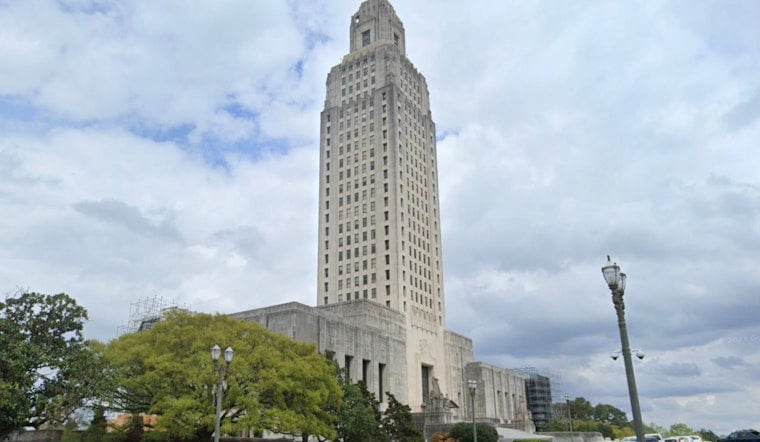
Louisiana regulators have postponed a vote on a proposal that would tack a 20-cent monthly fee onto electric bills to help fund early research into small nuclear reactors, after two commissioners raised objections over asking ratepayers to cover speculative utility research. The Louisiana Public Service Commission now plans to take up the measure on September 16, giving commissioners more time to sort out who should actually pay for it.
The proposal, filed under Docket No. R-37871 and dubbed the Louisiana Advanced Nuclear Exploration Program, or LANE, would apply the charge to customers of Entergy Louisiana, Cleco Power, and SWEPCO through 2030, according to the Louisiana Public Service Commission. Entergy New Orleans customers are exempt, since utility rates in Orleans Parish fall under the New Orleans City Council rather than the state commission, as reported by News From The States. As New Orleans CityBusiness reports, revenue from the fee would fund feasibility studies, site assessments, economic modeling, and other early-stage work on small modular reactors and microreactors in Louisiana.
Two Commissioners Push Back on Ratepayer Funding
Commissioner Davante Lewis requested the postponement, saying he supports studying the proposal but believes utility companies should pay for their own research rather than passing the cost to ratepayers, per the same CityBusiness report. Commissioner Jean-Paul Coussan backed Lewis's concern, though he described his own position as a strong maybe on supporting the tariff if other funding sources turn out to be unavailable. Coussan added that other funding sources might make the fee negligible and reduce its impact on ratepayers, the outlet notes.
The proposal came from LPSC Chairman Eric Skrmetta, who directed commission staff in March to examine ways utilities could increase nuclear power generation before formally proposing the tariff. Skrmetta is term-limited after three six-year terms representing District 1, leaving his seat open this year — a transition Hoodline covered in its report on the five-way race to replace him. Skrmetta has also pushed a separate, contested rule requiring intervenors in utility dockets to disclose out-of-state funding, a policy fight Hoodline detailed in July.
What the Fee Would Actually Buy
Small modular reactors can generate up to 300 megawatts of capacity, about one-third the output of a classic reactor, while microreactors top out around 20 megawatts and can operate independently of the public electric grid, the article notes. One megawatt can power roughly 1,000 homes, per the U.S. Department of Energy. Microreactors are typically eyed for remote locations and facilities like data centers, according to the same report.
Cost is central to the debate. A Lazard analysis found that nuclear power is on average the most expensive form of electricity generation in the country even after federal tax subsidies, though that analysis covered conventional nuclear plants rather than smaller, portable reactors, the CityBusiness report clarifies. Lazard's broader 2025 Levelized Cost of Energy report put new conventional nuclear at $141 to $220 per megawatt-hour, compared with $38 to $217 for utility-scale solar and $48 to $107 for combined-cycle natural gas, according to Lazard.
A Statewide Nuclear Push, With Federal Backing
The tariff debate is unfolding against a broader state campaign to expand nuclear power. State officials unveiled the Louisiana Nuclear Strategic Framework at the CERAWeek energy conference in March, laying out a strategy to expand nuclear generation, manufacture reactor components, and build out uranium fuel conversion capacity, according to the 10/12 Industry Report. That framework aims to position Louisiana as an energy hub capable of supplying power-hungry data centers and industrial users.
Industrial contractor Turner Industries is already building on that vision, announcing plans in April for 1,000 direct jobs averaging $77,000 a year at new nuclear fabrication facilities in New Iberia and Port Allen to build components for small reactors. In July, the U.S. Department of Energy selected Louisiana to join a federal initiative encouraging investment and supply chain development across the nuclear industry, a move that follows President Donald Trump calling on state leaders to promote nuclear energy. Separately, the National Science Foundation renewed $45 million in federal grant funding in March for the Future Use of Energy in Louisiana initiative, money commissioners have floated as a potential way to offset costs that might otherwise land on electric customers, according to Jones Walker LLP.
Existing Reactors Already Anchor the Grid
Louisiana already draws on two operating nuclear plants — Waterford 3 in Killona and River Bend in St. Francisville — with a combined capacity of more than 2,100 megawatts that generated roughly 15% of the state's electricity in 2024, according to the U.S. Energy Information Administration. Natural gas still dominates the state's power mix at roughly 70%. Entergy Louisiana applied to the commission last August for a $68.7 million power uprate at Waterford 3 to add about 45 megawatts of baseload capacity by 2029, per World Nuclear News, showing utilities are pursuing expansion at existing plants even as the state studies newer, smaller reactor technology.
For now, the fate of the 20-cent surcharge rests with the full commission when it reconvenes next month. Lewis and Coussan's objections signal that even a modest per-meter charge faces real scrutiny in a state where regulators are simultaneously courting federal nuclear investment and fielding complaints about who should shoulder the upfront cost of getting there.





