

























































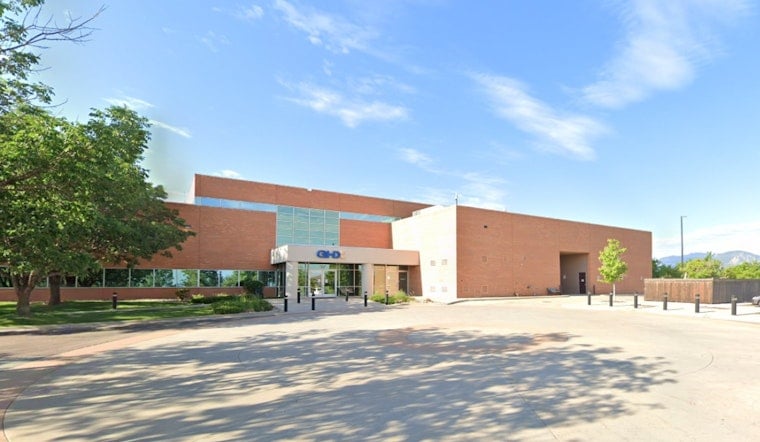
A quantum computing company has planted its global headquarters flag in Louisville, Colorado, opening a sprawling new facility that its backers say cements Boulder County's status as one of the country's premier hubs for the emerging technology. Infleqtion held the grand opening of its Colorado Quantum Innovation Center at 1315 W. Century Drive this week, a site that now serves as the company's worldwide base for neutral-atom quantum computing and quantum sensing work.
The facility is designed to push quantum computers toward solving problems far faster than traditional machines while advancing scientific research, according to CBS Colorado. Beyond quantum processing, the Louisville headquarters is also built for full-stack production of precision sensing hardware, including optical atomic clocks, radio-frequency receivers, and inertial sensors, according to reporting from Quantum Financial. Infleqtion already maintains active quantum computing and sensing deployments with the U.S. Department of Defense, NASA, and the UK Royal Navy, per StreetInsider.
A Mineral-Mapping Test Already on the Calendar
Timed to the headquarters opening, Infleqtion also announced plans for a 2027 field demonstration of its Quantum Gravity Gradiometry technology, aimed at mapping subsurface critical mineral deposits across Colorado's 3rd Congressional District, according to Quantum Financial. The project lines up with federal initiatives tied to the Quantum Critical Minerals Act and the U.S. Geological Survey's Earth MRI program, the outlet noted.
U.S. Rep. Brittany Pettersen, who represents Colorado's 7th Congressional District, said the facility will contribute to what's being called America's Quantum Peak corridor. She called quantum computing a key area for building a major future industry in Colorado, and said the technology is essential not just for her district's economy but for the state's and the nation's well-being, per CBS Colorado.
Governor Jared Polis said the facility proves Colorado's technology sector is attracting business to the state and is strengthening its economy, according to the same CBS Colorado report. Colorado elected leaders broadly said being first in quantum computing will help the state build on its existing leadership in aerospace and energy.
Roots Going Back to a CU Boulder Spinout
Infleqtion's origins trace back nearly two decades. The company was founded in 2007 as ColdQuanta by University of Colorado professor Dana Anderson, then rebranded to Infleqtion in 2022 before expanding its global workforce to more than 200 employees and going public under the ticker INFQ, according to BizWest. CU Boulder leadership considers Infleqtion one of the university's most successful spinouts, per the outlet's reporting.
The company's new home sits inside what state officials are calling America's Quantum Peak — the Boulder–Louisville–Broomfield corridor, now home to more than 35 quantum companies, the second-highest concentration of such firms in the country, according to the State of Colorado. That concentration didn't happen overnight. It builds on JILA, a joint institute founded in 1962 by CU Boulder and the National Institute of Standards and Technology, which has produced four Nobel Prize-winning physicists whose work laid the groundwork for neutral-atom quantum science, per the state.
Federal and State Dollars Fueling the Buildout
The region's momentum has been backed by serious public money. In July 2024, the U.S. Economic Development Administration awarded $40.5 million in CHIPS and Science Act Tech Hub grant funding to Elevate Quantum, formally designating the region as an official federal quantum tech hub, according to the U.S. Economic Development Administration. Elevate Quantum oversees a consortium of more than 100 organizations across the Mountain West.
State legislation passed the same year unlocked an additional $74 million in state matching funds for quantum development, including $44 million in refundable tax credits for shared research space and $30 million in loan loss reserves for small businesses, the Colorado Office of Economic Development and International Trade has reported. State funding was contingent on the region first securing its federal Tech Hub designation.
The economic case extends well beyond PhD researchers. Regional economic data from 2026 indicates the quantum industry now supports more than 19,000 jobs across the Mountain West, with 80% of those roles not requiring a doctorate and instead relying on skilled trades like machining, welding, and optical technician work, according to the Colorado Office of Economic Development and International Trade. Hoodline previously reported on the broader boom in Front Range tech funding in its look at Denver's billion-dollar startups, which highlighted quantum firms like Quantinuum alongside major venture investment pouring into the region.
Open questions remain about how quickly Infleqtion's new facility and others like it will translate into the promised wave of non-PhD technician jobs, and how smoothly early field tests like the 2027 mineral-mapping demonstration will scale into commercial products. For now, the Louisville opening stands as the most visible physical marker yet of Colorado's bet that quantum technology can become as central to its economy as aerospace and energy already are.





