
























































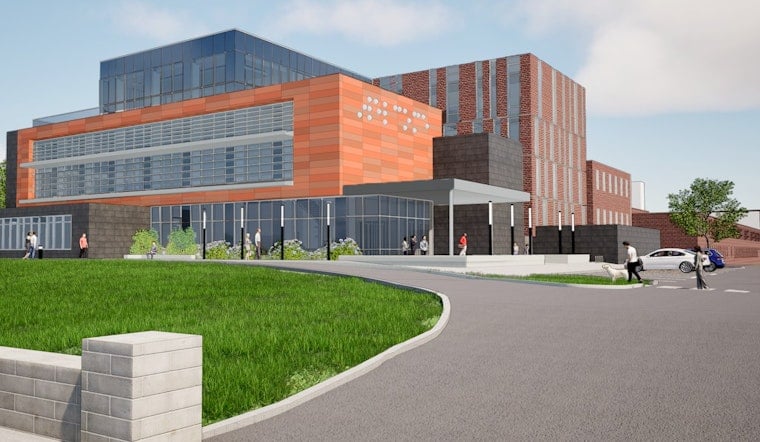
A new Louisville museum is throwing out one of the oldest rules in the business: no touching. The Dot Experience, a 28,000-square-foot interactive museum built by the American Printing House for the Blind, will open to the public on October 30 at 1839 Frankfort Ave., inviting visitors to explore blindness, braille, and accessibility through touch, sound, movement, and storytelling.
The museum is the centerpiece of a $55 million campus expansion at APH, with $22 million specifically dedicated to the new building — a space roughly five times larger than the nonprofit's previous museum, according to 6AM City. Construction broke ground in May 2023 on the Frankfort Avenue campus. As reported by WLKY, museum officials say accessibility has been built into every aspect of the museum from the ground up, and organizers hope it becomes both a major Louisville attraction and a model for inclusive museum design worldwide.
A Design Process Guided By The Blind Community
Rather than sealing artifacts behind glass, The Dot Experience pairs delicate originals with precise, one-to-one tactile replicas so blind and sighted visitors share the same sensory experience, per Solid Light, the Louisville-based design-build firm behind the project. Solid Light used an iterative prototyping process and incorporated community feedback as it developed the museum's interactive elements. That kind of ground-up collaboration is central to why organizers describe the museum as breaking from traditional do-not-touch standards, the firm notes.
APH itself is a Louisville-based nonprofit founded in 1858, and it has grown into the world's largest producer of educational materials and technology for students who are blind or have low vision, according to WLKY. Visitors to The Dot Experience will also get the chance to tour APH's working production facility, where the organization manufactures braille books and other accessible educational materials for students nationwide.
Rare Artifacts Anchor The Collection
Among the centerpieces is a 1922 Steinway Model A grand piano that Stevie Wonder played in the 1960s while attending the Michigan State School for the Blind. The instrument was originally loaned to APH in 2012 and is planned for display, according to the American Printing House.
The museum will also display one of only six known surviving copies in the world of Louis Braille's original 1829 manuscript, Procédé pour écrire les Paroles, la Musique et le Plain-chant au moyen de points — the publication that introduced the six-dot tactile code still used today. APH acquired the manuscript in 2016 for $95,000, as reported by Selling Travel. The collection additionally includes braille writing machines spanning the technology's history, along with interactive exhibits highlighting more recent technological advances.
Helen Keller Archive And Other Historic Materials
The Dot Experience also incorporates the National Federation for the Blind's Helen Keller Archive, which includes historic artifacts connected to Keller's life and legacy, per WLKY. In March 2025, the American Foundation for the Blind and The Dot Experience publicly released a rare, 90-year-old audio recording from the 1930s featuring a historic speech by Keller, according to Top Tech Tidbits.
APH's authority as the nation's primary producer of accessible educational materials traces back to the 1879 Federal Act to Promote the Education of the Blind, which established a national quota program funding specialized instructional tools for blind students below college level, per the U.S. Department of Education. The Federal Quota Program remains part of APH's federal statutory role. The organization's work also includes technological innovation.
Reaching Classrooms Before The Doors Open
Ahead of the physical museum's opening, APH has been developing ways to bring its mission to audiences. The museum includes a Decoding Braille exhibit and a Helen Keller-related exhibit.
The push toward accessible, hands-on design is intended to benefit people with vision impairment. That focus underscores why organizers see The Dot Experience not just as a local museum but as a potential template for inclusive design nationwide.





