

























































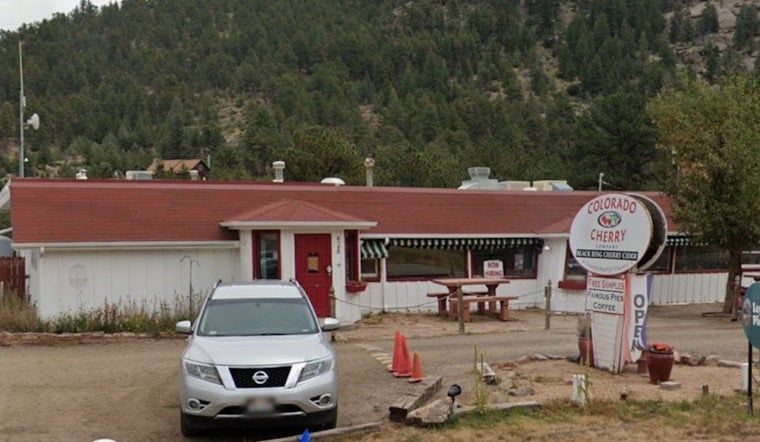
A young bear tore through a window screen and broke into the Colorado Cherry Company along Highway 36 north of Lyons, climbing inside to eat blueberry pie off the floor near the cash register. Staff had left the window slightly unlatched after closing, and the aroma reportedly was enough to draw the bear in for a late-night snack.
According to CBS News, the bear pushed through the exterior screen, forced open the window, and climbed inside before settling in for its pie feast. Security camera footage inside the shop captured the animal wandering through the store afterward, pausing to look over travel brochure displays before exiting back through the window it entered — leaving the rest of the shop undisturbed, per the outlet's report.
A Familiar Scene at the Lyons Pie Shop
This wasn't the pie shop's first unwanted visitor. Back in July 2015, a bear broke through a window at the same location, climbed on top of an oven, and devoured two to three dozen cherry and apple pies, famously leaving behind a single strawberry rhubarb pie untouched, as reported at the time by The Guardian and 9News. That earlier incident went viral, cementing the shop's reputation as something of a bear magnet along the Front Range.
The Colorado Cherry Company is a fourth-generation family business dating back to 1929, with its Lyons location operating since 2010 as a popular roadside stop for travelers heading toward Estes Park and Rocky Mountain National Park, according to the company's official site. Following this month's break-in, shop management said they are tightening procedures, including triple-checking window latches and securing trash dumpsters, to avoid drawing bears back to the site, the CBS report noted.
Colorado's Busiest Year Yet for Bear Conflicts
The Lyons incident lands amid what is shaping up to be Colorado's worst year on record for human-bear encounters. Between January 1 and August 13, Colorado Parks and Wildlife recorded 6,129 bear sightings and conflict reports statewide, according to KRDO — nearly double the 3,115 reports logged over the same stretch last year, and already more than the 5,299 reports tallied across all of 2025.
Severe drought, low winter snowpack, and wildfires have wiped out natural food sources like berries and acorns, pushing hungry bears into human-populated areas as they enter late-summer hyperphagia, when they forage up to 20 hours a day to build fat reserves for winter, per reporting from The Colorado Sun. State data from last year found unsecured trash was the primary driver in more than 57 percent of reported bear conflicts statewide, with 2,448 incidents resulting in property damage to homes, garages, sheds, or vehicles, according to the Pagosa Daily Post.
New State Law Cracks Down on Bear Attractants
The timing of the Lyons break-in coincides with a newly enacted Colorado law aimed squarely at the behaviors fueling these encounters. House Bill 26-1342, which took effect on August 12, lowered the legal standard for luring bears from “intentionally” to “knowingly,” eliminated mandatory first-offense warnings, and raised maximum fines to $5,000 for repeat offenders who leave out unsecured food or garbage, according to the Colorado General Assembly. Under the new rules, officers can now ticket individuals immediately upon finding unsecured attractants, rather than issuing a warning first.
The stakes for habituated bears remain high. In 2025, Colorado Parks and Wildlife relocated 68 black bears and euthanized 98 statewide due to recurring conflicts with humans, following agency protocols that call for destroying bears deemed a safety risk once they become habituated to human food sources, The Colorado Sun reported. Wildlife officials have repeatedly stressed the phrase “a fed bear is a dead bear” when urging residents and businesses to secure attractants.
The Lyons pie heist joins a string of similar incidents across Colorado this summer, including a bear that broke into the Grand Timber Lodge for M&Ms in Breckenridge earlier this month, as per Hoodline. Whether the Lyons bear returns for a third round remains to be seen, but with hyperphagia season in full swing and natural food scarce, wildlife officials say more encounters are likely before winter sets in.





