

























































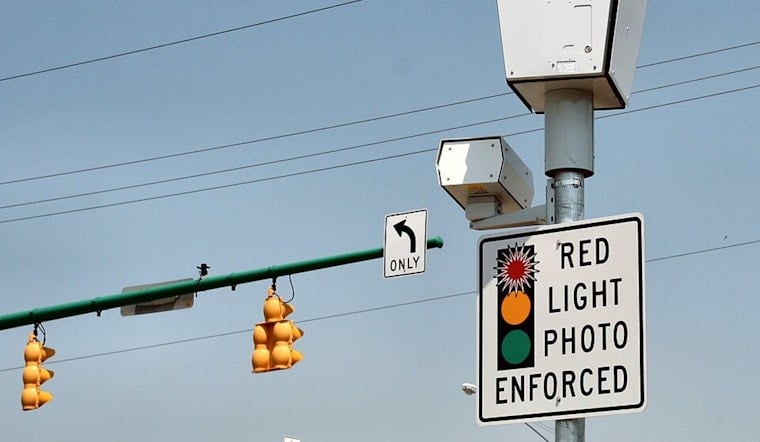
Malibu's automated speed camera system along Pacific Coast Highway is nearing completion, with officials announcing the start of a public education campaign ahead of a 60-day warning period set to begin in late September. Civil penalties are expected to follow in late November, marking the culmination of a years-long push to slow drivers down on a stretch of road that has killed more than 60 people since 2010.
The rollout, first detailed by MyNewsLA.com, comes as the city works through the technical and public-outreach steps required before the cameras can start generating citations. The system uses lidar technology and cameras to identify vehicles traveling at least 11 mph over the posted speed limit, and it covers Malibu's full 21-mile stretch of PCH. The outreach campaign provides residents and commuters with details on how the system works, where the cameras are located, and when enforcement will actually begin, according to the same report. More information is available at malibucity.org/pchsafetycameras.
Under the program, cameras photograph a vehicle's rear license plate and begin recording only once a speed violation is detected; footage involving nonviolating vehicles is deleted immediately. Bruce Silverstein said the goal is to improve safety for everyone using Pacific Coast Highway, per MyNewsLA.com's reporting. Malibu can operate up to five automated speed-enforcement systems within city limits, with authority for as many as ten cameras total.
Fines Without License Points
Once paid enforcement begins, drivers caught 11 to 15 mph over the limit will face a $50 civil fine, rising to $100 for 16 to 25 mph over, $200 for 26 to 99 mph over, and $500 for speeds exceeding 100 mph, according to the Los Angeles Times. The fines are civil infractions that will not add points to a driver's license or affect insurance rates. The system also includes a diversion program for eligible low-income residents and an appeals process, and stored violation records will be destroyed within 60 days after a case is resolved. During the initial 60-day warning period, drivers exceeding the threshold will receive warnings rather than citations, per MyNewsLA.com.
Program revenue will first go toward implementation costs, including equipment and staffing, with any remaining funds potentially supporting additional traffic-calming measures on PCH that the city plans to coordinate with Caltrans. Early data from Oakland, one of the other California cities piloting automated speed enforcement under AB 645, showed its 35 cameras issuing 82,000 civil citations in their first month of paid enforcement this spring, as reported by The Independent.
A Highway With a Deadly Toll
The push for cameras traces directly back to October 2023, when four Pepperdine University students were killed after being struck by a speeding driver while standing along PCH, prompting Malibu to declare a safety emergency. MyNewsLA.com reports that crashes along Malibu's PCH resulted in 220 total collisions, 93 injuries, and seven deaths in 2023 alone. State legislative analysis from the office of state Sen. Ben Allen, D-Santa Monica, who authored the legislation authorizing the camera program, found 134 crashes along the corridor between 2019 and 2023 resulted in a fatality or severe injury — giving Malibu the highest rate of severe-injury crashes among California cities of comparable size.
California Highway Patrol and Los Angeles Times records documented 49 traffic fatalities on Malibu's PCH between 2012 and 2022, along with 170 combined fatal and serious-injury crashes between 2011 and 2023. Gov. Gavin Newsom signed Senate Bill 1297 into law in September 2024, authorizing Malibu to deploy the automated cameras under a five-year pilot program set to expire on January 1, 2032.
Layered Enforcement and Road Redesigns
The cameras are only the latest layer in a broader safety push. In January 2024, the Malibu City Council approved a $2 million contract bringing a dedicated three-officer California Highway Patrol task force back to PCH for the first time since 1991 — a unit that issued more than 1,000 speeding citations in its first four months. Caltrans had already allocated $4.25 million in December 2023 for quick-build safety improvements, funding electronic speed feedback signs, enhanced lane striping, and upgraded crosswalks completed in early 2024.
The city and Caltrans are also advancing a quick-build pilot project proposing temporary roundabouts at PCH intersections near Encinal Canyon Road and El Matador Beach Road, reconfiguring four travel lanes into single-lane roundabouts to slow traffic in high-pedestrian beach access areas. Separately, Malibu officials warned this month that accelerating coastal erosion along PCH in the Palisades Fire burn area threatens roadway stability, and the city has requested fast-tracked permanent stabilization work from Caltrans before winter storms arrive.
Camera Rollout Coincides With Murder Trial
The public education campaign's launch comes just weeks before driver Fraser Michael Bohm, 24, is scheduled to stand trial on Sept. 8 in Los Angeles County Superior Court on four counts of murder and vehicular manslaughter in the October 2023 crash. A judge denied a defense motion to drop the murder charges in July, according to the Los Angeles Times. Prosecutors allege Bohm reached 104 mph in a 45-mph zone before losing control of his BMW.
Hoodline previously reported on the pretrial case against Bohm and on the ghost tire memorials that appeared along PCH after the crash. For now, the camera system's activation timeline stands separate from the criminal proceedings, but both trace back to the same October 2023 tragedy that pushed Malibu to declare a highway safety emergency and pursue the automated enforcement program now nearing its final stage.





