

























































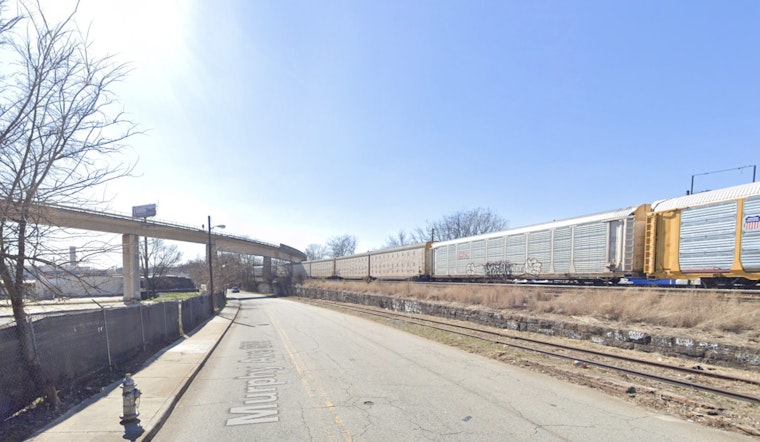
A man was struck and killed by a Norfolk Southern train along Murphy Avenue in Southwest Atlanta just after midnight Tuesday, and his identity has not been released pending notification of next of kin. Atlanta police and Norfolk Southern investigators remained on scene for several hours overnight working to piece together what happened.
Atlanta police told Atlanta News First that the preliminary investigation suggests the death was an accident. The station reports that investigators believe the victim may have been sitting or standing on the tracks when the train approached, and police are now investigating whether he heard the train before it arrived. The collision happened away from a railroad crossing, along an open stretch of track in a mostly commercial stretch of Murphy Avenue.
A Quiet Approach on an Industrial Corridor
According to the same report, trains can be surprisingly quiet when they are not sounding their horn, a detail that speaks directly to why the victim may not have heard the train coming. Federal regulations help explain why: under 49 CFR Part 222, the Federal Railroad Administration requires locomotive engineers to sound horns approaching public grade crossings, but not along open stretches of track unless a hazard, crew, or person is spotted on the right-of-way. Because Tuesday's strike happened away from a crossing, there was no regulatory requirement for the train to announce itself with a horn blast beforehand.
Murphy Avenue SW sits along a historic industrial rail corridor where active freight lines run alongside commercial facilities and former manufacturing sites in the Oakland City, Capitol View, and Adair Park neighborhoods, according to the Atlanta BeltLine. Even after emergency brakes are applied, a fully loaded freight train moving at 55 mph can need a mile or more — roughly the length of 18 football fields — to stop completely, per data from Operation Lifesaver. That stopping distance underscores why engineers often cannot avoid a collision even after spotting someone on the tracks.
Georgia's Track Record With Rail Trespass Deaths
Georgia recorded 35 total rail trespass casualties in 2025, including 22 fatalities and 13 injuries, ranking among the top states nationwide for pedestrian rail trespassing incidents, according to Federal Railroad Administration statistics compiled by Operation Lifesaver. Nationally, trespassing along railroad rights-of-way remains the leading cause of train-related deaths — the National Safety Council found that of 959 rail-related deaths in 2025, 651 were attributed to unauthorized trespassers on tracks, accounting for roughly 68% of all rail deaths and 97% of non-crossing rail deaths.
Walking, sitting, or standing on railroad tracks is illegal in Georgia regardless of intent. Under Georgia Code § 46-8-380, unlawfully intruding on a railroad company's constructed track without consent is a misdemeanor offense carrying penalties of up to 12 months in jail and fines up to $1,000, according to Justia Law. A landmark study by the Centers for Disease Control and Prevention examining rail trespasser deaths in Georgia found that a high proportion of victims were struck during pre-dawn hours or while sitting or lying on active tracks, a pattern investigators may weigh as they continue examining Tuesday's early-morning collision.
A Neighborhood in Transition Along the Tracks
The stretch of rail corridor along Murphy Avenue SW is in the middle of major urban redevelopment, including the 20-acre Murphy Crossing mixed-use project at 1050 Murphy Avenue SW and planned multi-use trails meant to improve pedestrian connections between local MARTA stations and the Atlanta BeltLine, according to Urbanize Atlanta. Hoodline previously reported on plans to pack 600 homes into the Oakland City site, part of a broader push bringing more residential density and foot traffic to a corridor long dominated by industrial rail use.
Nationwide, a train strikes a vehicle or pedestrian roughly once every three hours — about eight incidents per day — according to Federal Railroad Administration data compiled by Operation Lifesaver. Metro Atlanta has seen a string of fatal train strikes in recent months, including a deadly pre-dawn collision at a Roosevelt Highway crossing in South Fulton in July, a fatal strike at a Cobb County crossing in Powder Springs in March, and another fatal train collision in Hall County in February. It remains unclear whether Norfolk Southern or city officials plan any additional safety or fencing enhancements along the Murphy Avenue corridor as redevelopment continues to draw more people near the tracks.
Atlanta police and Norfolk Southern say the investigation into Tuesday's death remains ongoing, and the man's identity is expected to be released once his family has been notified.





