

























































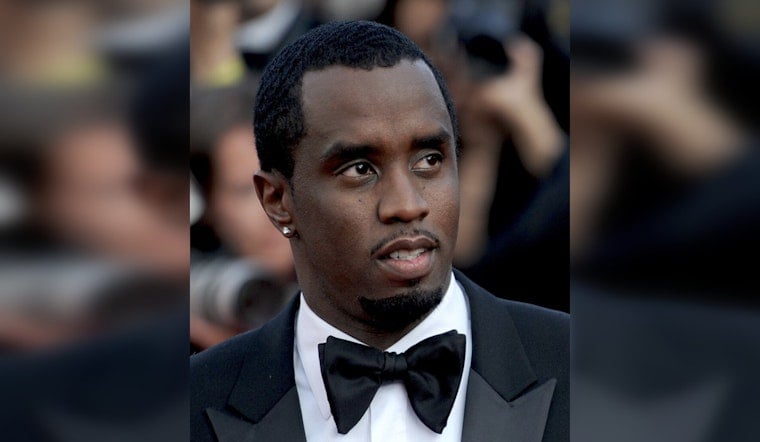
A Manhattan judge has refused to toss out a lawsuit accusing Sean “Diddy” Combs of drugging and sexually assaulting a man in a Manhattan hotel room in February 2020, rejecting arguments from Combs’ legal team that a male accuser cannot claim gender-motivated violence against another man. Justice Arlene Bluth ruled that the same-gender defense had no support in case law, allowing the anonymous plaintiff’s core sexual assault and battery claims to move forward while trimming other parts of the case.
The plaintiff says he worked for Combs running errands and that the two met at a Manhattan hotel to discuss outstanding payments he was owed, according to RadarOnline. It was during that meeting, the lawsuit alleges, that Combs drugged and sexually assaulted him. Combs was CEO of Bad Boy Records at the time, and both he and associated Bad Boy corporate entities moved to dismiss multiple claims in the suit.
Defense Argued Same-Gender Rape Couldn't Meet Legal Standard
Defense attorneys argued the plaintiff failed to sufficiently allege gender-based animus, a required element under New York City's Gender-Motivated Violence Protection Act, per the same outlet's report. Justice Bluth disagreed, finding that allegations of rape and sexual assault can plead gender-based animus on their own, and she declined to create a carve-out for alleged same-sex rape. She said the same-gender argument was not supported by any case law and that same-gender rape could satisfy animus toward that gender.
That reasoning tracks with established New York appellate precedent: courts have already held, in the case of Breest v. Haggis, that allegations of nonconsensual sexual assault inherently satisfy the gender-based animus requirement because consent is absent during coerced sexual acts, according to Holland & Knight. The Gender-Motivated Violence Protection Act, enacted in 2000 under NYC Administrative Code Chapter 11, allows victims of gender-biased violence to seek compensatory and punitive damages in civil court without a prior criminal conviction, per the New York City Bar Association.
Corporate Claims Dismissed, But Case Against Combs Personally Survives
Justice Bluth did side with the defense on several fronts. She dismissed the gender-motivated violence claim against the corporate defendants, along with the sexual assault and battery claims against those same corporate entities, and she also dismissed the intentional infliction of emotional distress claim, which the plaintiff did not oppose. The sexual assault and battery claims against Combs personally remain intact.
The dismissal of corporate liability rests on timing. A 2022 amendment expanded liability under the gender-violence law to parties who allegedly enable or participate in such violence, but that amendment cannot be applied retroactively to the alleged 2020 incident. That interpretation mirrors a December 2024 federal ruling in a separate case, Doe v. Combs, in which a Southern District of New York judge similarly found the 2022 corporate-liability amendment could not reach conduct predating 2022, according to CaseMine.
Judge Orders Discovery Into Corporate Ties
Despite dismissing the corporate gender-violence and sexual assault claims, Justice Bluth refused to dismiss negligence and negligent hiring claims against the corporate defendants. She found that the meeting's discussion of missing job payments connected the encounter to the corporate defendants, and she ruled that discovery was necessary to determine each corporate defendant's exact role. The plaintiff was not required to prove his entire case at the pleading stage, the judge noted.
Combs' defense had argued the alleged encounter occurred at a third-party hotel and lacked sufficient connection to the corporate defendants. That argument didn't sway the court on the negligence claims, and the lawsuit will now move forward, with defendants required to answer the complaint. A discovery conference is scheduled for September 16 in Manhattan.
One Case Among Dozens Still Pending
This lawsuit is just one piece of a much larger legal battle surrounding Combs. He was convicted in a Manhattan federal court in July 2025 on two counts of transportation to engage in prostitution, while a jury acquitted him of sex trafficking and racketeering conspiracy, according to The Washington Post. He was sentenced in October 2025 to 50 months in federal prison and is now held at FCI Fort Dix in New Jersey pending appeals, per IBTimes UK.
As of October 2025, Combs faced more than 70 active civil lawsuits nationwide alleging sexual assault, physical abuse, or misconduct spanning over three decades, according to XXL Mag. A significant share of those cases were organized by Texas-based attorney Tony Buzbee, whose firm announced in late 2024 that it represented over 100 individuals with claims against Combs and associated corporate entities, a campaign Hoodline first tracked back in 2024.
New York's legal landscape has also shifted to make more of these claims possible. The City Council enacted Local Law 50 in January 2026, opening an 18-month civil lookback window through July 2027 that lets survivors file previously time-barred claims for gender-motivated violence that occurred in NYC before January 9, 2022, according to Sanford Heisler Sharp. That window is what keeps a civil claim over an alleged 2020 Manhattan incident timely today.
Federal courts have continued to wrestle with similar animus questions in other Combs-related suits. In March 2026, the Southern District of New York reviewed gender-animus arguments in a separate case, Tucker v. Combs, evaluating whether specific allegations against him satisfied the physical and verbal standards required under state and federal law, per CaseMine's review of that ruling. Whether the September discovery conference produces corporate records tying Bad Boy entities more directly to the 2020 encounter, and how Combs' ongoing criminal appeals may affect the civil timeline, remain open questions as the case proceeds.





.jpg)