

























































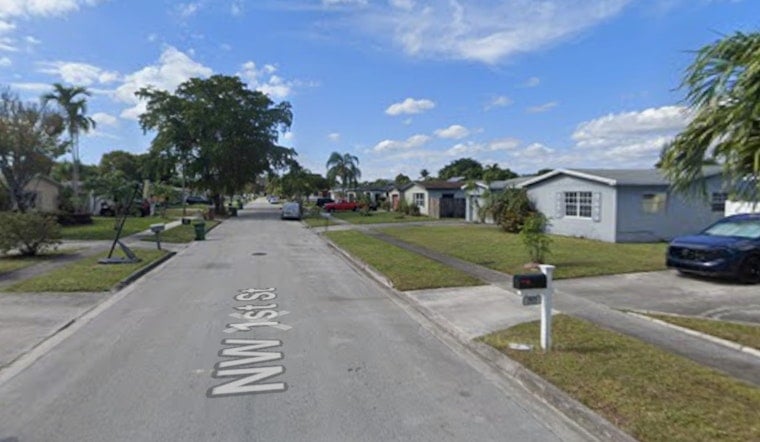
A 40-year-old Margate mother and her 2-year-old son died after lightning struck them on a sidewalk near NW 1st Street during a passing thunderstorm Sunday afternoon. Kenya Glasgow and her son were found on the ground around 2:30 p.m. and given CPR by first responders before both were rushed to separate hospitals, where they died shortly after arrival.
Margate Police and Margate Fire Rescue responded to a 911 call reporting two people struck by lightning near 7900 Northwest 1st Street, according to WPLG Local 10. Glasgow was taken to North Broward Medical Center in Deerfield Beach, while her son was escorted by police to Broward Health Medical Center in Fort Lauderdale. First responders performed CPR on both victims at the scene before transport, and the pair died shortly after arriving at their respective hospitals.
The Margate Police Department is investigating the incident and has expressed condolences to the victims' family and loved ones, the outlet reported. Byron Tollefson and Pablo Hernandez, who reported the story for the station, did not indicate whether the investigation had determined if the mother and son were caught in the open or attempting to seek shelter when the strike occurred, and that detail remains unclear.
A Storm Season That Rarely Lets Up
The tragedy landed squarely within Florida's most dangerous stretch of the year for lightning. Florida had recorded more than 2.3 million lightning strikes by mid-August, with about 90 percent of the state's electrical storm activity occurring during the rainy season between June and September, according to Telemundo 51. Rapid afternoon thunderstorm development is common across Broward County during late summer, and the Margate strike hit at 2:30 p.m., squarely within the window when storms typically build fastest.
Florida also carries the nation's heaviest lightning density. The Vaisala Xweather 2025 Annual Lightning Report found the state logged 305 lightning events per square mile, the highest concentration in the country, even as nationwide lightning activity reached an eight-year peak of 252 million strikes. Texas recorded more total strikes because of its larger land size, but Florida led every state in strike density.
A Rare Double Fatality
National Weather Service data updated in June showed Florida led the country in lightning deaths in 2025 with three fatalities, and had already logged four confirmed lightning deaths in 2026 before the Margate incident. Historical surveillance data from the Centers for Disease Control and Prevention shows Florida has recorded more than 2,000 lightning-related injuries over the past 50 years and 81 lightning fatalities between 2006 and mid-2026, double the total of any other state; Texas ranks second over that same period with 21 deaths.
A 20-year study cited by the National Lightning Safety Council found that more than 70 percent of U.S. lightning fatalities occur during June, July, and August, and that two-thirds of deadly strikes happen between noon and 6 p.m. — a window that aligns with when Glasgow and her son were struck. CDC victim data also shows that males are struck four times more often than females nationwide, meaning a fatal strike involving a mother and her toddler son is an especially rare outcome.
Why Bystander CPR Matters
CDC medical data indicates that roughly 90 percent of lightning strike victims survive, but a direct strike can trigger sudden cardiac arrest, making immediate bystander CPR critical before paramedics arrive. First responders in Margate began CPR on both Glasgow and her son as soon as they reached the sidewalk, though the effort was not enough to save either of them.
Federal safety guidance urges the public to follow the rule “When Thunder Roars, Go Indoors!” and to wait at least 30 minutes after the last thunderclap before heading back outside, since lightning can strike more than 10 miles from the center of a storm. People are often struck before rain even begins falling, or after a storm appears to have moved on.
The Margate deaths follow a string of serious lightning incidents across South Florida this summer, including a July strike that hit a gas-leaking vehicle and sparked a fire on a quiet Miramar block, according to Hoodline's earlier coverage. Margate police have not released further details on the cause of death beyond attributing both deaths to the lightning strike, and the investigation into the incident remains ongoing.





