

























































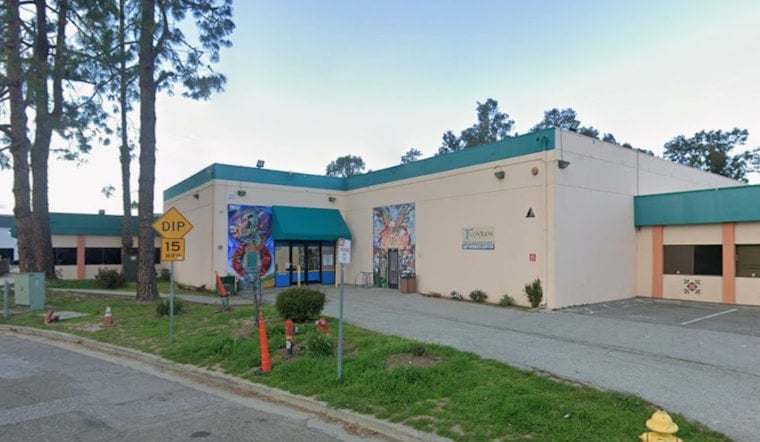
Two murals that had marked the entrance of a building on Story Road for years are gone, painted over by Martha's Kitchen as part of exterior repairs to its new East San Jose food distribution hub. The move has drawn sharp criticism from the artists who created the works, a former tenant who says she had a verbal agreement to protect them, and a local advocacy group that calls the loss a blow to the neighborhood's Chicano and Indigenous heritage.
According to San José Spotlight, Martha's Kitchen bought the 749 Story Road building from ConXión to Community for roughly $7.5 million in July 2025, a purchase that made the 31,900-square-foot facility the nonprofit's first permanent home since it began serving meals in 1981. ConXión to Community leased back about 10,000 square feet of the building for the next 10 years as part of the deal, according to the same report.
ConXión president and CEO Lori Ramos Chavez told the outlet she saw the murals had been painted over on August 8. She claims a verbal agreement existed with Martha's Kitchen to keep the artwork in place, and says ConXión asked Martha's Kitchen during the sale to preserve the murals. Martha's Kitchen leadership reportedly agreed the murals should remain during multiple building walkthroughs, per the Spotlight's reporting, though the nonprofit says it never received a written mural agreement as part of the sale.
Two Different Accounts of a Broken Promise
Bill Lee of Martha's Kitchen said the murals were painted over to address exterior paint that was faded and peeling and to help prevent leaks, and that the nonprofit plans to waterproof the building for that same reason. He disputes ConXión's interpretation of any mural agreement and said the removal had nothing to do with racial or cultural issues, the report states.
Martha's Kitchen did send ConXión a letter in late October 2025 stating the building would be repainted, including the murals, according to the Spotlight's reporting on the letter. Ramos Chavez maintains that Martha's Kitchen is responsible for compensating one of the muralists, Carlos Rodriguez, for the loss of his work.
The Artists and What the Murals Meant
The murals were created by artists Carlos Rodriguez and Jimmy Fonseca. Fonseca's mural was a community project he worked on with children ages 6 to 12, while Rodriguez created the other. The two works were connected to San Jose's youth and its Indigenous community, and a sage plant that had been cultivated on the property and used by members of the local Indigenous community was also removed, per the same account.
Rodriguez had a legal agreement with ConXión, signed in 2020, requiring a $6,500 payment if the mural were ever removed. Before it was painted over, Rodriguez and his wife offered Martha's Kitchen compensation, a replacement mural, or incorporation of the existing work into the new design, but the report states Martha's Kitchen did not respond to that offer before the mural was gone. Rodriguez had also provided information about legal protections he believed applied to the artwork, and in November 2025 he wrote to the city of San Jose asking whether the mural could receive historical recognition.
Why City Hall Couldn't Step In
The San Jose Office of Cultural Affairs responded in November 2025 that its public art program had no jurisdiction over a mural on private property, and the city's public art program has no process to register artwork on private land, the Spotlight reports. That gap exists even though San Jose's Historic Resources Inventory includes a small number of murals; the city has noted that inclusion on that inventory does not protect artwork from demolition once it sits on private property.
That distinction has a well-documented precedent in San Jose. In October 2019, the city's Historic Landmarks Commission voted unanimously to add six Chicano murals to the Historic Resources Inventory after community protests erupted over the abrupt painting-over of the historic Mural de la Raza, according to KQED. Even that historic vote, the first time Chicano murals were added to the city's inventory, did not grant landmark status or legal protection against a private owner altering an exterior wall.
Federal and state law offer separate, if narrower, protections. Under the federal Visual Artists Rights Act of 1990, property owners seeking to remove a building-mounted mural that cannot be taken down without destroying it must make a diligent effort to notify the artist in writing and give them 90 days to remove or pay to remove the work before it is destroyed; willful violations can expose owners to statutory damages up to $150,000. California's own Art Preservation Act, enacted in 1979 as the nation's first law protecting visual artists' moral rights, similarly bars intentional defacement or destruction of fine art on private or public property without the artist's express written waiver, according to background compiled by SF.gov. A prominent example of the stakes involved: the Second Circuit Court of Appeals affirmed a $6.7 million judgment in 2020 against a New York developer who whitewashed the 5Pointz street art complex without giving artists the required 90 days' notice under VARA, a ruling that established street murals can hold recognized stature under federal copyright law.
Community Pushback and What Comes Next
La Raza Roundtable sent a letter to Mayor Matt Mahan and the San Jose City Council last Thursday, calling the murals cultural landmarks that honored the history, identity and experiences of Indigenous and Chicano communities in San Jose. Residents also voiced anger on Martha's Kitchen's social media pages following the repainting, demanding an apology and criticizing the loss of both the murals and the sage plants, with commenters urging the nonprofit to fund cultural restoration efforts.
Martha's Kitchen says it plans to have a new mural created by students at a local high school, depicting food being grown, prepared and consumed. Despite the dispute, ConXión and Martha's Kitchen continue to work together on some community programs, including providing sandwiches for ConXión's employment program and food for its National Night Out event, the Spotlight notes.
The clash arrives as Martha's Kitchen leans harder on its new Story Road hub to serve a neighborhood facing severe hunger. A December 2025 Santa Clara University study found nearly 30% of East San Jose residents experience food insecurity, with Mayfair and Alum Rock ranking among the county's highest-risk areas, a finding Hoodline previously reported was unveiled during the grand opening of the Food Hub at the same address. Whether Martha's Kitchen submitted formal written notice to Rodriguez and Fonseca under federal law, and how the promised student mural will address the community's objections, remain open questions.





