

























































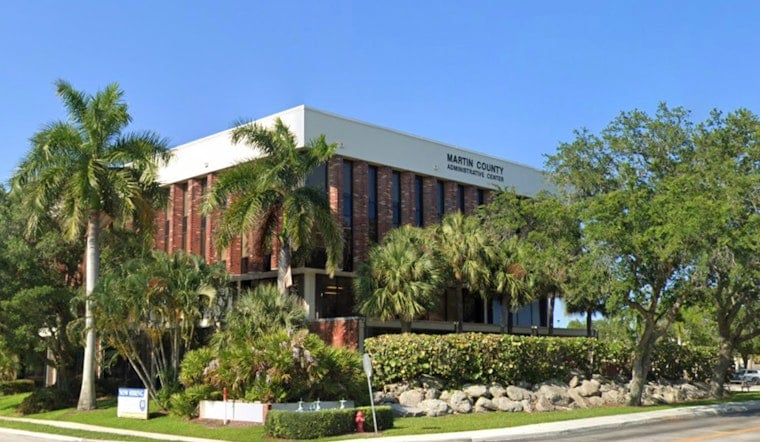
Martin County commissioners took the first step Tuesday toward possibly pausing new hyperscale data center development, directing staff to research a one-year moratorium for unincorporated parts of the county. No date has been set for a formal vote, and commissioners said they want more information before deciding whether to restrict new applications.
According to WPEC, commissioners requested that staff bring back a proposal for a possible one-year pause on large-scale data center development. The station reports that county staff and the county attorney will also address potential legal questions tied to two conflicting pieces of state legislation, and that any moratorium ordinance would likely require two public hearings before it could take effect.
Residents Push Commissioners to Act
Martin County residents and others urged commissioners to act on data center development during Tuesday's meeting, per the same account. Commissioner Sarah Heard Vargas said she supports a hard pause on data center development while officials continue researching the issue, while Commissioner Ed Ciampi said the county should study data centers' effects on the environment, economy and community before moving forward.
Among those addressing the board was investor James Fishback, who ran against U.S. Representative Byron Donalds in the August 18 Republican primary for Florida governor before losing statewide, according to Ballotpedia. Fishback made opposition to hyperscale data centers a central theme of his campaign and told commissioners that a two-million-square-foot data center could be associated with higher electric bills, lower water pressure and lower property values, the WPEC report notes.
Two Indiantown Projects Fuel the Debate
The concern in Martin County did not emerge in a vacuum. In April, developer Silver Fox 606 LLC withdrew its proposal for a 2.2 million-square-foot AI data center campus on 606 acres off Silver Fox Lane in Indiantown after intense community pushback, according to a local report cited by Taiyo.ai. That same month, the developer had claimed the project would bring roughly 400 jobs to the area.
That same month, the Indiantown Village Council approved a rezoning agreement for Florida Power & Light's 5,722-acre Tesoro Groves Planned Unit Development, designating the land for light industrial uses that residents worry could accommodate future hyperscale data centers, per WQCS. FPL representatives maintained during hearings that the rezoning was not tied to any specific project. A civil lawsuit filed by the Greater Indiantown Community Alliance challenging that annexation and rezoning was voluntarily dismissed with prejudice in circuit court in July, leaving county commission policy as the primary remaining avenue for residents seeking restrictions.
A Legal Gray Area Between Two State Laws
Any moratorium Martin County pursues will have to navigate a tension between two recent state laws. Florida Senate Bill 484, signed by Governor Ron DeSantis on May 7 and effective July 1, explicitly preserves local government authority to deny or impose stricter land-use standards on large-scale data centers, defined as facilities consuming 50 megawatts or more at peak load, and also requires large power customers to pay their full cost of service so residential rates are not driven up.
But Florida Senate Bill 180, passed in June 2025 after major hurricanes, prohibits local governments in federally declared disaster areas from adopting building moratoria or more restrictive land development regulations for one year after landfall, creating retroactive restrictions that run through October 1, 2027, according to Bilzin Sumberg. More than 25 Florida municipalities have filed lawsuits challenging SB 180's limits on local land-use planning. WPEC reports that the Martin County attorney told commissioners the two laws create a legal gray area, and that staff will return with more information about the county's authority to impose a moratorium.
Part of a Statewide Wave
Martin County is far from alone in weighing this kind of restriction. Between May and August, at least 14 Florida counties and municipalities — including Washington, Sarasota, DeSoto and Lakeland counties — enacted or initiated temporary moratoria or bans on hyperscale data centers following SB 484's passage, according to Broadband Breakfast. On August 17, the Volusia County Council went further, bypassing a staff-recommended 12-month moratorium and voting unanimously to draft an ordinance permanently banning large-scale data centers in unincorporated areas, citing local aquifer vulnerabilities and sinkhole risks.
Under SB 484, Florida's Office of Program Policy Analysis and Government Accountability must also contract for an independent, interdisciplinary study evaluating policy considerations, facility siting and environmental mitigation measures for large-scale data centers statewide, per Carlton Fields. Findings from that study could inform additional statutory guidelines during the 2027 legislative session, giving Martin County one more reason to wait before finalizing its own rules.
What the Water and Power Numbers Actually Show
Separate from the political debate, objective figures on data center resource use offer some context for residents' concerns. A PolitiFact report published in March found that while AI data centers do not increase electric bills by 30% to 40% as some campaign figures have claimed, large hyperscale facilities typically consume at least 500,000 gallons of water daily for equipment cooling, according to WLRN. That water drawdown, rather than electricity pricing, remains a key concern cited by regional water management districts as Martin County decides its next move.





