

























































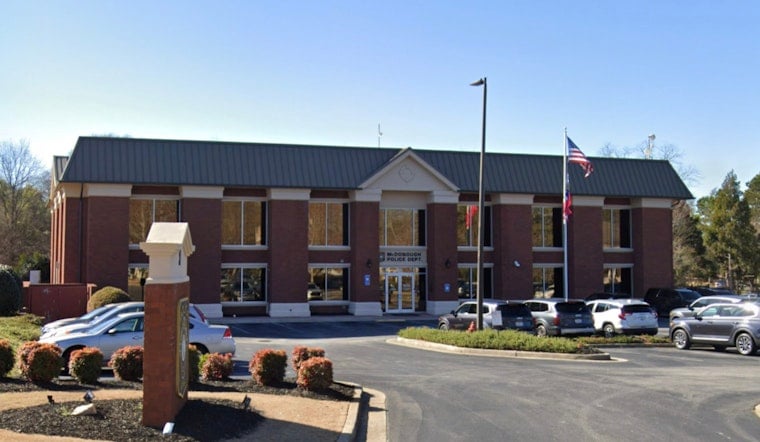
McDonough Police Department officers ran just 32 searches through the city's Flock Safety license plate reader system between January and July, and an internal audit found every single one was tied to a legitimate law enforcement purpose. The review comes as departments across metro Atlanta and beyond scramble to check their own officers' use of the increasingly controversial camera network.
The department undertook the audit as part of a formal process it established for reviewing and reporting internal Flock license plate reader usage by all sworn officers, according to WSB-TV. The audit found no discrepancies between how the department actually used the system and its own written policies, the department said. McDonough runs 52 Flock Safety cameras across the city alongside four Redspeed traffic enforcement cameras, according to the Atlas of Surveillance, a footprint patrolled by a force of 49 full-time certified officers working four 12-hour shifts across five patrol zones, per the City of McDonough Police Department.
Department Says It's Already Tightening Controls
McDonough Police spokesperson Ken Noble said the department will maintain accountability, transparency and compliance with its policies going forward. Noble said the department had already taken steps to prevent abuse of Flock tools and would continue to monitor license plate reader usage closely, per the same account relayed by the station. The department has tightened its policies regarding use of the reader technology and is working on additional proactive measures to prevent abuse, the report notes.
McDonough's clean results stand out against a rough stretch for Flock oversight statewide. At least 18 Georgia law enforcement officers and department personnel across multiple agencies were arrested, fired, or placed under investigation for improper personal license plate reader searches during July and August alone, according to The Atlanta Journal-Constitution. Those cases included five Albany officers fired and charged in July, six Savannah police employees terminated in August, and a former Paulding County 911 director accused of tracking her ex-spouse 1,200 times — a case Hoodline previously reported.
Statewide Crackdown Follows Flock's Own Policy Overhaul
The wave of scrutiny follows Flock Safety's announcement on August 13 that it was overhauling its national platform policies, shrinking the default license plate reader data retention window from 30 days to seven and requiring new audit monitoring tools and case-code entry for every customer search by year's end. Channel 2 Action News reported that Flock rolled out these new oversight features that day, citing internal company metrics showing roughly 90% of law enforcement database searches happen within the first seven days after an image is captured. Flock Safety, headquartered in Atlanta, operates more than 120,000 automated license plate cameras across 7,000 law enforcement agencies nationwide, passively logging plates, vehicle colors, makes, and other features into a searchable cloud database.
The scale of misuse uncovered elsewhere in Georgia has been striking. On August 7, the Savannah Police Department terminated six employees, including four sworn officers, and referred them to the Georgia Bureau of Investigation after audits using Flock's Audit Assist software revealed searches run on personal acquaintances and family members; Savannah has since instituted mandatory weekly audits through its Office of Professional Standards. In July, the GBI arrested five former Albany Police Department officers on felony oath-of-office and misdemeanor charges after an internal audit found repeated non-official access to retained data — among the first Georgia cases to trigger criminal prosecution after Flock released its automated audit tools.
Nearby Rockdale County Also Caught Misuse
Closer to McDonough, the Conyers Police Department in neighboring Rockdale County uncovered its own abuse through internal auditing, leading to the GBI's arrest of a 911 dispatcher supervisor accused of running more than 30 unauthorized Flock searches between April and July — a volume comparable to McDonough's entire seven-month total. Flock cameras helped Conyers police track down a fatal hit-and-run suspect in a separate case that same month.
Under Georgia law, O.C.G.A. § 35-1-22, enacted in 2018 under House Bill 79, automated license plate reader data can only be collected and accessed for legitimate law enforcement purposes; knowingly using the data for anything else is punishable as a high and aggravated misdemeanor. The statute also requires agencies to destroy unneeded data within 30 months and maintain formal policies governing who can access the system — the same kind of policy McDonough's department points to in explaining its clean audit.
Flock has defended the broader value of its network, reporting that its cameras help law enforcement resolve more than 1 million criminal cases annually nationwide, including locating over 1,000 missing persons and recovering more than 20,000 stolen vehicles in July alone, according to Police1. The company says fewer than nine human-reported system errors occur for every 1 million automated alerts generated. Still, with 52 cameras watching a city of roughly 29,000 residents that serves as the Henry County seat, questions remain about whether internal audits like McDonough's are enough oversight or whether passive license plate networks need mandatory outside review.





