

























































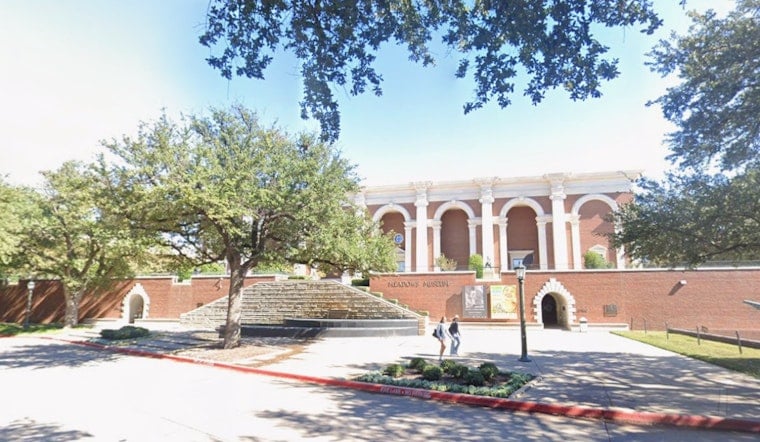
Eighteen ceramic pieces made by Pablo Picasso during his decades-long detour into pottery are heading to Dallas, many of them going on public display for the first time. The Meadows Museum at Southern Methodist University opens Picasso Beyond the Canvas on August 23, and the show runs through January 24, 2027, pairing the artist's fired-clay experiments with a handful of prints and a single ink wash.
The exhibition draws its ceramic works from gifts to the museum, including donations from the Robert and Tina Tonti family, Catherine B. Taylor, and the estate of Stephen Kahn, according to the Meadows Museum. In total, the show includes 11 prints, 18 ceramic pieces, and one ink wash, as reported by The Dallas Morning News. Featured objects include an earthenware plate depicting Jacqueline at the canvas, an owl-shaped pitcher, and a lamp shaped like a woman's face.
A Late-Career Turn Toward Clay
Picasso took up ceramics in his 60s, learning the craft at the Madoura Pottery studio in Vallauris, in southern France, per the same Dallas News account. Between 1947 and 1971, he designed 633 distinct ceramic editions and more than 4,000 unique ceramic pieces, working alongside Suzanne and Georges Ramié at Madoura, according to Joshua Kodner Fine Art. He was reportedly drawn to the medium's utilitarian nature, and Dallas News reports he paved the way for ceramics to be respected as legitimate art rather than mere craft.
The article distinguishes between two kinds of objects in Picasso's ceramic output: the original pieces he developed himself, and the editions his studio produced afterward based on those originals. Those studio editions were hand-painted, though not necessarily by Picasso himself, Dallas News notes — Picasso approved everything that left the workshop. That production method, the report states, made his ceramics more accessible to buyers than his paintings, reflecting Picasso's stated wish that people in the post-war economy could still afford to own something he made.
What Dallas Collectors and Curators Say
Dallas designer Sherry Hayslip told Dallas News that ceramics can serve as an entry point for building an art collection, letting collectors start with exquisite small objects before moving on to important paintings. She added that vases, sculptures, and plates can be mixed freely with other types of art, though she cautioned that collectible or priceless ceramics should not be used for everyday meals or displayed where children or dogs could knock them over.
Designer Noel Pittman, per the same report, has decorated homes with antique lebrillos imported from Spain and ceramic plates from Tonalá, Mexico, saying ceramics are regional and truly artisan. Pittman is currently decorating a colonial revival home with Georgian influences, collects antique creamware, and has sourced pieces from antique shops and estate sales as well as from modern makers. In past projects, Pittman used Picasso-like ceramics from Formations in a former Los Angeles kitchen and hung Mexican ceramics above a banquette in a Dallas home; a former Dallas home of Pittman's also displayed antique plates from Portugal.
At the museum itself, curatorial assistant Sofia Penny said critics were confused by Picasso's move into ceramics when he first took it up, according to Dallas News. Penny added that his ceramic and print works reflected something like a communist manifesto for him, inviting people to engage with life differently. Curator Patricia Manzano Rodríguez said Picasso's personal style remains recognizable across his ceramics, noting that cubist artists often began their careers in sculpture — though translating a personal style through a new medium, she said, is difficult work.
Two Objects Worth a Closer Look
Among the highlighted pieces is Woman Lamp (Lampe femme), a turned earthenware vessel from 1955 made of engobe and glaze on earthenware. It was produced at Madoura in an edition of 200 copies, cataloged as A.R. 299, and stands nearly 14 inches tall, transforming a functional lamp vessel into a stylized female form, according to the Meadows Museum. It was gifted to SMU by the Robert and Tina Tonti family. Another work, Face With Pinched Nose, dates to 1959 and is likewise made of engobe and glaze on earthenware.
Picasso lived from 1881 to 1973, and ceramics occupied roughly the final 24 years of his working life. Beyond the pottery, the Meadows Museum's permanent collection also holds significant Picasso print works, including the only near-complete set of proofs in the United States for his 1937 anti-fascist series The Dream and Lie of Franco, produced during the Spanish Civil War shortly before he painted Guernica, the museum notes.
A Bigger Fall Slate at the Prado on the Prairie
Picasso Beyond the Canvas is organized by the Meadows Museum and funded by a grant from The Meadows Foundation. It opens the same day as another major exhibition, Spectacles of Power and Faith: Colonial South American Art from the Thoma Foundation, which also runs through January 24, 2027, and features 63 paintings alongside an immersive chapel installation, according to CultureMap Dallas. Hoodline previously covered that colonial treasures show in more detail.
Founded in 1965 on the SMU campus by Texas oil executive Algur H. Meadows, the museum earned the nickname Prado on the Prairie for housing one of the largest collections of Spanish art outside Spain. Amanda W. Dotseth became the museum's Linda P. and William A. Custard Director in March 2023, becoming the first woman to lead the institution. General adult admission runs $12, seniors 65 and older pay $10, and admission is free for members, visitors 18 and under, SMU students and staff, and everyone on Thursday evenings after 5 p.m.
Dallas joins a broader Texas moment for Picasso this year. The Museum of Fine Arts, Houston hosted the U.S. debut of the Berggruen collection, featuring more than 95 works by Picasso and his contemporaries, as Hoodline reported in its earlier piece on the Bayou City Berggruen show.



