

























































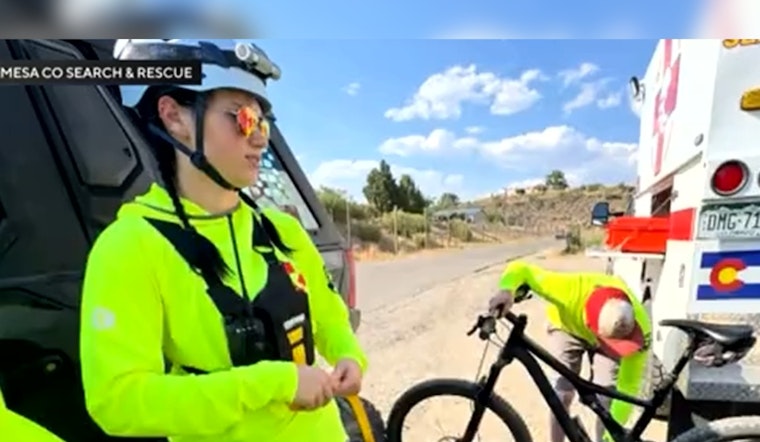
A shade shelter built along Colorado's Palisade Plunge trail to honor a cyclist who died of heat stroke did exactly what it was designed to do this month, giving a stranded rider a safe place to wait after a mechanical breakdown left them stuck in the remote desert canyon. The structure has stood as both memorial and lifesaving infrastructure since it was erected following a 2022 tragedy on the same trail.
On August 3, Mesa County Search & Rescue responded to a mountain biker stranded on the Palisade Plunge after mechanical failure, according to the agency. The rider managed to navigate to the route's shade shelter and waited there safely until rescue crews arrived, as reported by CBS News Colorado. The rescue underscored the value of a structure built specifically to protect cyclists from the trail's brutal exposure.
A Memorial Born From Tragedy
The shelter exists because of what happened to Jeffrey Higgins, a 53-year-old Colorado Springs mountain biker who died of heat-related illness near mile marker 28 on the Palisade Plunge on June 11, 2022, after running out of water during a 102-degree heat wave, according to Singletracks.com. Even the three cyclists who found Higgins and called 911 had completely run out of water themselves despite starting with a gallon each, and they required emergency treatment for severe dehydration, per VeloNews. That detail illustrates how quickly the trail's lower canyon can overwhelm even well-prepared riders.
In the wake of Higgins's death, the Mesa County Sheriff's Office issued official trail safety guidance recommending that summer riders carry at least 10 liters, or 2.5 gallons, of water per person along with electrolyte replacements, according to CBS Colorado. The advisory reflects just how unforgiving the route's final stretch can be, since there is no way to refill water once riders descend into the canyon.
An Extreme Drop In Elevation and Temperature
The Palisade Plunge is a 34-mile singletrack route that descends more than 6,000 vertical feet, starting at 10,700 feet atop Grand Mesa and finishing at 4,700 feet in the town of Palisade, according to Forbes. While the trail is mostly downhill, that dramatic shift from alpine forest to exposed desert canyon means temperatures can swing wildly over the course of a ride. Regional trail guides and local bike shops have noted that the lower 12-mile canyon section features narrow cliffside singletrack, embedded rock obstacles, and intense heat that regularly catches unprepared riders off guard, per Singletracks.com.
The $3.4 million trail was completed in July 2021 after a decade of development led by a multi-agency partnership that included the Bureau of Land Management, the U.S. Forest Service, Mesa County, the Town of Palisade, the City of Grand Junction, and the Colorado Plateau Mountain Bike Trail Association, Forbes reported. Federal approval had been finalized years earlier, in August 2018, when the U.S. Forest Service's Grand Valley Ranger District signed off on the project's environmental assessment.
Heat Rescues Remain A Regional Threat
The Palisade Plunge isn't the only Western Slope trail testing riders' limits this summer. On August 1, Lower Valley Fire District and Mesa County Search & Rescue rescued a mountain biker experiencing a heat emergency on Wranglers Trail near Fruita, who was airlifted by CareFlight of the Rockies, according to Lower Valley Fire District. Together with the Palisade Plunge rescue two days later, the incidents show that heat illness remains a persistent hazard across the region's backcountry trail network during peak summer months.
Beyond the safety concerns, the trail also carries significant economic weight for the area. Economic impact studies conducted during the trail's planning phase projected that the Palisade Plunge would generate roughly $5 million annually in tourist spending for surrounding Mesa County communities, per Forbes. That dual identity, as both a major draw for outdoor tourism and a route capable of extreme danger, has shaped how local agencies balance promotion of the trail with ongoing safety messaging.
It remains unclear whether local outdoor groups or Mesa County have plans to add further shade structures or water caches along other remote sections of the 34-mile route. For now, the single memorial shelter built in Higgins's memory has already proven its worth once again, giving at least one more rider a chance to wait safely for help rather than face the canyon's heat alone.





