

























































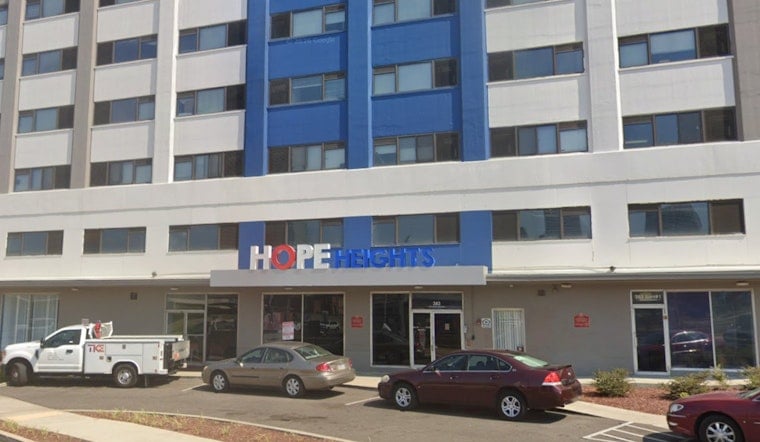
Residents of Hope Heights Tower, a Downtown Memphis high-rise for seniors and people with disabilities, say management gave them just 15 minutes to grab their clothes and leave the building after a flooding issue, and never told them when they could come back. Tenant Joseph Crittenden said the abrupt announcement shocked him, and that he ended up needing to be taken to the hospital afterward.
Crittenden told WREG that residents were given 15 minutes to gather belongings and were instructed not to return until the matter was resolved, and that Hope Heights did not offer him another room or a motel while he was displaced. With nowhere else to go once he was released from the hospital, Crittenden said he called on city officials to intervene.
Hope Heights Tower managers pointed to a flooding issue as the reason for the evacuation order, but tenants say they were never given a letter or any information spelling out when they would be allowed back inside, according to the report. By phone on August 20, Hope Heights Tower managers told WREG the flooding issue had been resolved, though it's unclear from that statement whether displaced residents were formally notified they could return.
Reporters Turned Away at the Door
When WREG reporters went to Hope Heights seeking answers, a staff member at the main office refused to speak with them. A person who identified themselves as a Hope Heights employee told reporter Katelyn Barker she was not authorized to be there, and another unidentified employee at the property slammed the door on the WREG crew.
WREG also reached out to the U.S. Department of Housing and Urban Development for comment, but the agency had not responded by the time the station published its report. Hope Heights operates under HUD's Section 8 Project-Based Rental Assistance program, and its 10 stories house residents aged 62 and older along with people with disabilities, according to AffordableHousing.com.
A Former Property Manager Already Under Federal Scrutiny
Hope Heights was previously managed by Cleveland-based Millennia Housing Management, which operates subsidized housing developments nationwide. The property is now managed by Winn Management. In March 2024, HUD issued a five-year debarment against Millennia and its CEO Frank Sinito, barring the company from new federal housing contracts following investigations into unauthorized financial distributions and property neglect across its HUD-subsidized portfolio, as reported by FreeWire Magazine. That same year, federal agents from HUD and the U.S. Department of Agriculture executed a search warrant at Sinito's Ohio home as part of an ongoing federal investigation into financial irregularities at HUD-subsidized properties, according to footage reviewed by WKYC.
City officials said Hope Heights last recorded a code violation in 2017 and has had few violations overall, even as a 2023 demand letter from the National Housing Law Project documented long-running physical failures at the building, including recurring pipe bursts that flood the property and frequent elevator breakdowns that leave elderly and disabled residents stranded in the tower. That history suggests the flooding cited by managers this month may be part of a pattern rather than an isolated malfunction.
What Tennessee Law Says About Sudden Vacate Orders
Tennessee's eviction statute, T.C.A. § 66-7-109, generally requires landlords to provide formal written notice — typically 14 days for nonpayment of rent or 30 days for lease violations — before pursuing court eviction proceedings, according to Legal Templates. Separately, under the state's Uniform Residential Landlord and Tenant Act, self-help evictions and the unlawful exclusion or displacement of tenants without a court order are illegal, and tenants who are locked out or deprived of essential services can sue for actual damages, punitive damages, and attorney's fees, per Nolo. A 15-minute verbal order to vacate, without written notice or a court proceeding, sits well outside those standard legal timelines.
Hope Heights is not the only Millennia-managed property in Memphis to draw scrutiny. Conditions at Serenity Towers, another Millennia property, deteriorated to the point that local courts declared it a public nuisance and temporarily put the City of Memphis in charge of stabilizing the complex and relocating residents, a pattern also seen at Memphis Towers. Tenant advocacy groups including the Memphis Tenants Union have organized public protests and appeared before the Memphis Health, Education, and Housing Facility Board demanding the revocation of tax incentives for Millennia-owned properties over chronic lack of maintenance and unlivable conditions, according to MLK50.
How Residents Can Report Problems
Memphis residents facing unsafe living conditions can report problems to Memphis 311 by phone or online, which dispatches municipal inspectors who can issue citations or refer severe structural hazards to Environmental Court. For now, it remains unclear whether HUD or city code enforcement will issue any formal order addressing emergency relocation assistance or habitability standards at Hope Heights, and whether displaced tenants like Crittenden have received any further word on returning home.
Editor's Note: This article has been updated to clarify the current management of Hope Heights Tower and to reflect Millennia Housing Management's prior role at the property.





