

























































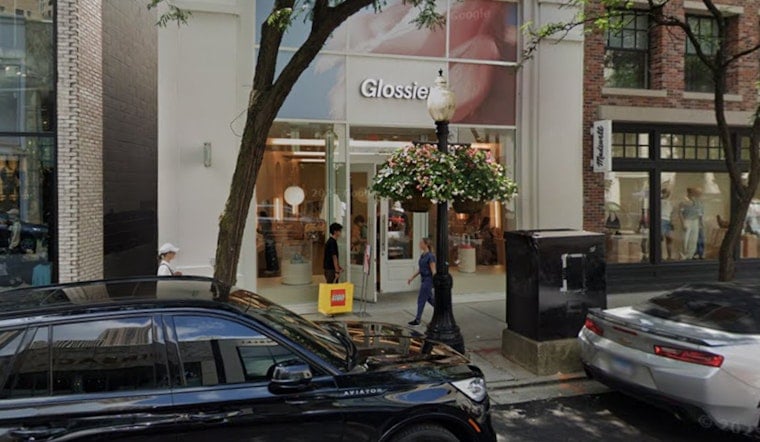
Meta is opening its first Midwest retail store in the Gold Coast, taking over the former home of beauty brand Glossier at 932 N. Rush St. The company confirmed it plans to open the location, called a Meta Lab, ahead of the holiday shopping season, giving Chicago shoppers a hands-on spot to try its AI glasses and virtual reality headsets.
The announcement was first reported by Axios, which noted that Meta had not immediately responded to questions about a recent privacy complaint tied to its AI glasses. Matt Jacobson, an executive at the company, said Chicago's “vibrant culture and creative energy” make it the perfect city for the Midwest's first Meta Lab, according to the outlet's reporting. Meta Lab retail shops sell AI glasses and virtual reality headsets, and the company already operates eight such locations, including stores in New York City, Los Angeles and Las Vegas, per the same account.
The Rush Street address has changed hands before. Glossier opened its permanent Chicago storefront at that spot in April 2023, only to announce in March 2026 that it would permanently close the location along with eight other global sites as part of a corporate restructuring toward wholesale distribution, according to Cosmetics Business. The vacancy left a prime slot open on a block that has become a magnet for upscale retailers fleeing Michigan Avenue's higher vacancy rates.
Gold Coast Becomes the New Retail Battleground
Meta's arrival adds to a wave of brands clustering along Rush, Oak and Walton streets rather than the traditional Magnificent Mile corridor. Luxury jeweler David Yurman signed a lease at 933 N. Rush St. earlier this year, a move Hoodline previously reported as part of that broader shift. The neighborhood has also drawn scrutiny for other reasons this month, after a Rush Street Lululemon return scam was tied to a $100,000 theft ring, underscoring the corridor's mix of high-end foot traffic and active law enforcement attention.
Meta Lab stores are designed to let people experience Meta AI glasses and VR products firsthand in what the company describes as locally rooted spaces. Each location reportedly features custom, neighborhood-specific interior designs co-created with local artists — New York's store leans into skate culture, while Los Angeles channels a low-rider automotive theme, according to Retail TouchPoints. It is not yet known what design theme Meta plans for the Chicago store.
From Pop-Ups to Permanent Flagships
The Chicago lease continues Meta's push to convert its retail experiments into long-term commitments. In March, Meta signed a 10-year lease with Vornado Realty Trust for a 15,000-square-foot, five-story townhouse at 697 Fifth Ave. in Manhattan, turning a former pop-up into a permanent flagship, as reported by Bisnow. That deal marked Meta's first permanent East Coast flagship ahead of the Chicago announcement. Meta also said in June that it would establish 50 experiential Meta Lab spaces inside U.S. and Canadian Best Buy stores, broadening its retail footprint well beyond standalone shops.
The hardware on display traces back to a strategic pivot inside Meta's Reality Labs division, which recorded a $17.7 billion loss in 2024 and cut more than 1,000 jobs in early 2026 as the company shifted investment away from virtual-reality metaverse projects toward AI smart glasses, as Hoodline reported earlier this year. That bet appears to be paying off commercially: global sales of Ray-Ban Meta smart glasses topped 2 million units by mid-2025, with sales more than tripling in the first half of that year compared to 2024, far outpacing the earlier Ray-Ban Stories model that sold fewer than 300,000 units before being discontinued.
Cameras, AI Voices and Privacy Questions
Meta's AI glasses, developed through a multi-year partnership with EssilorLuxottica under the Ray-Ban and Oakley brands, include a built-in camera for photos and video, open-ear speakers and microphones, internet capabilities, and prescription lens compatibility. The company has also launched a pair of the glasses featuring an AI voice provided by Kylie Jenner. A white LED indicator light is supposed to alert bystanders when the glasses are recording, and Meta has updated its software so recording is disabled if that light is tampered with — changes made in response to mounting privacy concerns.
Those concerns have not gone away. In June, Meta removed undisclosed facial-recognition code known as “NameTag” from its smart glasses companion app following an investigation by WIRED and pushback from privacy rights organizations, according to Captain Compliance. Advocates have warned the glasses could let wearers identify strangers in public without their consent. As Axios's reporting noted, Meta did not immediately respond to questions about the latest privacy complaint tied to the glasses.
The scrutiny carries particular weight in Illinois, which enforces the nation's strictest biometric privacy law, the Biometric Information Privacy Act. Meta paid a landmark $650 million settlement in 2021 to resolve a class-action lawsuit alleging its facial-recognition photo-tagging features violated that law, which requires written consent before collecting biometric identifiers such as facial geometry and carries statutory penalties of up to $5,000 per willful violation. Meta's AI glasses more broadly face growing privacy controversy as the company expands their sale into new markets like Chicago's Gold Coast.
Camera-equipped wearables have already found supporters beyond retail demos. Hoodline reported this month on blind veterans in Indianapolis receiving free Meta AI glasses for accessibility purposes, even as some venues have moved to ban the devices over privacy fears. Chicago's Meta Lab will give the Gold Coast a firsthand look at both sides of that debate when it opens later this year, with additional reporting on the story contributed by Ina Fried.





