

























































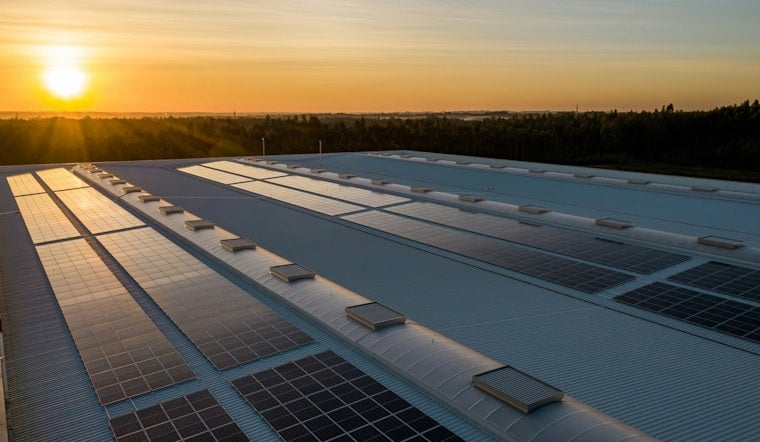
The Midwest's power grid has quietly become the biggest in the country, and solar panels are the reason why. The Midcontinent Independent System Operator, known as MISO, now provides electricity to 45 million people across 15 states, having overtaken PJM Interconnection to claim the title of the nation's largest electric-supply grid.
The shift, first reported by Bloomberg, comes down to a wave of new solar capacity that has transformed a grid historically built on coal and wind. According to BloombergNEF, MISO overtook PJM sometime after PJM held the top spot among U.S. electric grids through 2025. PJM, which stretches from Washington, D.C., to Chicago, had long been the largest system by capacity, but its footprint has been outpaced as solar farms multiplied across MISO's territory, which spans states including Indiana and Missouri.
Solar Capacity Nearly Doubled in a Single Auction Cycle
The numbers behind the shift are stark. In MISO's 2026/2027 Planning Resource Auction released in April, cleared solar capacity jumped 59% year-over-year to 12.2 gigawatts, up from 7.6 gigawatts the prior year, according to Enel North America. That surge helped drive down summer capacity clearing prices by more than 35% across the region, a sharp reversal from the previous year's auction, when tight reserves and fossil fuel retirements triggered a tenfold price spike before new solar additions relieved the pressure.
The growth reflects a longer trend. MISO's monthly energy mix saw solar generation expand six-fold in three years, rising from about 1% of total monthly generation in July 2022 to 6% in July 2025, per MISO market reporting analyzed by Utility Dive. Nationally, the solar boom has been just as pronounced — the U.S. solar industry installed 43 gigawatts of new capacity in 2025, making solar the top source of new U.S. power grid additions for the fifth consecutive year, according to the Solar Energy Industries Association.
A Grid Racing to Keep Up With Data Centers
MISO's solar surge isn't happening in a vacuum. The grid operator projected in April that its peak regional electricity load will jump 35%, from 121 gigawatts in 2025 to 163 gigawatts by 2035, driven primarily by an estimated 8 to 14 gigawatts of new data center capacity planned for 2026 and 2027 alone, per Utility Dive's reporting. That demand crunch is a nationwide phenomenon: a BloombergNEF report published in July revised U.S. data center power demand estimates upward to 118 gigawatts by 2030 and 207 gigawatts by 2033 under accelerated AI chip deployment scenarios, according to Utility Dive.
To move all that new solar power where it's needed, MISO's board approved a historic $21.8 billion long-range transmission expansion plan in December 2024, covering roughly 3,630 miles of high-voltage transmission lines, including a 765-kilovolt backbone across nine Midwest states, according to Utility Dive's report on the plan. The buildout is designed to knit together MISO's sprawling footprint, which covers more than 1 million square miles across all or parts of 15 states from Montana to Louisiana, plus the Canadian province of Manitoba, per PCI Energy Solutions. Hoodline previously reported on how that expansion is playing out on the ground, as a Franklin Parish solar project advances through MISO's interconnection queue.
PJM's Bottleneck Versus MISO's Faster Pace
Part of what allowed MISO to leapfrog PJM is a stark contrast in how quickly each grid processes new power projects. PJM Interconnection, which serves more than 65 million people across 13 states and Washington, D.C., faced average interconnection delays exceeding eight years for new projects by 2025, according to PJM Inside Lines. That backlog prompted the Federal Energy Regulatory Commission to approve a temporary fast-track process for shovel-ready generation in June.
The queue bottleneck has been a recurring theme in PJM's recent troubles. Hoodline has reported on PJM's emergency power buying push to manage data center strain, as well as on federal regulators eyeing a shakeup that could carve up Northeast Ohio's power grid amid capacity price spikes tied to data center load.
Utilities Now Bet on a Sustained Surplus
The rapid capacity gains have flipped the script on MISO's own reliability outlook. Just two years ago, state utility regulators warned that MISO could face systemic capacity deficits starting in 2025 because of power plant retirements. Now, an Organization of MISO States survey released in June found that MISO member utilities plan to add an average of 15 gigawatts of accredited summer capacity annually over the next five years, reversing those earlier projections of shortfalls, according to Utility Dive.
That optimism aligns with federal forecasts. The U.S. Energy Information Administration projected in January that utility-scale solar will be the fastest-growing source of U.S. electricity generation through 2027, with nearly 70 gigawatts of new solar capacity scheduled to come online nationwide in 2026 and 2027. Still, grid operators face surging demand from AI data centers, manufacturing and electrification, alongside concerns over the lower winter availability of weather-dependent resources as dispatchable fossil units retire.
MISO's rise also intersects with ongoing regulatory fights across its footprint. Hoodline has covered a Michigan tax dispute tied to Consumers Energy sales into MISO's wholesale market, as well as a federal court order requiring MISO grid owners to repay ratepayers eight years of power-line profits tied to high-voltage transmission return-on-equity rates. Those disputes underscore that even as MISO's raw capacity numbers climb, the deeper story is how transmission planning, interconnection speed and renewable economics continue to reshape the competitive balance between MISO and hubs like PJM.



