

























































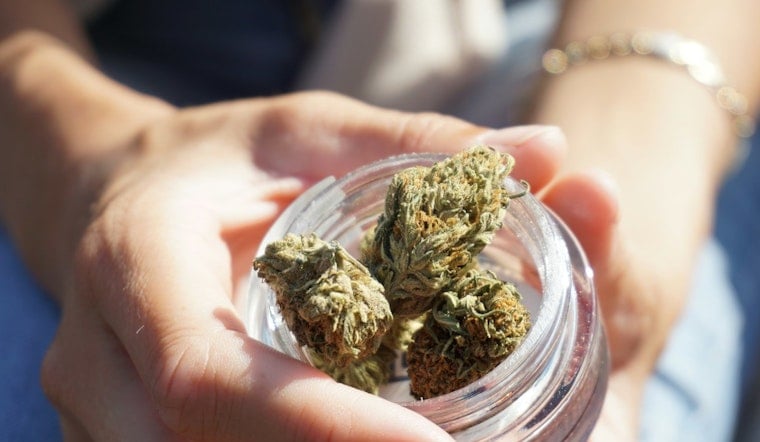
Minnesota is the only state in the country that allows tribal nations to open cannabis dispensaries off their reservations, and the head start is paying off. Tribes including White Earth Nation and Red Lake Nation have built retail chains stretching from Moorhead to the Twin Cities suburbs, turning cannabis into a new economic engine while state officials in Connecticut, Wisconsin, New York, California and Virginia study whether to copy the approach.
The arrangement traces back to Minnesota Statutes § 3.9228, enacted under House File 100 when the state legalized recreational marijuana in 2023. As reported by the Star Tribune, the law directed the governor to negotiate government-to-government compacts with Minnesota's 11 federally recognized tribal nations, and the state began signing those agreements in 2025. Because state cannabis laws do not apply on tribal sovereign land, the compacts became the legal bridge letting tribally regulated stores operate in cities that never issued them a state license, according to the Minnesota Revisor's Office.
Red Lake Nation moved first among Minnesota tribes, opening the state's first recreational marijuana dispensary on its reservation in 2023, building on an already established medical marijuana operation. White Earth Nation followed with its own cannabis enterprise, Waabigwan Mashkiki — Ojibwe for flower medicine — which likewise grew out of an existing medical marijuana program before expanding into recreational sales off reservation land.
From an Idle Potato Chip Plant to 200 Jobs
White Earth's cannabis operation now employs 200 people, more jobs than a potato chip plant on the reservation ever managed. That $8.5 million plant, once expected to create 45 jobs, sat idle for more than a decade before the tribe redirected its energy into cannabis, investing $30 million into the enterprise, per the Star Tribune's reporting. White Earth's Waabigwan Mashkiki has opened off-reservation stores in Moorhead, St. Cloud, East Grand Forks and Chanhassen, with more planned in cities including Bemidji, according to MPR News.
Michael Fairbanks, White Earth's tribal chairman, said cannabis profits are being reinvested into further expansion, and the tribe plans to use earnings to support scholarships and community programming. In Mahnomen, where the tribe is expanding operations, cannabis has increased both traffic and employment, according to the Star Tribune. Sue Kraft, editor of the Mahnomen Pioneer newspaper, said cannabis represents an opportunity for reservation communities.
Mason Hamilton, a tribal member, applied to work at Waabigwan Mashkiki when he turned 21 last year and has since helped get jobs there for his siblings and father. He said the business will only get bigger. Waabigwan Mashkiki cannabis is now sold in Duluth dispensaries as well, extending the tribe's reach beyond its own retail footprint.
Red Lake and Prairie Island Expand Beyond the Reservation
Red Lake Nation now operates off-reservation dispensaries in West St. Paul and Thief River Falls through NativeCare, which is owned and operated by the Red Lake Band of Chippewa. Nokomis Paiz, a NativeCare spokesperson, said roughly 80 percent of NativeCare employees are Red Lake tribal members, and the company reinvests profits into education, harm reduction programs and wellness services.
Prairie Island Indian Community is preparing to open its own off-reservation store, Island Peži, in Mankato in late August. Demetria Buck is helping open that location, and the tribe has said Island Peži revenue will support community programming. Prairie Island's cannabis facility cultivates its product in buffalo compost, and Prairie Island edibles are already sold in stores on the Leech Lake reservation. Under the compacts, each tribe may operate up to eight dispensaries, and seven tribally owned stores have opened outside tribal land so far, per the Star Tribune's count.
State Officials Say the Model Boosts Minnesota's Economy
Eric Taubel, director of Minnesota's Office of Cannabis Management, said restricting tribal cannabis to reservations, as California currently does, does not drive economic benefit into the state. The compact approach was designed to boost tribal economic development while also giving non-tribal marijuana businesses access to product once the broader market opened — early state-licensed retailers have sold tribally grown or tribally manufactured products as a result. OCM does not differentiate between tribal and non-tribal cannabis sales in its figures, which showed $80 million in recreational cannabis sales over the past year, per OCM.
Taubel said he expects other states may replicate Minnesota's approach. Connecticut, Wisconsin, New York, California and Virginia are all looking to mirror it in some form, according to the Star Tribune. Virginia has already borrowed from Minnesota's cannabis regulations, and Wisconsin may look to Minnesota's framework if it moves toward legalization next year. Connecticut took its own step in June 2026 when Governor Ned Lamont signed the state's first tribal cannabis compact with the Mashantucket Pequot Tribe, a framework that, unlike Minnesota's retail-focused model, centers on aligning tribal adult-use regulations with state statutes to enable wholesale and retail transactions between tribal operators and state-licensed businesses, according to Ganjapreneur.
Federal Limits and Legal Advantages Still Shape the Market
Minnesota's compacts did not emerge in a vacuum. Washington state passed the nation's first state-tribal cannabis compacting law, House Bill 2000, in 2015, a framework later adapted by Nevada and by Michigan, which signed compacts with the Bay Mills Indian Community in July 2024 and with the Pokagon Band and Lac Vieux Desert Band in late 2025, according to the Cannabis Law Journal. Rob Pero, founder of the Indigenous Cannabis Industry Association, said Native Americans are reclaiming cannabis as an agricultural commodity and medicine.
Federal law still sets outer boundaries on that commerce. Tribal cannabis enterprises rely on Department of Justice enforcement guidance dating to the 2014 Wilkinson Memorandum, which extended Cole Memo priorities into Indian Country, but Attorney General Pam Bondi told the Senate in late 2025 that transporting cannabis across state lines remains a federal crime, per CRB Monitor News. Tribal-owned enterprises on reservation land are also exempt from federal income taxes under Internal Revenue Code Section 280E — which denies standard business-expense deductions to state-licensed operators — and exempt from Minnesota's 15 percent state cannabis excise tax on reservation sales, though off-reservation compact stores follow tax-sharing and regulatory parity agreements, according to research from Boise State University. Tribal cannabis critics say that structure gives tribes an unfair advantage, while cannabis advocates counter that tribes are simply diversifying their economies beyond casino revenue.
Minnesota courts have also weighed in on where state authority ends. In February 2026, the Minnesota Court of Appeals ruled in State v. Thompson that because the state decriminalized adult cannabis possession and authorized tribal compacts, its cannabis law is civil and regulatory rather than criminal — meaning state authorities cannot exercise criminal jurisdiction over enrolled tribal members on reservation land, according to Courthouse News. Separately, the League of Minnesota Cities notes that under state cannabis rules, municipalities cannot enforce city-specific regulations or require local registration for compact dispensaries, though cities may still count those stores toward their overall dispensary caps.
Among those building a career inside the new industry is Charrise Nepoose, 37, who works at Island Peži and is developing her own cannabis strain. Tribes set their own cannabis regulations for their enterprises, giving workers like Nepoose and Hamilton a degree of creative and operational control not typically available to employees of state-licensed retailers.





