

























































A 6-megawatt solar farm proposed for roughly 28 acres near Section Road and County Highway I in the Town of Mukwonago is drawing pointed questions from neighbors who worry about noise, property values, and whether an industrial-scale energy project belongs on land currently zoned for agriculture. The developer, OneEnergy Renewables, calls the project, Spring Lake Solar, an economically sound way to generate electricity that stays in the local grid. Residents call it something else entirely: a land-use shift they never asked for.
Peter Murphy, a director at OneEnergy Renewables, told TMJ4 News the project is designed to generate power for local homes and businesses, and that taxpayers are not footing the bill. The land in question, a 40.45-acre agricultural parcel owned by Stanley and Julie Sugden, sits at the northwest corner of Section Road and County Highway I, according to Town of Mukwonago project records. The family would lease roughly 28 to 30 acres of that parcel to OneEnergy Renewables for the installation, per the same documents.
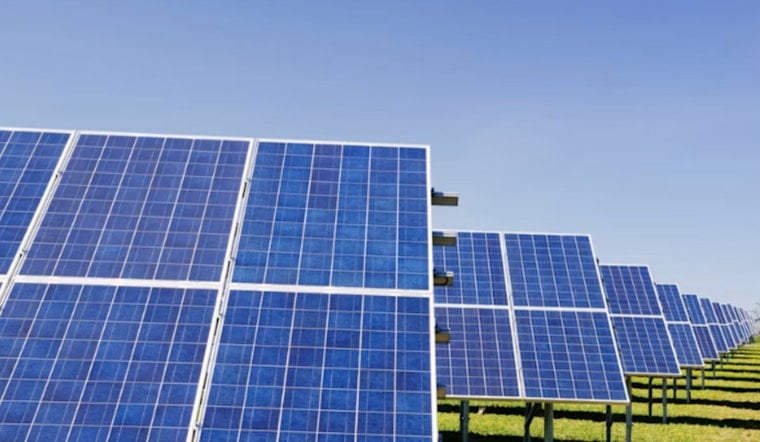
Murphy said the project is economically viable and that local power is being produced and consumed locally, per TMJ4's reporting. Application materials filed with the town describe a 6-megawatt array of about 13,000 single-axis tracking panels mounted on driven steel I-beams, ringed by an 8-foot deer-exclusion fence and served by a 16-foot gravel access drive off County Highway I. The facility would generate enough electricity to power about 1,600 average Wisconsin homes each year, according to TMJ4.
Where the Power Would Go
The electricity generated on site would interconnect directly into We Energies' existing three-phase distribution line running along County Highway I, feeding local residential and commercial customers rather than a distant grid, according to a report from Greater Milwaukee Today. Spring Lake Solar's plans do not include lithium battery storage units, per TMJ4. If approved, construction is expected to begin in spring 2027 and take four to six months, supporting more than 30 union construction jobs during peak activity, the outlet reported.
Mukwonago resident Gail Yerke attended an informational meeting about the proposal and came away unconvinced. She told TMJ4 the land use does not seem appropriate for the site, and said she has concerns about noise and property values near the location. “The community deserves to know about the proposal,” Yerke said, adding that the public process itself matters regardless of the outcome.
State Law Limits What the Town Can Do
Any pushback from Yerke or her neighbors runs into a legal wall built into state statute. Because Spring Lake Solar's 6-megawatt capacity falls far below the 100-megawatt threshold that triggers oversight from the Public Service Commission of Wisconsin, the Town of Mukwonago Plan Commission retains jurisdiction over the conditional use permit, according to the Wisconsin Legislative Council. But that local authority is itself constrained: Wisconsin Statute § 66.0401 bars municipalities from restricting solar energy systems unless a rule protects public health and safety, avoids significantly raising costs or lowering efficiency, or offers a comparable alternative, per an analysis from Boardman Clark. In practice, that means the Plan Commission cannot deny the permit simply because neighbors dislike the aesthetics or the change from row crops to panels.
The Plan Committee has scheduled a public hearing for Wednesday, October 7, at Mukwonago Town Hall, giving residents a formal chance to weigh in, according to TMJ4. That follows an informal community open house OneEnergy Renewables held in August, ahead of initial conditional use permit reviews the town had already lined up for September and October at Town Hall, per project filings. Notices of the hearing were mailed to nearby property owners.
What Happens to the Land Long-Term
OneEnergy Renewables' site plans call for a low-growing perennial pollinator and prairie seed mix planted beneath the panels, intended to improve stormwater infiltration compared with row cropping while preserving existing mature oak trees on the parcel, according to Greater Milwaukee Today. The company's proposal calls for the array to remain on the property for 30 to 50 years, per TMJ4, after which the site would be decommissioned and the agricultural soils restored, according to the developer's filings.
The proposal lands amid a broader statewide shift toward solar power. Wisconsin's solar generation capacity grew from 21.1 megawatts in 2012 to more than 837 megawatts by 2021, as utilities and independent producers added renewable capacity to replace retiring fossil-fuel plants, according to Boardman Clark's analysis. Hosting communities also stand to gain financially: state law directs annual shared-revenue payments of $2,000 to $5,000 per megawatt, split between the town and county, to offset the property-tax exemption utility equipment receives, according to the Wisconsin Department of Revenue.
For now, the fate of Spring Lake Solar rests with the October 7 hearing, where residents like Yerke are expected to press officials on the specifics while the Plan Commission weighs its narrow legal options under state law.


