

























































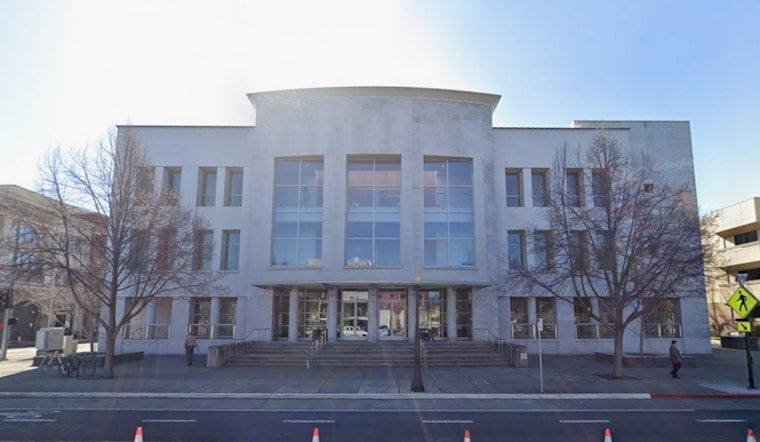
A Napa County judge has thrown out a defamation lawsuit filed against Israel Delgado, a father who posted social media videos accusing a special-education aide of abusing his autistic teenage son at American Canyon High School. Napa County Superior Court Judge Cynthia P. Smith ruled that Delgado was within his rights to speak about child welfare and student safety, dismissing the case brought by McGrew Behavior Intervention Services Inc., the company that employed the aide.
McGrew filed the lawsuit on June 27, 2025, arguing that Delgado's posts placed the company in a false light and threatened its ability to contract with other school districts, according to The Napa Valley Register. Delgado had begun posting accusations on TikTok, Instagram and other platforms starting March 20, 2025, alleging that McGrew and classroom aide Richard Wolf abused and insulted his son, who was then 15 years old. Delgado's original video ran two minutes and showed what appeared to be two welt-like blisters on his son's hands.
Delgado's son was born with cri-du-chat syndrome, a rare chromosomal condition that, per NCBI StatPearls, affects an estimated 1 in 15,000 to 50,000 births and typically causes severe intellectual disability along with motor and speech impairments. Many individuals with the syndrome face significant expressive speech challenges and rely on nonverbal cues, signs, or basic words to communicate, leaving them especially vulnerable to reporting mistreatment on their own.
What Delgado Alleged Happened at American Canyon High
In his posts, Delgado alleged that Wolf called his son stupid and gay, forced him into an isolation pen made from gym-floor mats, and choked him in a school restroom. Delgado also alleged that Wolf bullied and physically abused his son and denied him food and drink. He publicly asked why American Canyon High had not suspended Wolf, a question that echoed through a vigil held outside the school on April 2, 2025, which coincided with World Autism Awareness Day and drew about 20 supporters.
Court records cited by the Register indicate that Delgado's son's mother had asked American Canyon High in March 2025 to assign a different special-education aide to her son, though she did not file a formal complaint about the request at that time. Wolf was eventually placed on unpaid leave, and school staff allegedly moved him to an adjacent classroom rather than removing him from duty entirely, before he was reassigned to a list of substitute aides. McGrew stated in a court filing that Wolf abandoned his job at American Canyon High shortly after Delgado's videos appeared.
McGrew's Denials and the Company's Legal Argument
McGrew founder Deborah McGrew has denied that Wolf mistreated Delgado's son. She asserted on June 30, 2025, that an investigation by McGrew and the Napa school district found no witnesses to confirm Delgado's accusations. McGrew said the company's ability to do business with school districts would continue evaporating if Delgado kept publishing what she characterized as false narratives, and the company sought financial damages along with an injunction barring Delgado from sharing the allegations before trial.
Delgado fought back in October under California's anti-SLAPP statute, which allows defendants to strike lawsuits targeting protected speech on matters of public interest. Judge Smith ultimately ruled that Delgado's claim qualified as a strategic lawsuit against public participation, finding that his allegations about an employer allowing an alleged abuser to remain assigned at a public school contributed to public debate about school safety. She said the issue of public-school student safety was one of utmost public interest.
Why the Judge Sided With Delgado
Under California's two-step anti-SLAPP framework, once a defendant shows the challenged statements involved a matter of public interest, the burden shifts to the plaintiff to produce admissible evidence showing a probability of prevailing at trial, according to Kolmogorov Law. Courts applying that standard do not weigh conflicting evidence but instead evaluate whether the plaintiff has established a legally sufficient case. Judge Smith found that McGrew offered no evidence that Delgado's abuse allegations were untrue and failed to show its defamation claim had a strong chance of succeeding at trial.
The judge also ruled that Delgado's claim that McGrew aides were negligent in failing to keep his son safe amounted to a statement of law as much as fact, and that any alleged duty of McGrew to ensure its employee did not remain on campus was a legal question that could not support a defamation claim on its own. Separately, a Napa County court imposed a three-year restraining order barring Wolf from contact with Delgado and his children. Under California Code of Civil Procedure § 527.6, such civil harassment restraining orders require proof of a course of conduct that seriously alarms or harasses a person, and violations carry criminal misdemeanor penalties under Penal Code § 273.6, according to Central Coast Criminal Defense.
Financial Fallout and District Context
Because McGrew lost its anti-SLAPP motion, California law now entitles Delgado to recover his attorney fees and court costs from the company. Under Code of Civil Procedure § 425.16(c)(1), that fee-shifting rule is mandatory rather than discretionary, according to Justia Law, a design meant to deter lawsuits aimed at chilling protected speech.
The case unfolds against a backdrop of long-standing scrutiny over special education staffing in Napa Valley Unified School District. A 2017 audit by California's Fiscal Crisis and Management Assistance Team identified McGrew's contracted aides as one of the district's primary high-cost special education expenses, averaging nearly $49,755 per student annually, and suggested the district could cut costs by hiring aides directly rather than relying on outside agencies. Delgado's son allegedly struck staff members, other students and school property at least eight times since his eighth-grade year in 2024, according to court filings referenced in the case.
State law also sharply limits what aides and school staff can do when managing behavior. California Education Code § 49005, enacted under Assembly Bill 2657 in 2018, prohibits public school personnel from using physical or mechanical restraints and seclusion for discipline, convenience, or punishment, permitting such measures only as a last resort during imminent threats of serious physical harm, per the California Department of Education. That framework underscores why allegations of a makeshift mat isolation enclosure and withheld food carry particular legal weight in this dispute.
American Canyon High School has faced other reporting controversies in recent years. In June 2024, the Napa County District Attorney's Office charged then-principal Andrew Goff with failing to make a mandatory report of suspected child sexual abuse involving a former track coach and a student, according to CBS News. Under California's Child Abuse and Neglect Reporting Act, public school teachers and administrators are mandatory reporters required to notify law enforcement or child protective services within 36 hours of learning of suspected abuse, with criminal misdemeanor penalties for those who knowingly fail to do so.





