

























































A woman was grabbed from behind outside her North Naples apartment in the early hours of June 2, 1999, forced inside, and sexually assaulted after spending the evening listening to live jazz at a club in nearby Bonita Springs. For 27 years, the case sat unsolved. Now, Collier County investigators say a discarded restaurant fork nearly 2,300 miles away in Arizona finally led them to a suspect.
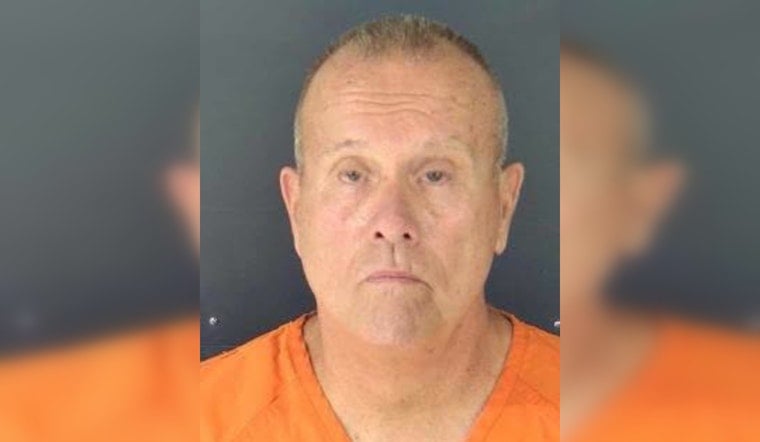
Collier County Sheriff Kevin Rambosk announced that 71-year-old Terry Lynn Denton was arrested in Sarasota County in connection with the 1999 burglary and rape, according to Tampa Free Press. The Sarasota County Sheriff's Office Fugitive Apprehension Unit made the arrest this month, and Denton is being held at the Sarasota County jail pending extradition to Collier County, where he faces a sexual battery charge. Rambosk said the arrest was directly linked to cold-case DNA recovered from a fork Denton used at an Arizona restaurant.
The attacker grabbed the victim from behind, covered her mouth, forced her inside her apartment, and sexually assaulted her, the sheriff's office says. Medical staff later collected and preserved a sexual assault kit while treating the victim at a local hospital. Semen DNA collected from that kit produced no hits when run through the FBI's national CODIS database, and the case stalled for decades with no suspect and no lead.
Why the DNA Database Came Up Empty
CODIS relies on matching crime-scene DNA against profiles already cataloged from prior offenders, and that limitation is part of why the case went cold for so long. Nationally, CODIS yields matches in only 13% to 16% of cold cases, while forensic genetic genealogy — which builds family trees from public consumer DNA databases — achieves roughly a 50% resolution rate, according to Hoodline's own reporting on cold-case DNA breakthroughs.
In August 2025, investigators sent the crime scene DNA evidence to DNA Labs International, a private accredited forensic laboratory based in Deerfield Beach that specializes in advanced single nucleotide polymorphism profiling for cold cases. By February 2026, analysts had produced a family tree report that narrowed the search to two persons of interest, one of whom was Denton.
Agents Tail a Suspect to an Arizona Restaurant
Collier County detectives traveled to Glendale, Arizona, alongside Glendale police officers to track Denton down. The FBI assisted in monitoring him once he was located, and federal agents ultimately collected several items Denton left behind at a table at an area restaurant, including a drinking glass, a straw, a spoon, and a metal fork.
Because those items were voluntarily discarded in a public restaurant, officers did not need a search warrant to collect them — a doctrine rooted in established Fourth Amendment case law holding that people have no reasonable expectation of privacy in items they abandon in public, according to FindLaw. The DNA profile pulled from the fork was found to be more than 700 billion times more likely to belong to Denton than to an unrelated individual. That result gave detectives probable cause to seek a formal court search warrant, which they used to collect a direct buccal swab from Denton himself, following Department of Justice guidance that bars an arrest based on genealogical leads alone until a confirmatory sample is tested, per the U.S. Department of Justice. The Florida Department of Law Enforcement confirmed on June 18, 2026, that DNA from the fork matched semen recovered from the 1999 assault, and FDLE lab results the following month confirmed that Denton's direct mouth swab also matched the crime scene DNA.
Denton's Denials Met With Old Driver's License Records
When detectives interviewed Denton in Glendale, he denied ever living in Collier County in 1999. Officers confronted him with state records showing he held a Florida driver's license listing a Naples address in 1998, placing him less than a mile from the victim's apartment at the time of the attack, the sheriff's office says.
Rambosk said the arrest marks the first time in the history of the Collier County Sheriff's Office that a criminal investigation has been solved through forensic genetic genealogy. “The victim waited 27 years for answers,” Rambosk said, adding that the arrest reflected advances in forensic science paired with detectives' determination to keep pursuing the case. FBI representative Rodney Crawford said the bureau remains committed to pursuing violent offenders wherever they are found.
No Statute of Limitations for the Charge
Because non-consensual sexual battery involving physical force or burglary is classified under Florida Statute § 794.011 as a life felony or first-degree felony, Denton could face up to life or 30 years in state prison if convicted, according to the Florida Senate. Florida Statute § 775.15 eliminates the statute of limitations for life felonies altogether, and a specific subsection of that law allows extended prosecution whenever a suspect is later identified through preserved crime-scene DNA — a carve-out lawmakers built in specifically so cold cases with viable DNA evidence would not time out.
The investigation's use of forensic genetic genealogy also comes amid a broader statewide push to fund the technology. In April 2024, the Florida Legislature enacted Chapter 2024-113, creating a dedicated $500,000 Forensic Investigative Genetic Genealogy Grant Program intended to help state and local agencies afford the specialized DNA testing that cracked cases like this one. It remains unclear whether Denton will contest extradition to Collier County or whether his defense will challenge the fork surveillance or DNA database search in court.





