

























































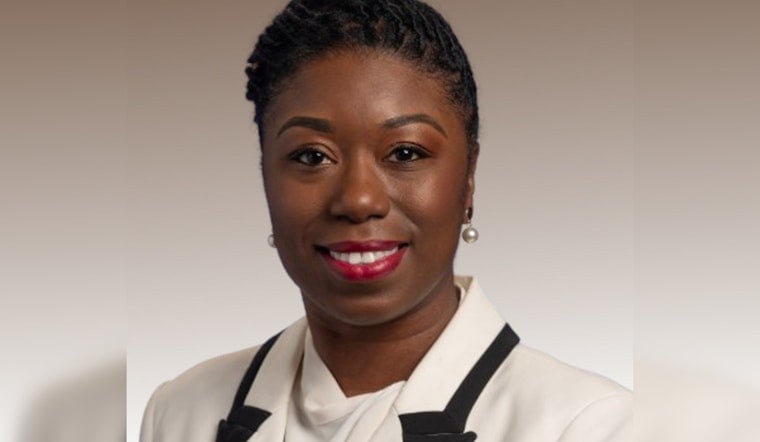
Nashville Democratic state Sen. Charlane Oliver is threatening legal action against Tennessee Senate leadership after a deadline to rescind her punishment for protesting the state's new congressional map came and went without a response. Oliver's attorneys had demanded that her sanctions be lifted by July 31, 2026, but Senate Democratic spokesperson Brandon Puttbrease confirmed the deadline passed without any reply from Republican leadership.
The dispute traces back to Tennessee's redistricting special session, when Republicans passed a new congressional district map that split Memphis into three districts and removed the state's lone Democratic-held seat in Congress, according to WKRN News 2. During the vote, Oliver unfurled a bedsheet reading “No Jim Crow 2.0 Stop the Tennessee Steal,” and she says the Senate clerk refused to record her no vote on the new map. In response, Lt. Gov. Randy McNally removed Oliver from the Senate Government Operations Committee, restricted her per diem, and cut her travel reimbursements.
McNally reassigned Oliver specifically to the Senate State and Local Government Committee, which does not meet during the summer interim, unlike Government Operations, the only Senate committee that convenes year-round and pays per diem, according to the Nashville Scene. That timing effectively cut off Oliver's income and committee standing until the regular legislative session resumes in January. McNally chastised Oliver's behavior as outrageous, unprecedented, and disgraceful in his original disciplinary letter, per the same report.
Attorneys Demand Rescission, Cite Constitutional Violations
Oliver's attorneys sent a letter to Senate Republican leadership demanding that the punishment be rescinded, describing it as inconsistent with both Senate rules and the Tennessee Constitution. They also requested a correction of the legislative record to reflect Oliver's no vote and asked that her reimbursement rights be restored for her attendance at the National Conference of State Legislatures Legislative Summit in Chicago, held July 27-29, 2026. The attorneys argue that McNally's actions violate Oliver's First and Fourteenth Amendment rights to free speech, expression, and equal representation.
When their initial letter went unanswered, Oliver's legal team sent another letter to Senate Republican leadership specifically asking that the extra punitive measures in McNally's original letter be rescinded. Senate spokesperson Adam Kleinheider pushed back firmly, saying Oliver chose to threaten legal action instead of accepting what he called a legal and appropriate sanction. Kleinheider maintained that McNally's actions were measured, appropriate, and legal, and that Oliver was repeatedly warned to end her remarks before her microphone was turned off.
Kleinheider also disputed Oliver's account of the vote itself, saying her claim that she was prevented from voting is false and that she could have requested her vote be recorded before adjournment. Under Rule 73 of the Rules of Order of the Tennessee State Senate, committee assignments and officer appointments fall solely within the discretion of the Senate Speaker, who weighs member preferences, seniority, and party balance, according to Ballotpedia. Senate leadership has leaned on that rule to argue the reassignment was administrative rather than a constitutional punishment. Oliver has said she will consider any and all avenues for seeking legal redress if her punishment remains in place.
A Pattern That Reached Beyond the Senate
Oliver's sanction did not happen in isolation. Just weeks earlier, House Speaker Cameron Sexton removed almost every Democratic Tennessee House member from committee assignments following redistricting floor protests, a move that effectively stripped every Black state representative in the House of a committee role, according to Democracy Docket. Sexton accused House Democrats of creating disorder by blocking aisles, holding signs, and distributing earplugs during the session. Hoodline previously reported on that chamber-wide action in its piece on Democrats booted from committees.
National advocacy groups have since weighed in on Oliver's case specifically. On June 2, 2026, organizations including Democracy Action for Women, State Innovation Exchange Action, and Vote Run Lead Action issued a joint statement condemning McNally's sanctions against Oliver as retaliatory and discriminatory, arguing that stripping her leadership role and per diem punished a Black woman for speaking out against disenfranchisement.
The Redistricting Fight Behind the Punishment
The special session itself was triggered by a U.S. Supreme Court ruling. The Court's April 29, 2026 decision in Louisiana v. Callais partially overturned Section 2 of the Voting Rights Act of 1965, weakening federal protections against racial gerrymandering and prompting Southern Republican leaders, including those in Tennessee, to pursue mid-decade redistricting. Tennessee's redrawn 9th Congressional District map extends roughly 200 miles east from Memphis toward Middle Tennessee, diluting the city's urban Black population across three separate districts to create a 9-0 Republican-favoring congressional delegation, per reporting cited by Wikipedia's account of the redistricting.
The fallout has already reshaped Memphis politics. Eighteen-year Democratic U.S. Rep. Steve Cohen announced he would not seek reelection in the 9th District after the map passed, opening the redrawn seat to a multi-candidate August primary. The district had long served as Tennessee's lone majority-Black and Democratic-held congressional seat. It follows a similar pattern set in 2022, when Tennessee's Republican supermajority split Davidson County across three congressional districts, a move that led to the retirement of longtime Democratic Rep. Jim Cooper and established the state's earlier 8-1 GOP delegation, as Hoodline reported in its coverage of Tennessee's 10th House seat.
The map itself is also facing a direct legal challenge. The NAACP filed a federal lawsuit against Tennessee on May 14, 2026, alleging the redrawn congressional map violated federal civil rights laws by intentionally dismantling the state's lone majority-Black congressional district, as Hoodline detailed in its report on the NAACP's lawsuit over the map. The lawsuit claims lawmakers ignored traditional redistricting principles like compactness and community representation in order to minimize Black voting power. It remains an open question whether Oliver's legal team will move forward with a formal lawsuit now that the July 31 deadline has passed, and how the pending NAACP litigation might ultimately affect the map heading into the general election.
Before entering the Tennessee Senate to represent District 19 in January 2023, Oliver co-founded The Equity Alliance in 2016, a statewide nonpartisan organization focused on expanding Black voter participation and political power. She started the group with $250 of her own money and built it into a multi-million-dollar statewide civic engagement organization, according to Vanderbilt University. That background as a voting rights organizer now sits at the center of a standoff over whether her punishment for protesting the map was, as her attorneys argue, retaliation — or, as Senate leadership insists, a routine exercise of administrative authority.





