

























































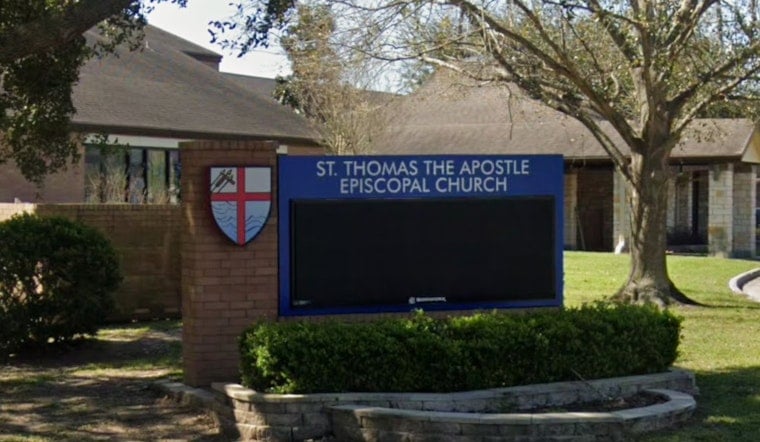
A new monument standing four blocks from Johnson Space Center now honors eight people and groups who helped shape America's space program, with a price tag of $125,000 and a permanent home on church grounds in Nassau Bay. The monument, called EarthRise, was unveiled during a ceremony on Sunday at St. Thomas the Apostle Episcopal Church, recognizing Black astronauts, scientists, engineers, and civil rights leaders whose contributions to spaceflight have often gone unrecognized.
According to ABC13 Houston, organizers say there are no other monuments like EarthRise anywhere in Houston. The installation was paid for by the John and Joseph Talbot Fund of the Episcopal Diocese of Texas, according to organizers, and it sits on the grounds of a church that has served as a spiritual home for local astronauts, engineers, and NASA center leaders since it was established directly across from Johnson Space Center in 1964, per the Click2Houston report on the project.
A Former NASA Chief With Deep Local Roots
Former NASA Administrator and astronaut Charles Bolden Jr. said the monument honors people of color and underrepresented groups who contributed to the space program, per ABC13's reporting. Bolden is a longtime member of St. Thomas the Apostle Episcopal Church, where he participated in ministries and served in leadership roles while living in the area, the outlet reports. That connection carries added weight given Bolden's own career: he served as NASA's 12th Administrator from 2009 to 2017 under President Barack Obama, becoming the first African American to permanently lead the agency after flying four Space Shuttle missions, according to St. Thomas the Apostle Episcopal Church.
Bolden said the monument is intended to inspire hope through racial reconciliation and recognition that diversity is a strength, according to the same report. He also said women and people of color should study and work hard, and that people should not let others define them or tell them who they are.
Eight Honorees Spanning Six Decades of Spaceflight
EarthRise recognizes eight people and groups: Robert Henry Lawrence Jr., Ed Dwight, George Robert Carruthers, Ruth Bates Harris, NASA Astronaut Group 8, Dr. Bernard Harris Jr., Sunita Williams, and Bolden himself. The names trace a long and uneven arc of struggle and achievement inside the space program.
Robert Henry Lawrence Jr. was selected for the Manned Orbiting Laboratory program in June 1967, making him the first African American designated as an astronaut, though he died in a training crash six months later at age 32, according to Britannica. Ed Dwight was selected by President John F. Kennedy's administration in 1961 as America's first Black astronaut candidate but was passed over for spaceflight in the 1960s; he finally flew to space at age 90 aboard Blue Origin's NS-25 mission in May 2024, as reported by CBS News. After leaving the military, Dwight became an accomplished sculptor of Black history monuments.
From Lunar Cameras to a Fired Whistleblower
Astrophysicist George Robert Carruthers invented the far-ultraviolet camera and spectrograph deployed by Apollo 16 astronauts on the lunar surface in April 1972, creating the first Moon-based astronomical observatory and capturing the first ultraviolet photos of Earth's outermost atmosphere, per the American Institute of Physics. Carruthers later received the National Medal of Technology and Innovation in 2011 for his space instrumentation work.
Ruth Bates Harris, NASA's highest-ranking Black female executive at the time, was fired in September 1973 after co-authoring a candid internal report finding NASA's equal employment opportunity program to be a “near-total failure,” before being reinstated in 1974 following public backlash, according to Cambridge Core. Harris had served as Deputy Director of NASA's Equal Employment Opportunity Office and advocated for diversifying the space program.
Milestones From Group 8 to a Historic Spacewalk
NASA Astronaut Group 8, selected in January 1978 and nicknamed “The Thirty-Five New Guys,” was the first astronaut class to include women and minorities, introducing NASA's first Black astronaut candidates, including Guion Bluford, Ronald McNair, and Frederick Gregory, according to NASA. Bluford went on to become the first African American in space during the STS-8 mission in August 1983.
Dr. Bernard Harris Jr., a physician and NASA mission specialist, became the first African American to perform a spacewalk during the STS-63 shuttle mission aboard Space Shuttle Discovery on February 9, 1995, per the Cosmosphere. He spent over four hours in open space testing thermal protection suits in orbital cold.
A Message From Church Leaders and a Public Art Statement
The Rev. Mike Stone of St. Thomas the Apostle Episcopal Church said the monument highlights hidden figures who helped advance space efforts, according to ABC13. Church leaders called EarthRise a work of public art and a statement about who gets remembered in public spaces, and organizers said the monument reminds people not to let the size of a dream determine whether they pursue it.
The EarthRise monument bears the phrase “we can do more together” and was designed by Houston-based Genesis Art Collaborative following an international design competition, according to the Houston Defender. The installation includes an interactive companion website offering digital biographies and educational curricula on Black space pioneers, extending the monument's reach beyond the physical unveiling into a lasting educational resource.
Funding Tied to a Broader Reconciliation Effort
The Episcopal Diocese of Texas launched the John and Joseph Talbot Fund for Racial Reconciliation as part of a $13 million initiative in February 2020 aimed at repairing historical harms connected to the diocese's 19th-century ties to slavery, according to the Episcopal Diocese of Texas. That fund also supports racial reconciliation projects and scholarships across the state, placing the Nassau Bay monument within a much larger institutional effort.
EarthRise is free and open to the public year-round, sitting just four blocks from Johnson Space Center in a neighborhood that developed in the 1960s alongside the original Manned Spacecraft Center. For a region built around the space program's history, the monument offers a permanent reminder of the Black astronauts, scientists, engineers, and civil rights leaders whose work shaped it from the beginning.





